Exaltation of Cross Convent
49.596192, 34.576569
- the document of appointment to the post:
Journal No. 27 session of the Holy Synod of UOC on 17.08.2020 year
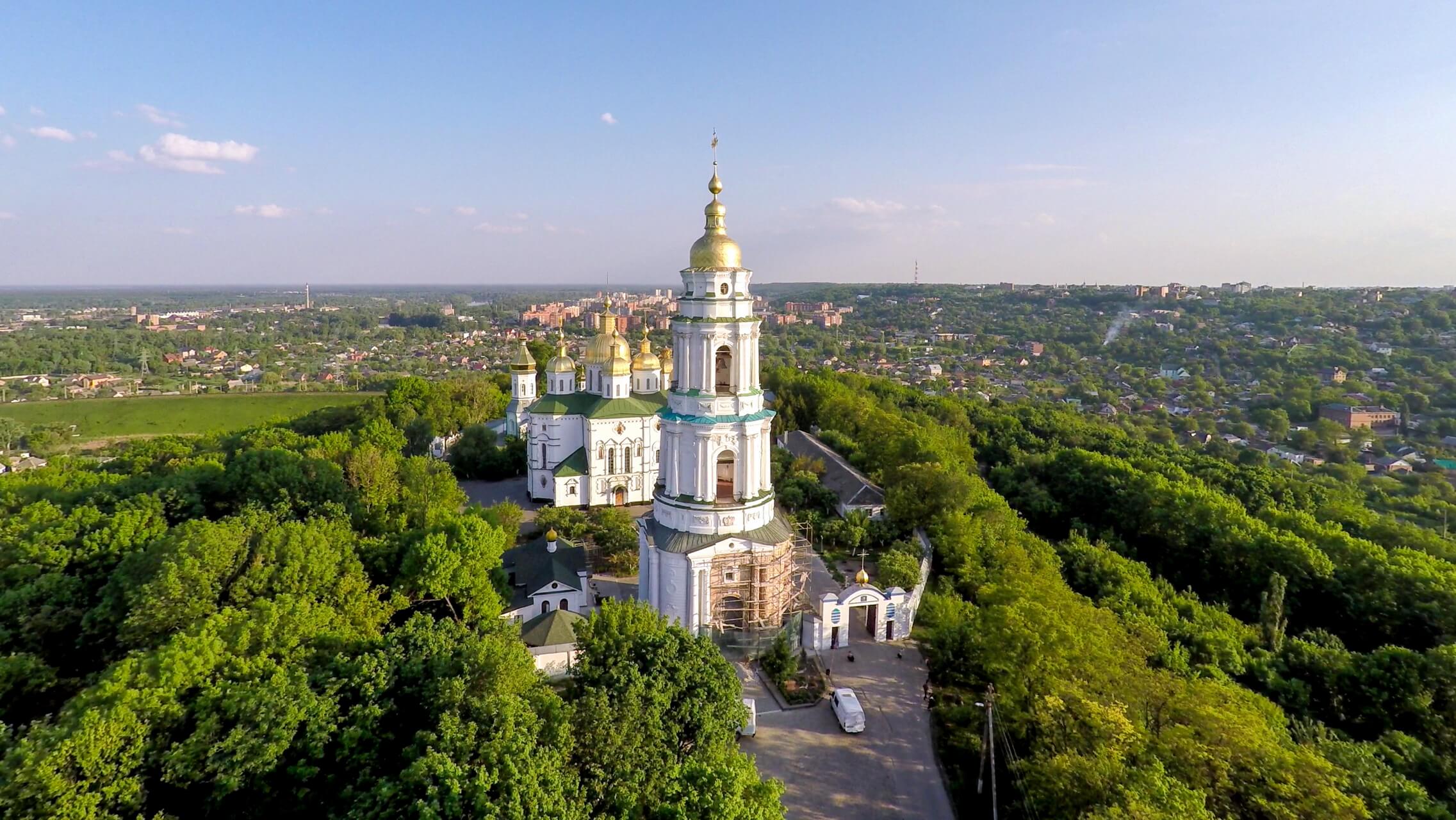
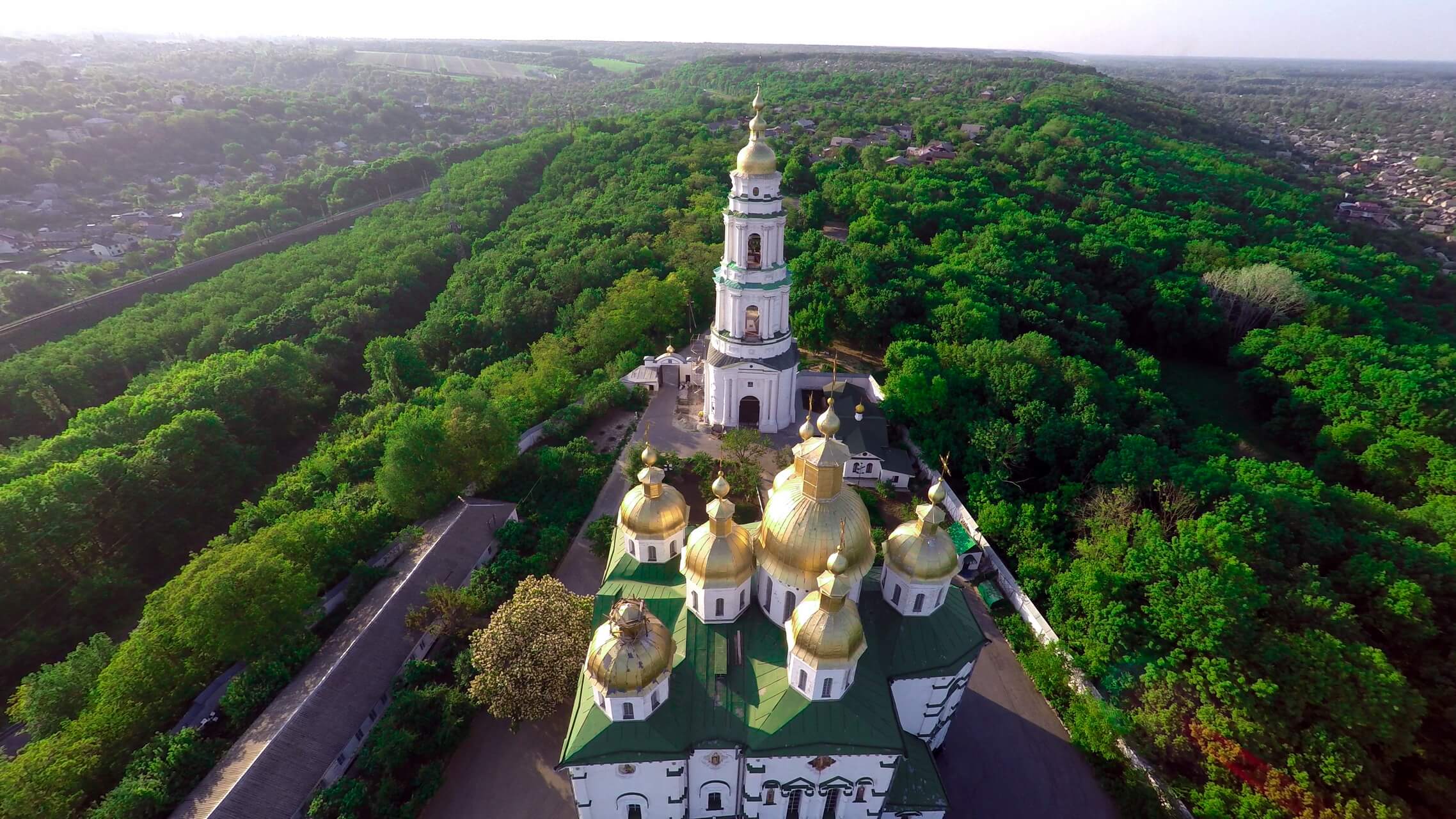
The Poltava Exaltation of the Cross Monastery was founded in 1650 on a hill above the river Poltavka, with the blessing of Metropolitan Sylvestr (Kosiv) of Kyiv1, 5. It was built by Kalistrat, hegumen of the Mhar Transfiguration monastery, on the gifts of Martyn Pushkar, the first colonel of Poltava, of other members of the Cossack officer class and of the townspeople1, 4. The Poltava Regional Museum names Ivan Iskra among the initiators as well6, and local historical tradition adds the burgher Ivan Kramar7. The house was founded as a men's monastery and remained one for nearly three centuries4.
In the 1690s the monastery was laid waste by the Tatars1, 4, 7. In the spring of 1709 it was occupied by the Swedes, who dragged their cannon up the monastery hill and shelled the town from it1. By tradition it was near the house, while riding round his outposts, that Charles XII took the bullet wound in the leg that left him unable to move freely on the day of the battle of Poltava1, 4. In memory of the victory the archimandrites of the house were ordered from 1803 to wear on the tablets of the mantle the images of St Sampson the Hospitable, on whose feast the battle was fought, and of the Great Martyr George the Victorious, and in 1857 the church of St Sampson on the battlefield was attached to the monastery1.
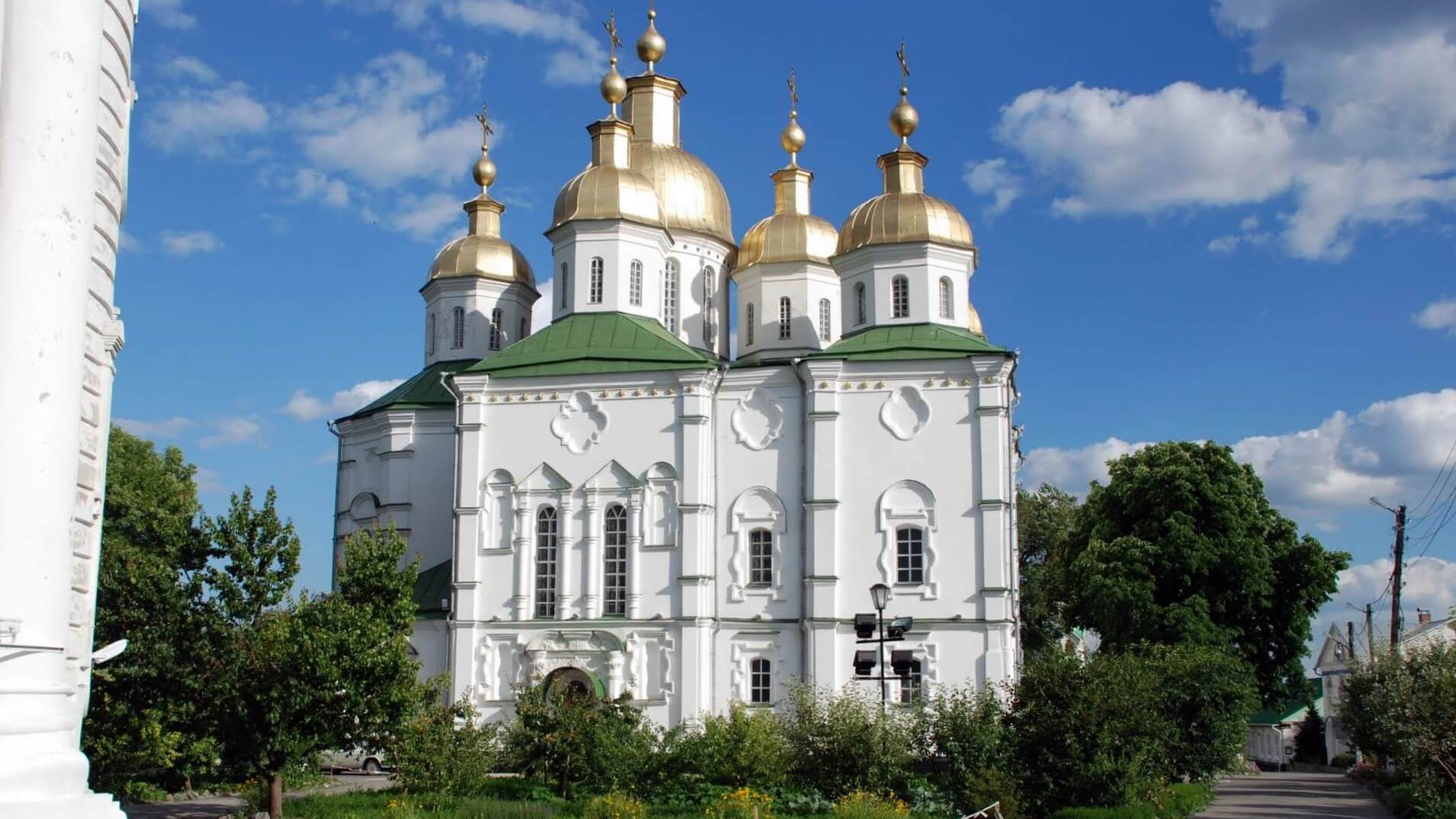
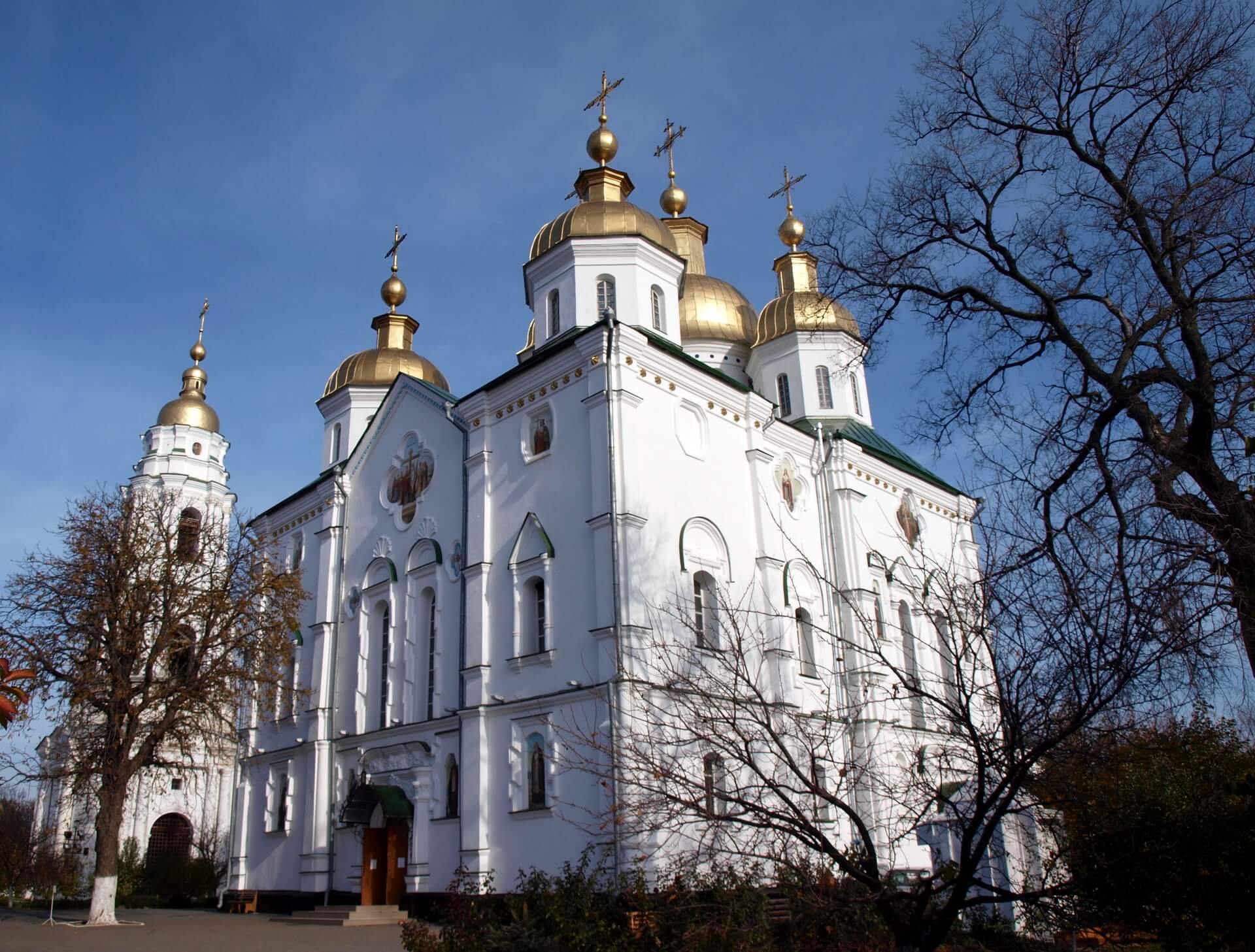
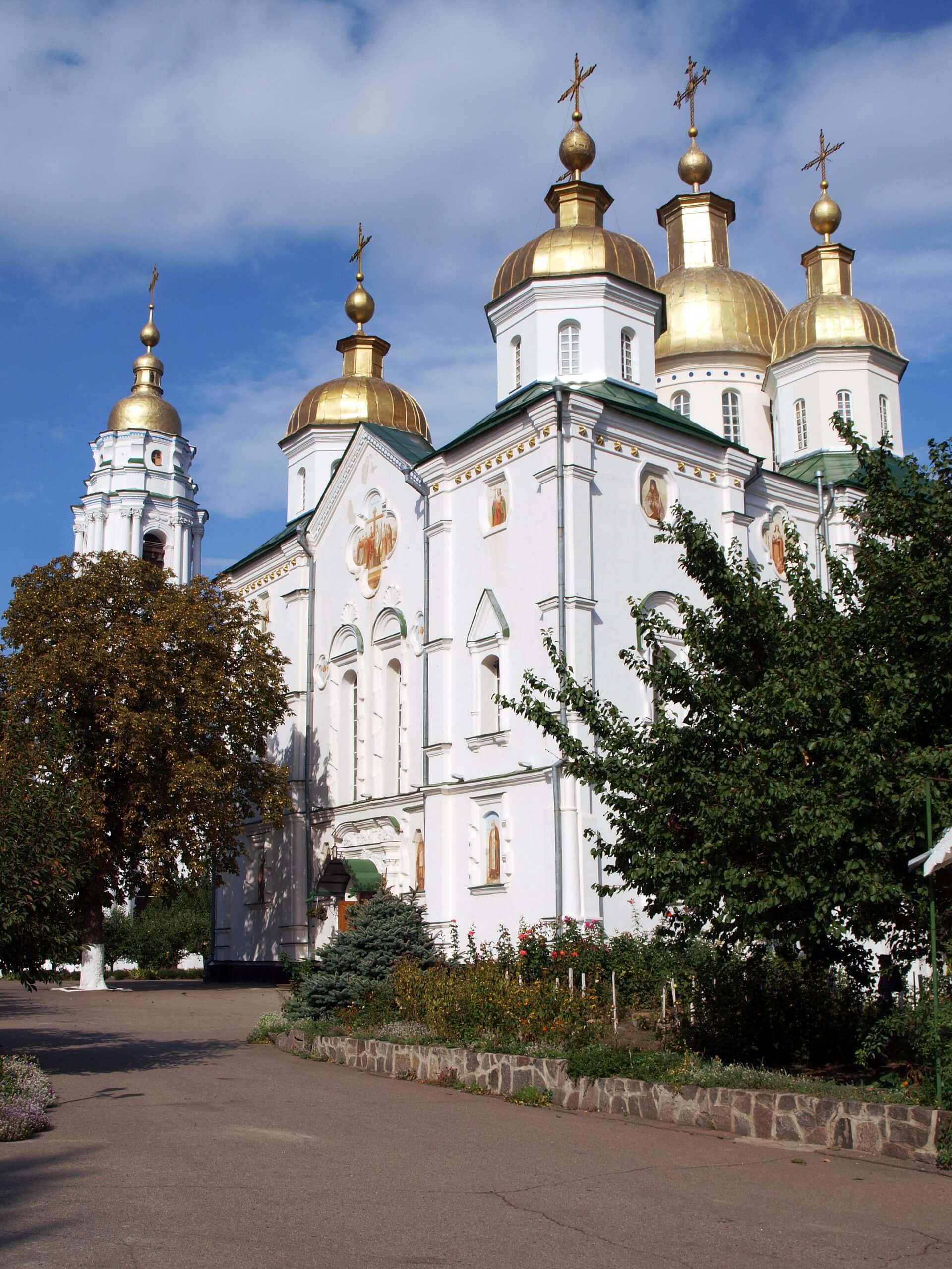
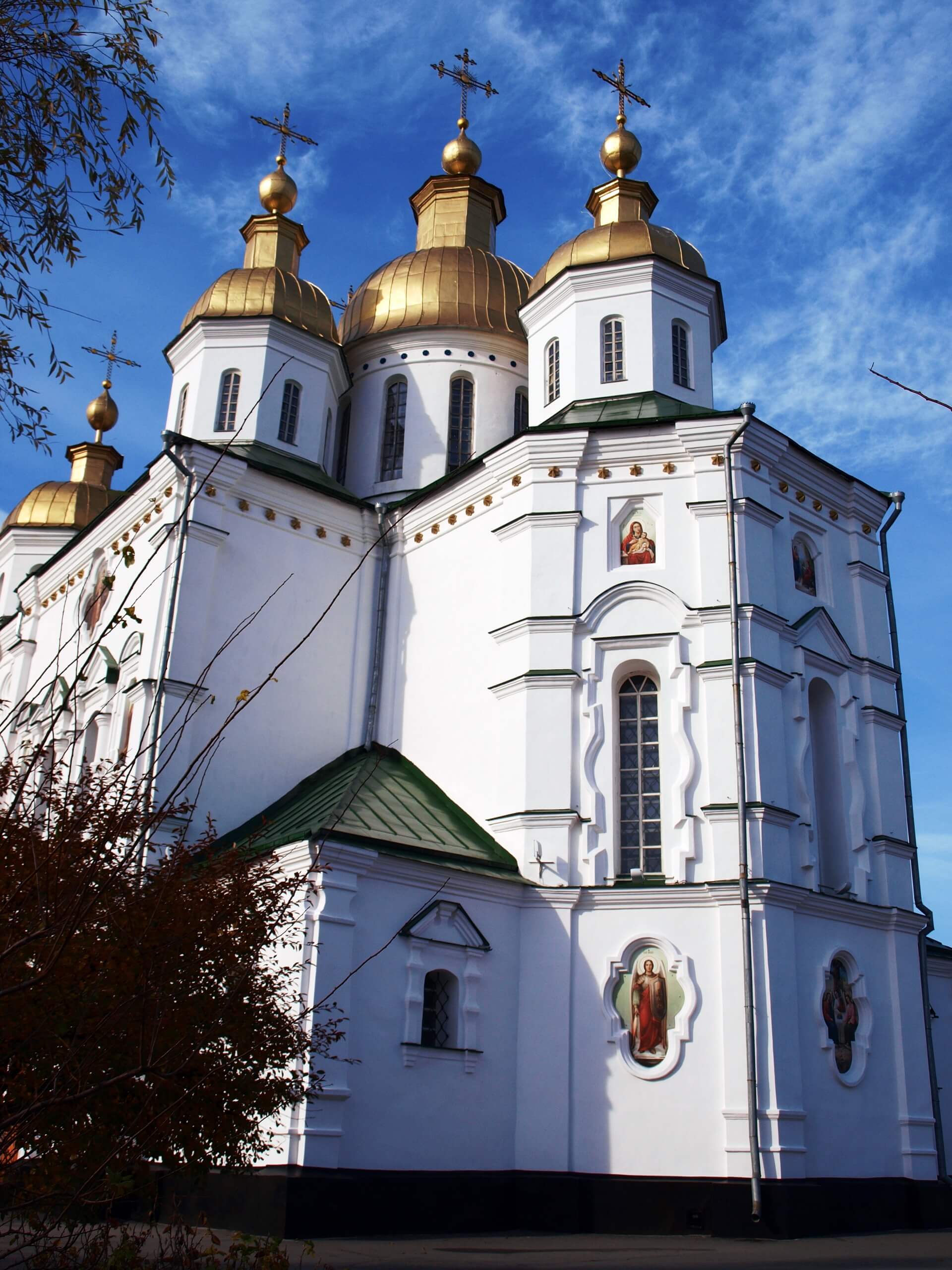
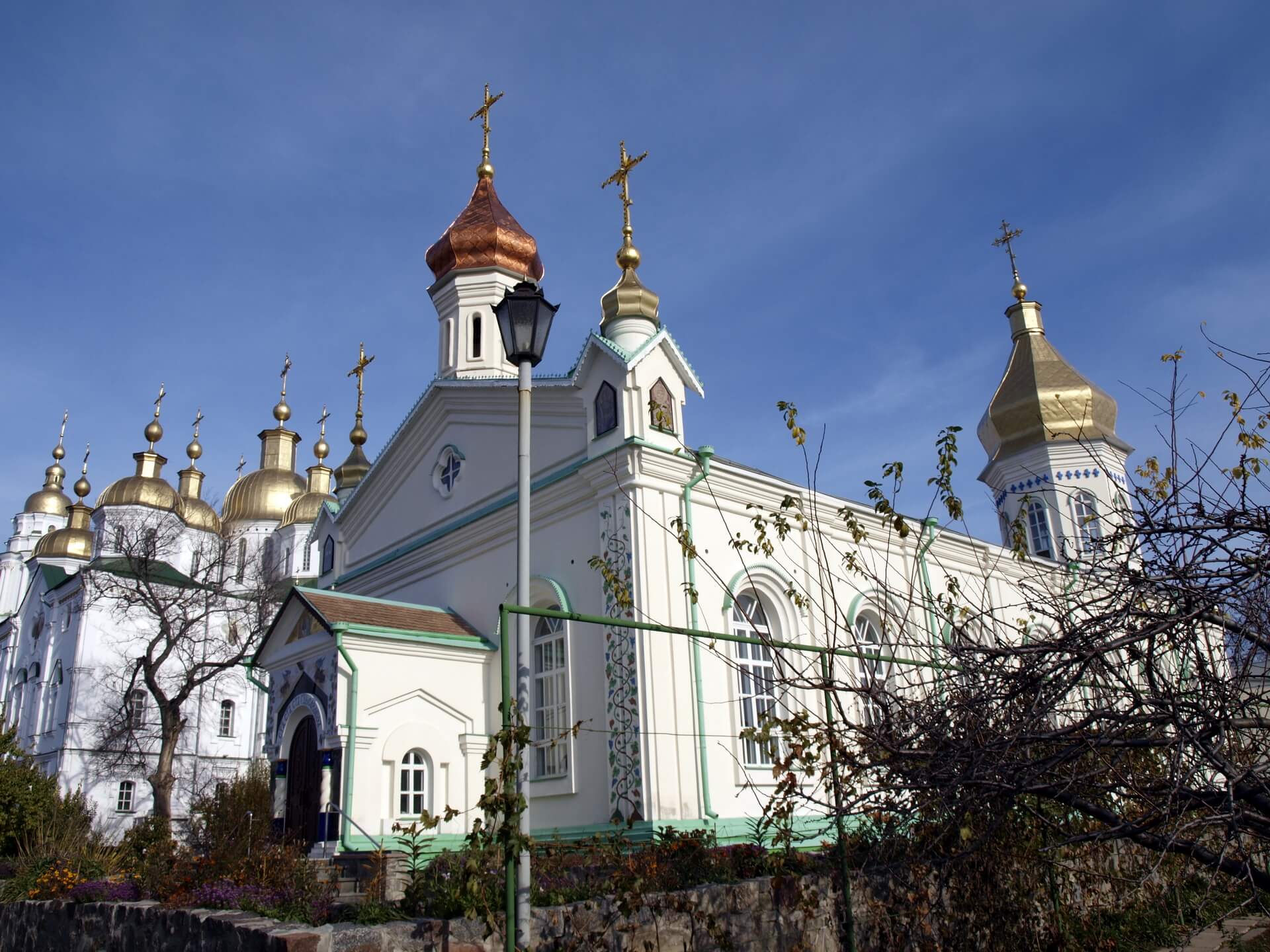
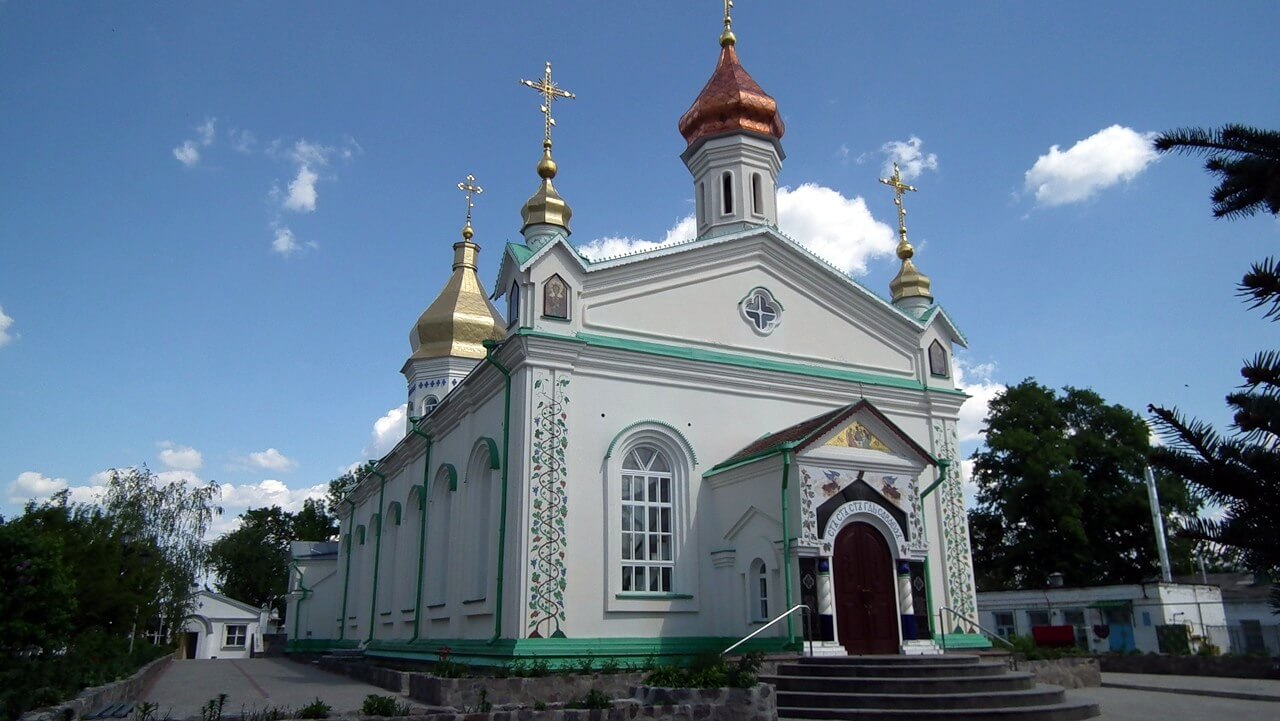
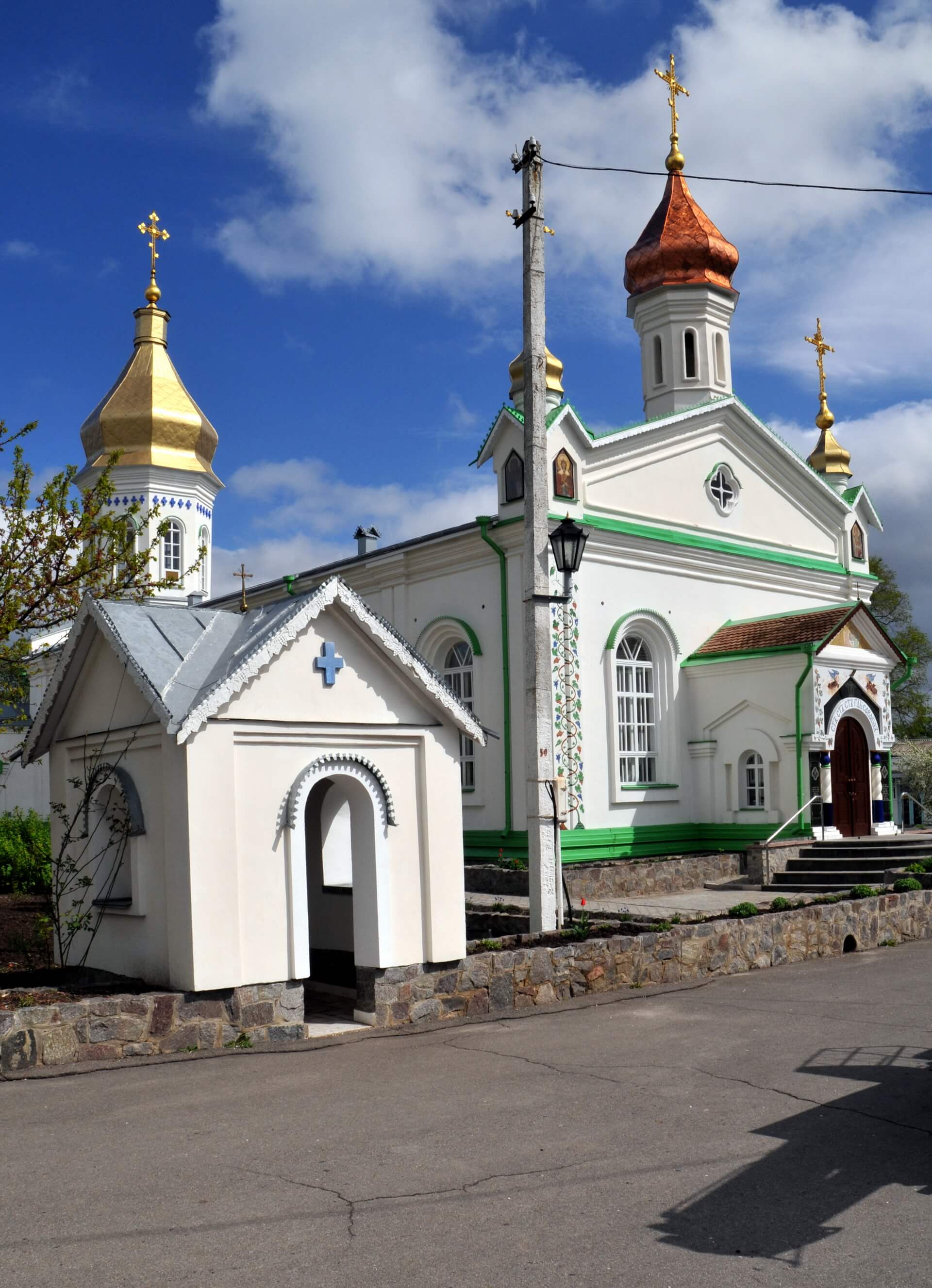
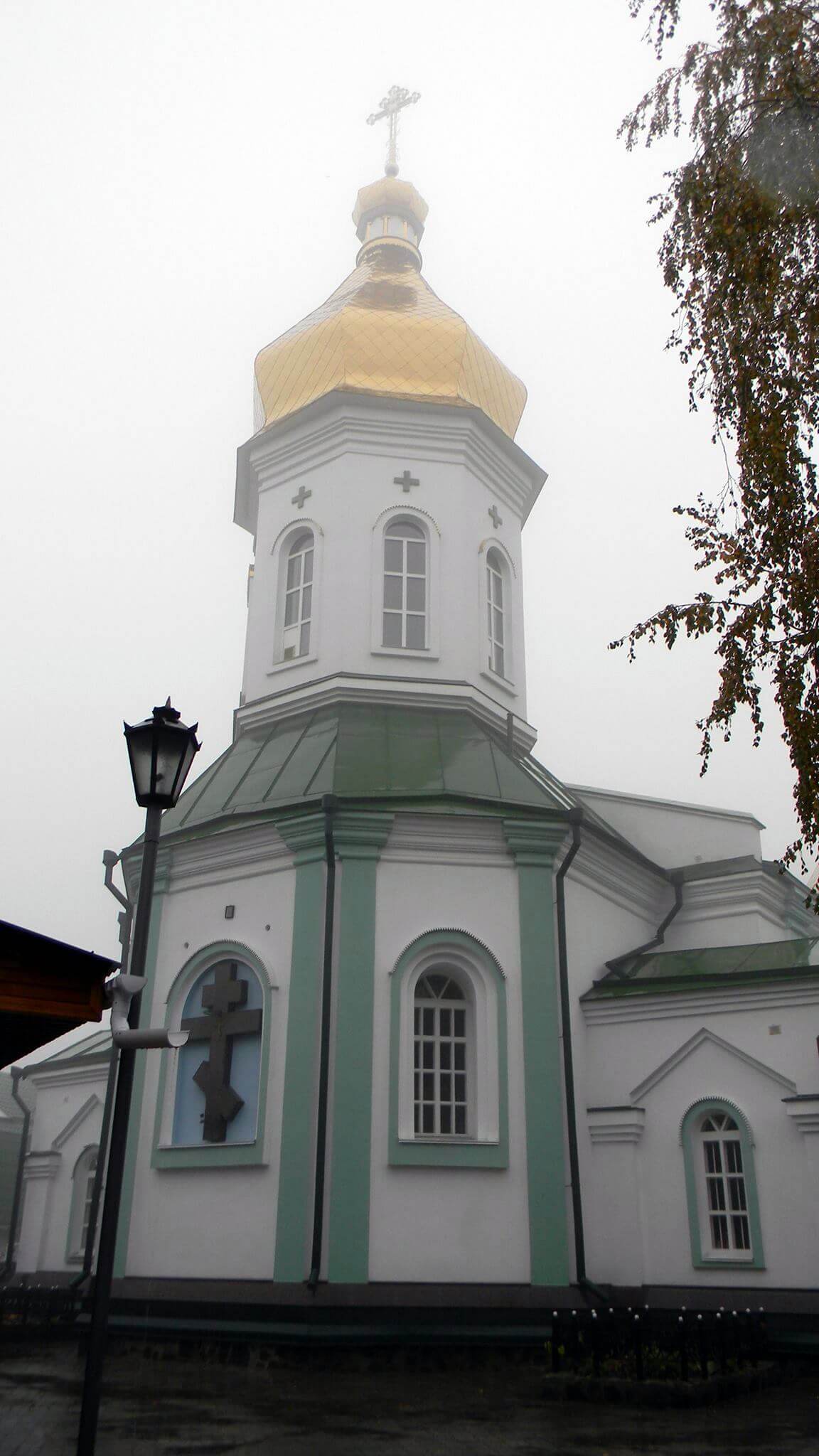
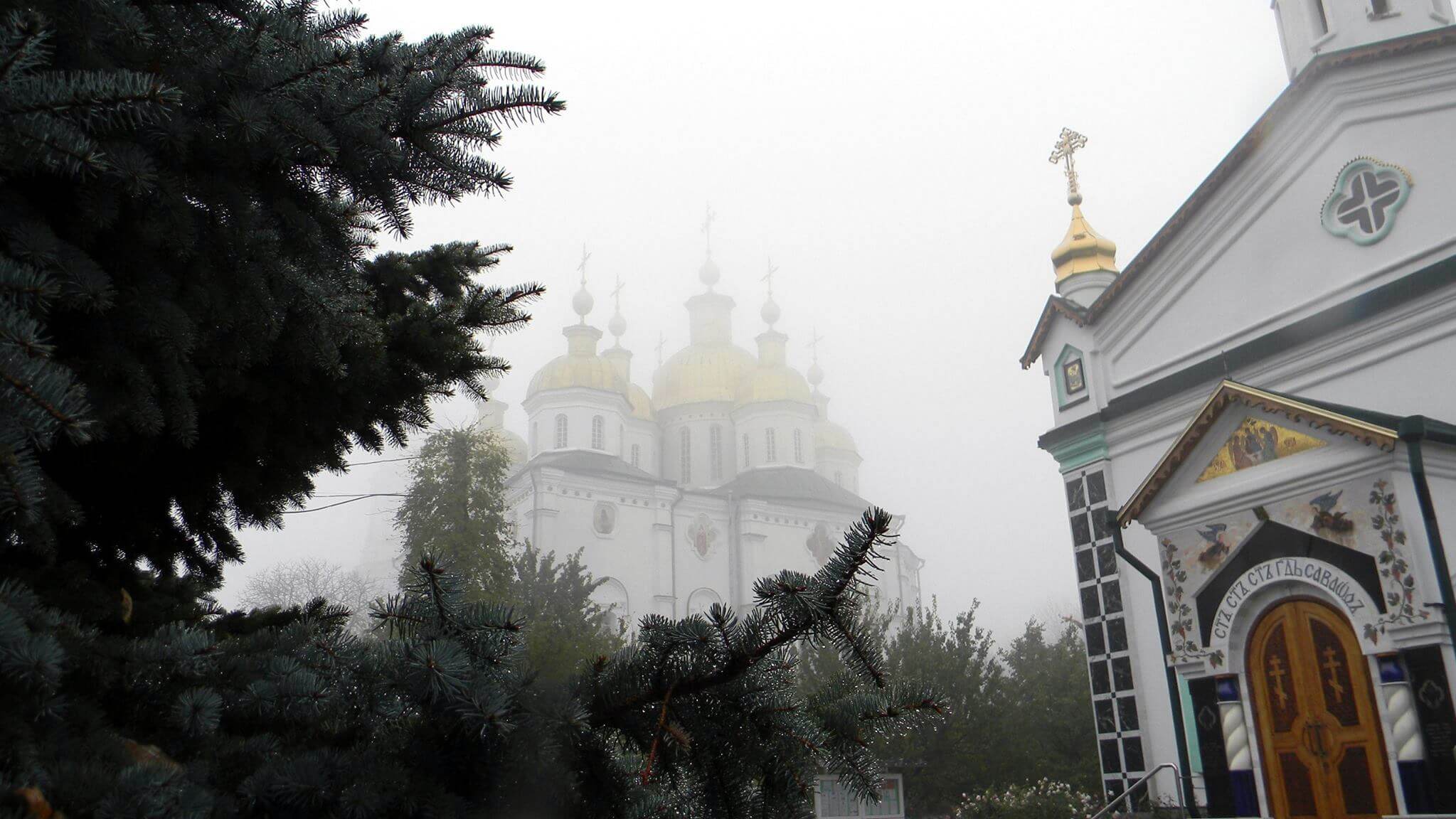
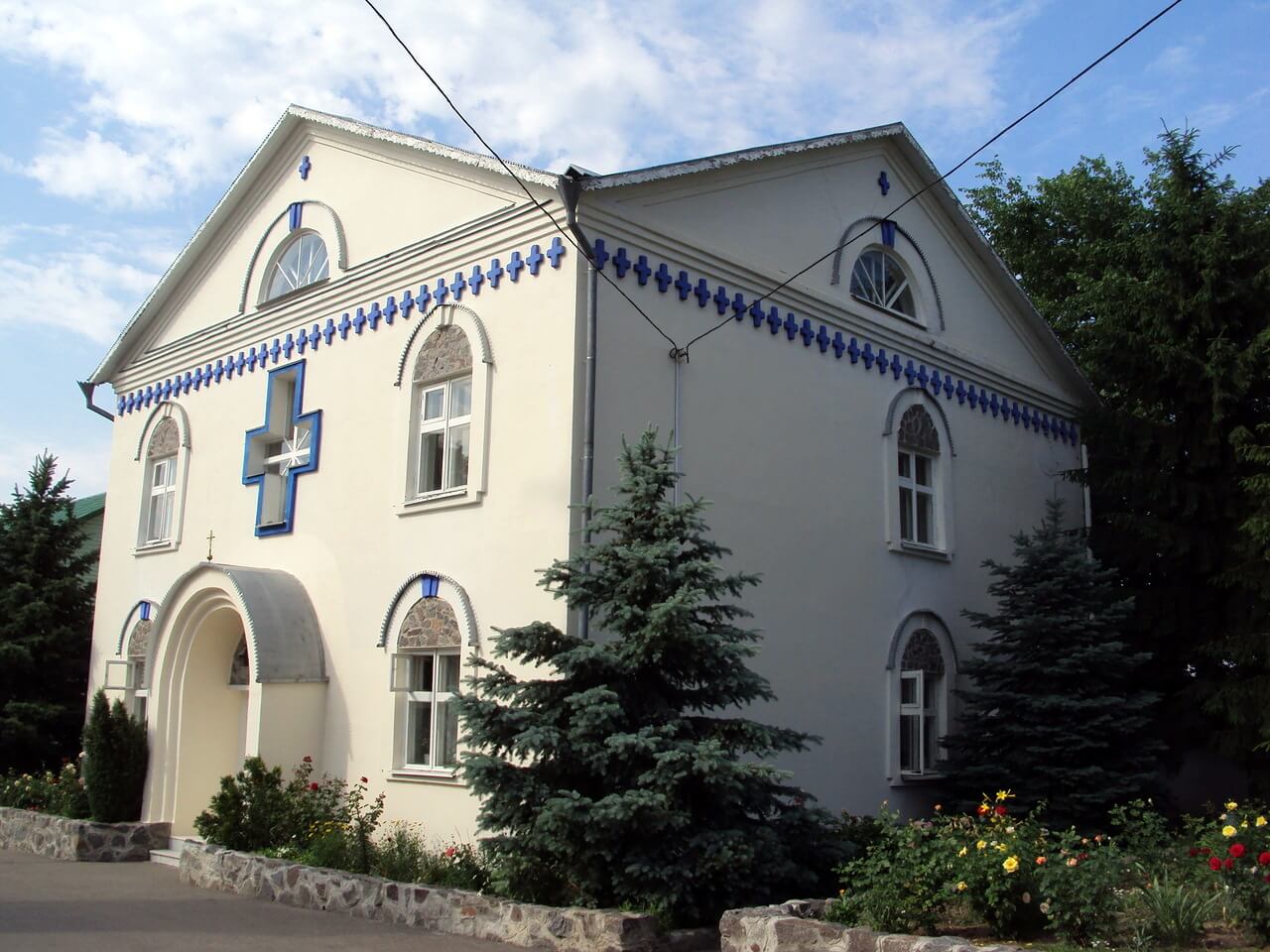
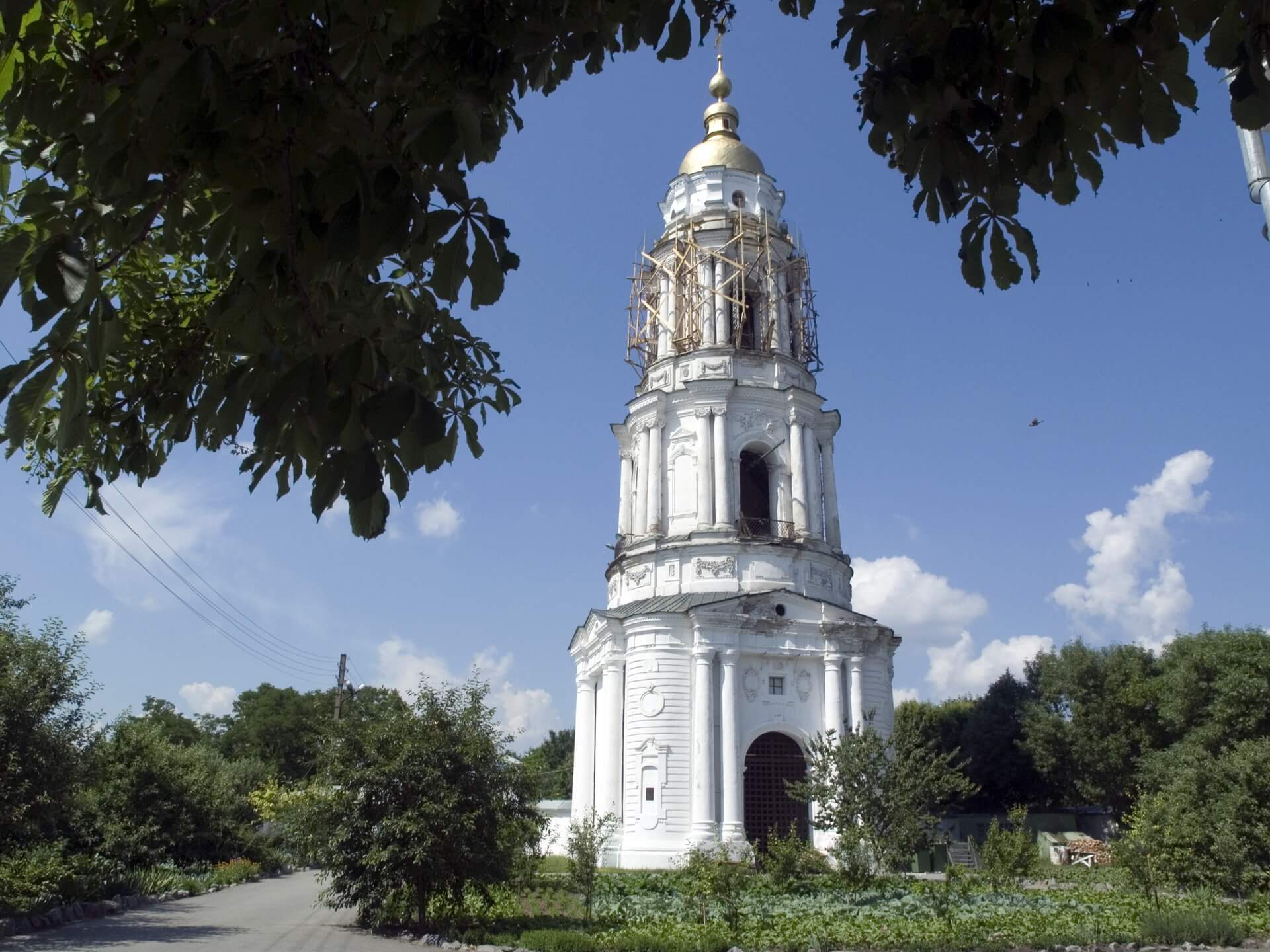
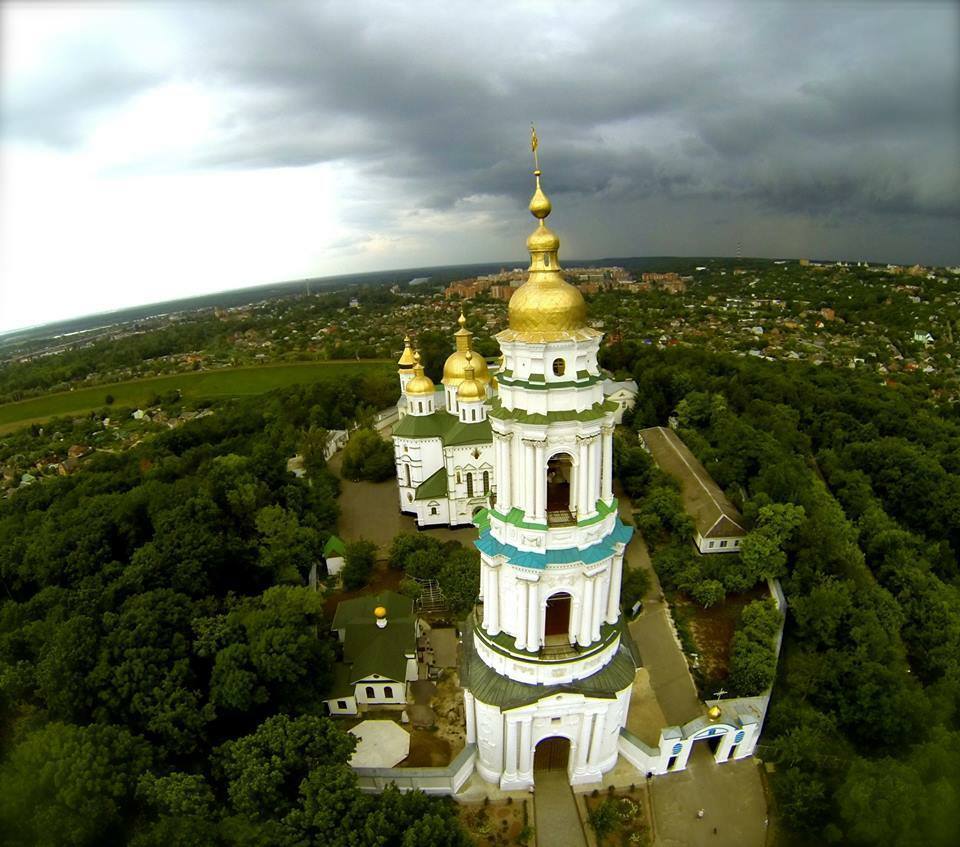
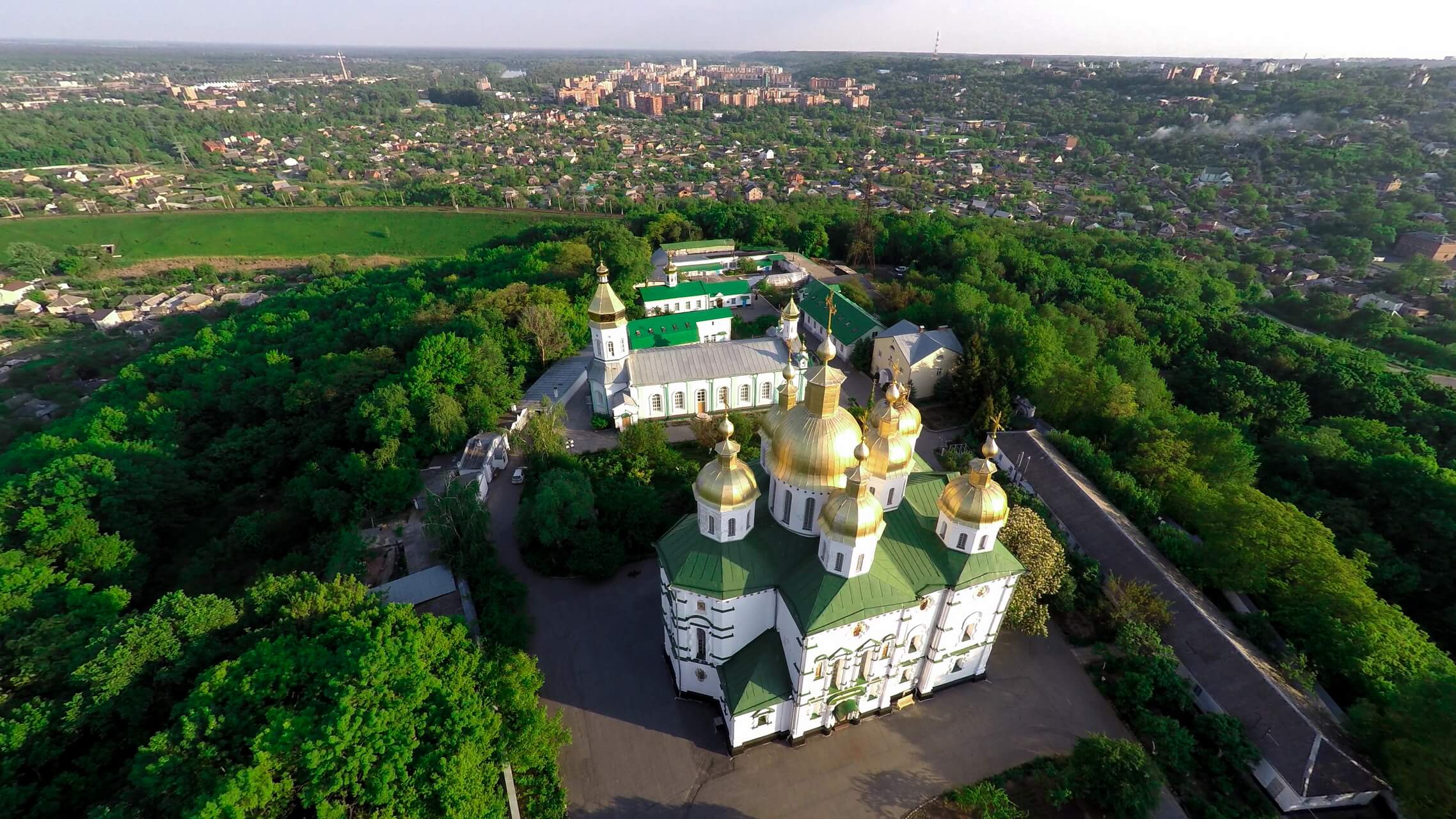
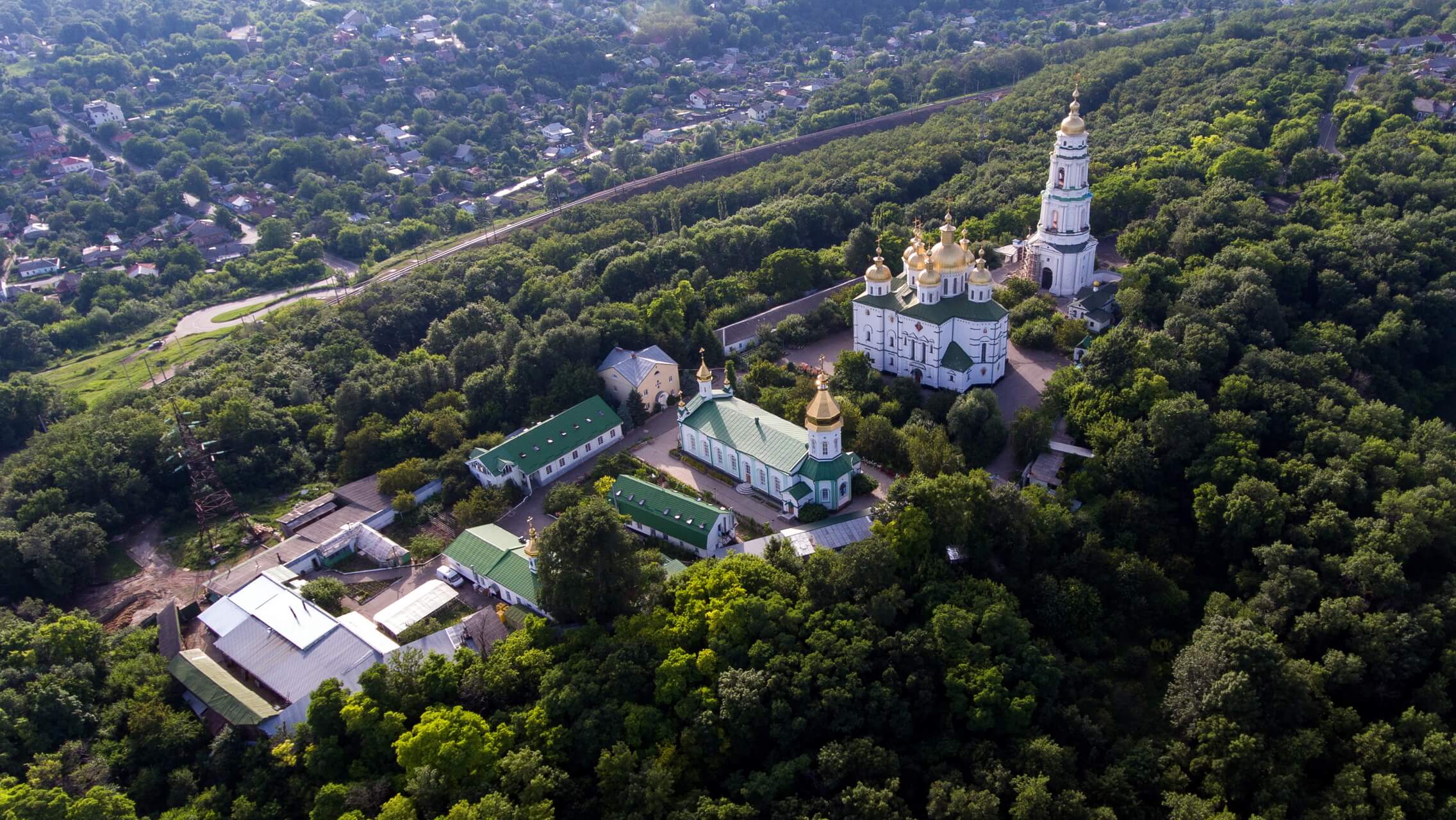
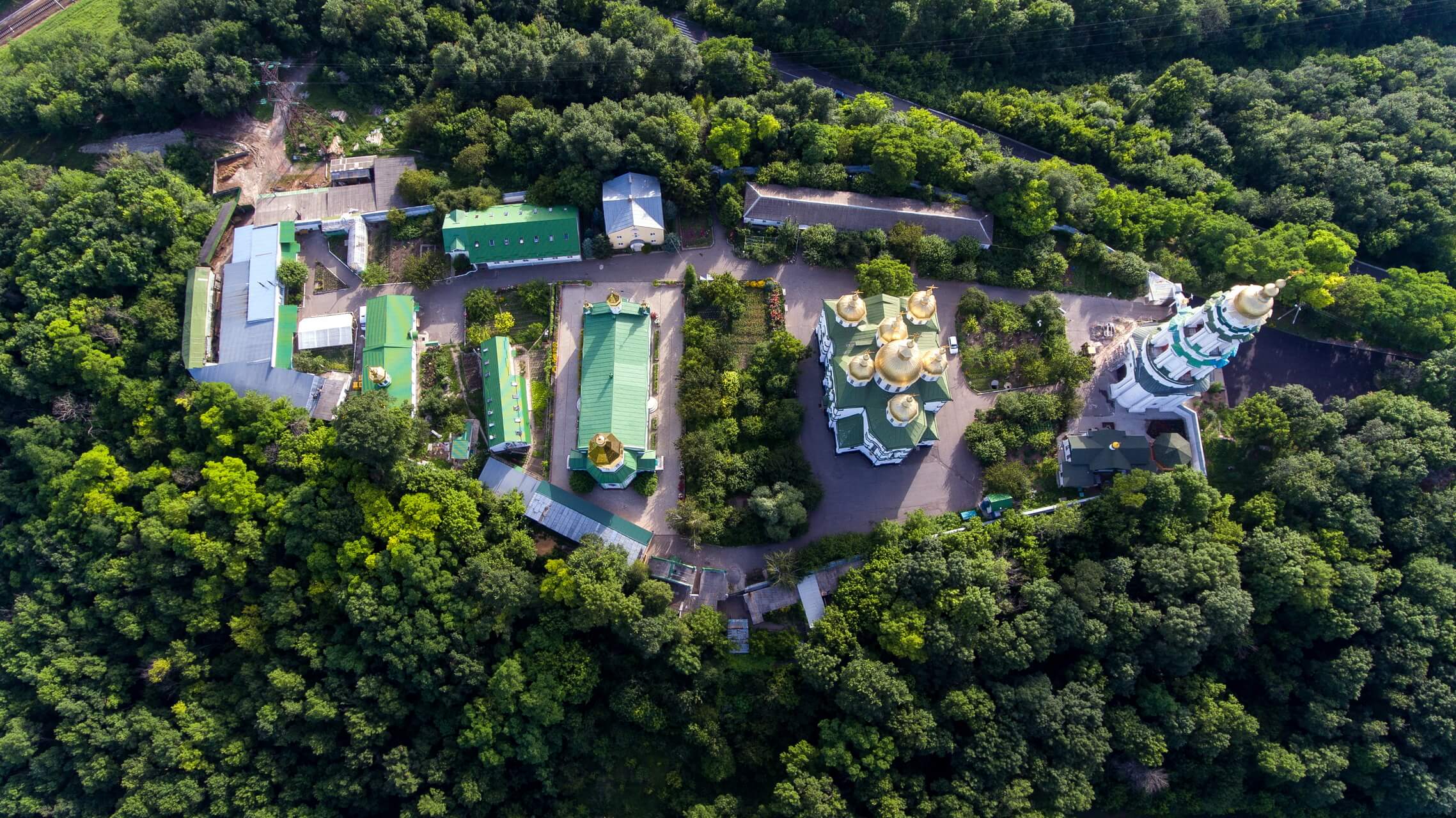
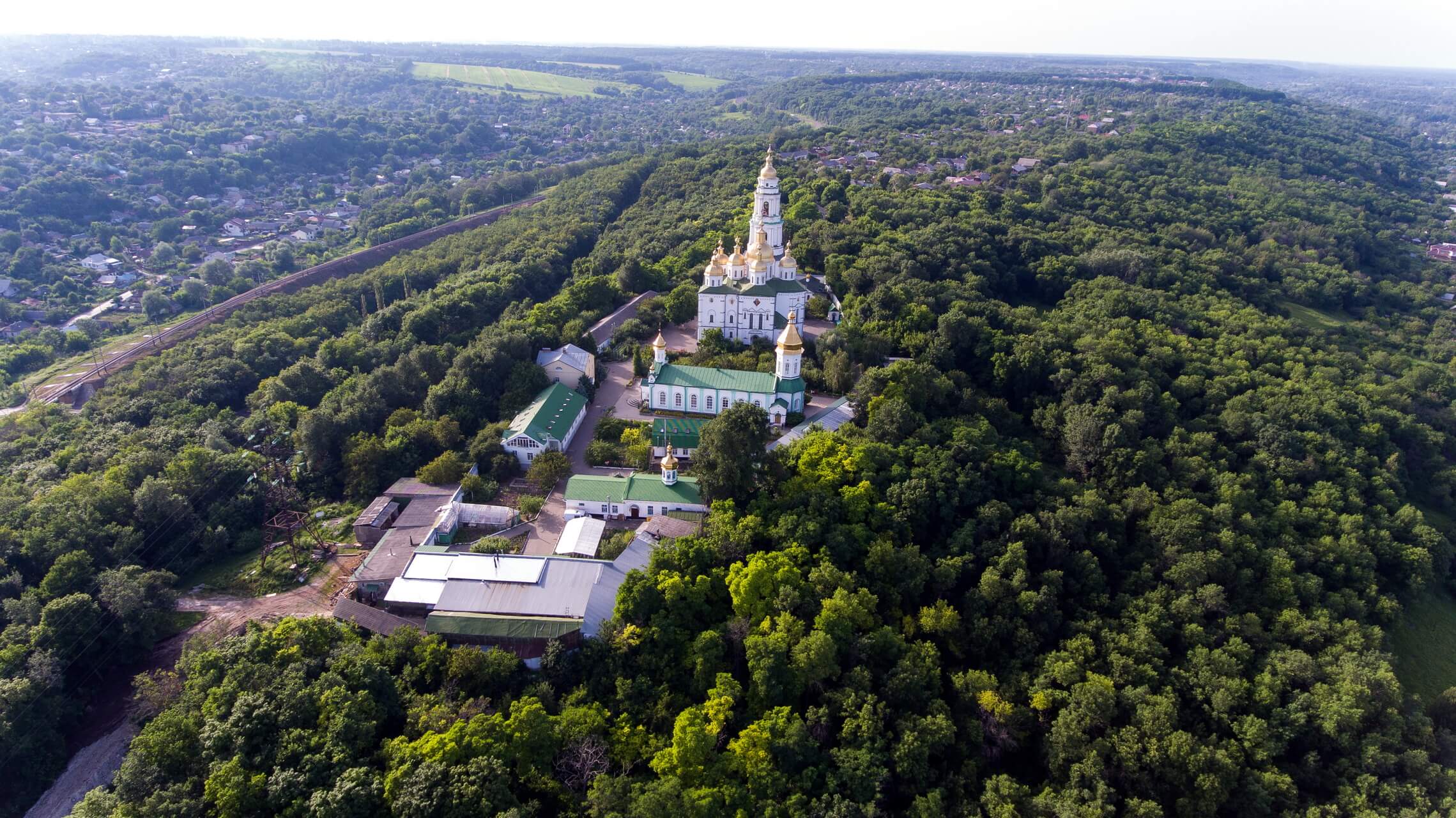
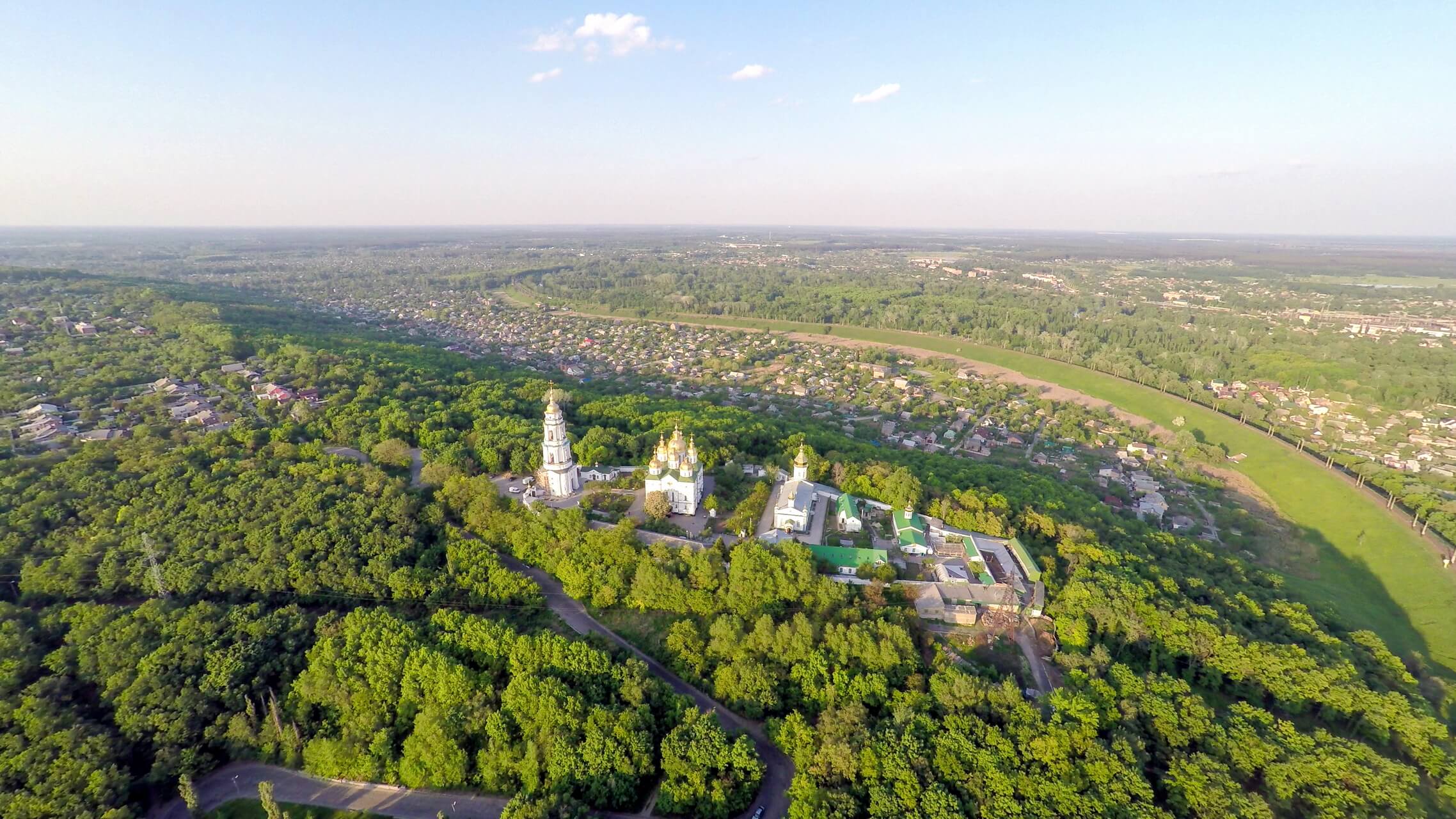
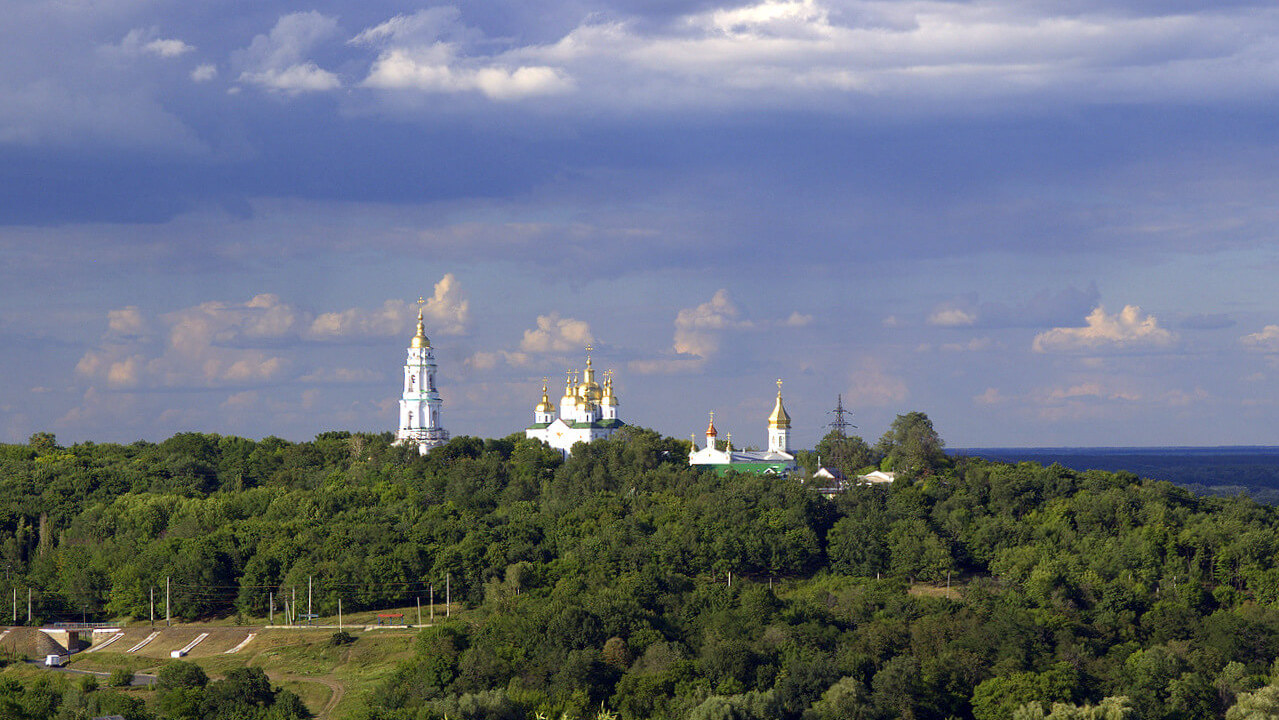
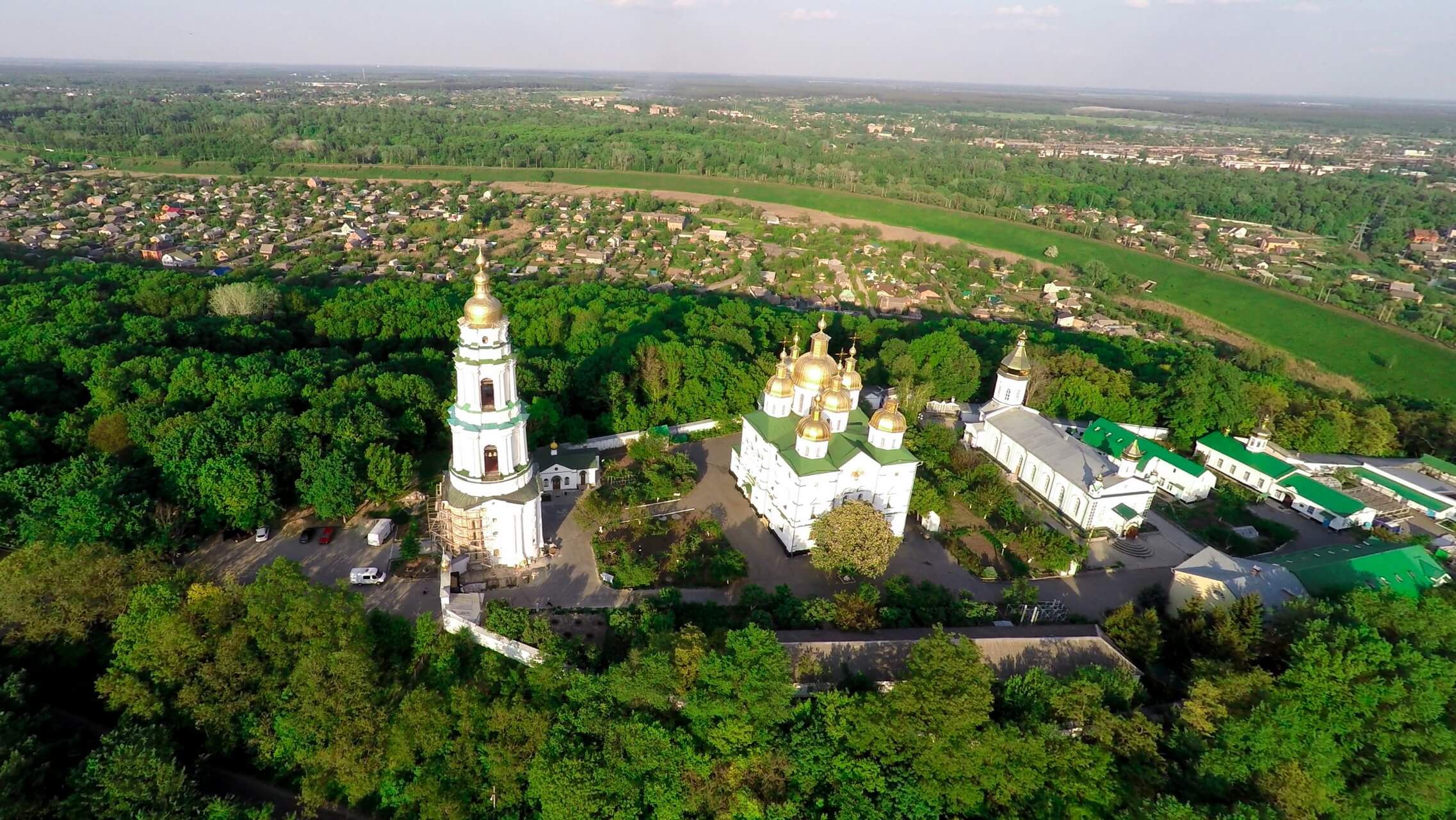
Building in stone began in 1689 at the expense of Hetman Ivan Samoilovych and, after his fall, of Ivan Mazepa and Ivan Iskra4. The Exaltation cathedral was raised at the turn of the seventeenth and eighteenth centuries in Ukrainian baroque and combines three longitudinal naves on six piers, five main domes set in a straight rather than a diagonal cross, and two more on the corners of the narthex2. The cathedral was completed by the general judge Vasyl Kochubei and, after his execution in 1708, by his son Vasyl Vasylyovych Kochubei, colonel of Poltava; it was consecrated in 17564, 6. In 1750 a stone heated refectory with the Holy Trinity church was built4, in 1770 a cell block2, and in 1786 the four-tier, forty-seven-metre belfry in Ukrainian baroque, close in its ornament to the Great Belfry of the Kyiv Caves2, 4. The cathedral's iconostasis was carved in 1772 by Sysoi Shalmatov; destroyed in 1933, it was recreated in 20104, 6. In 1887 the Poltava benefactor Innokentii Kotelnykov built in the monastery a church of the Righteous Symeon the God-Receiver in memory of his only son, who died in Poltava on his way to treatment and asked to be buried here; two years later the same donor put up a second cell block2.
From 1775 to 1786 the house was the residence of the bishops of Slaviansk, and from 1786 to 1797 of those of Katerynoslav1. Here the history of the Slavonic seminary began: in 1778 a school for the monastery's singers was set up in the house, reorganised the same year into a clerical college and moved into the town, and in 1780 turned into a seminary1. Before the seminary was moved to Novomyrhorod in 1798 its pupils included Ivan Kotliarevsky, the translator of the ancient classics Mykola Hnedych, and the Ukrainian writer Vasyl Hohol-Yanovsky, father of Mykola Hohol1. From 1818 a men's clerical college worked at the house, moved into the town in 18761. In 1792 Archbishop Amvrosii (Serebrennykov) of Katerynoslav was buried in the monastery, and in 1801 St Afanasii (Volkhovsky)1. In 1797 the house was rated a second-class men's monastery of the Chernihiv eparchy4, and in 1884, when the vicar see of Pryluky was opened in the Poltava eparchy, it became the vicar bishop's residence1.
In 1845 the monastery was seen by Taras Shevchenko, who drew it in one of his sketches and mentioned it in the tale "The Twins"1. Lines about it appear also in Lina Kostenko's poem "Marusia Churai"1.
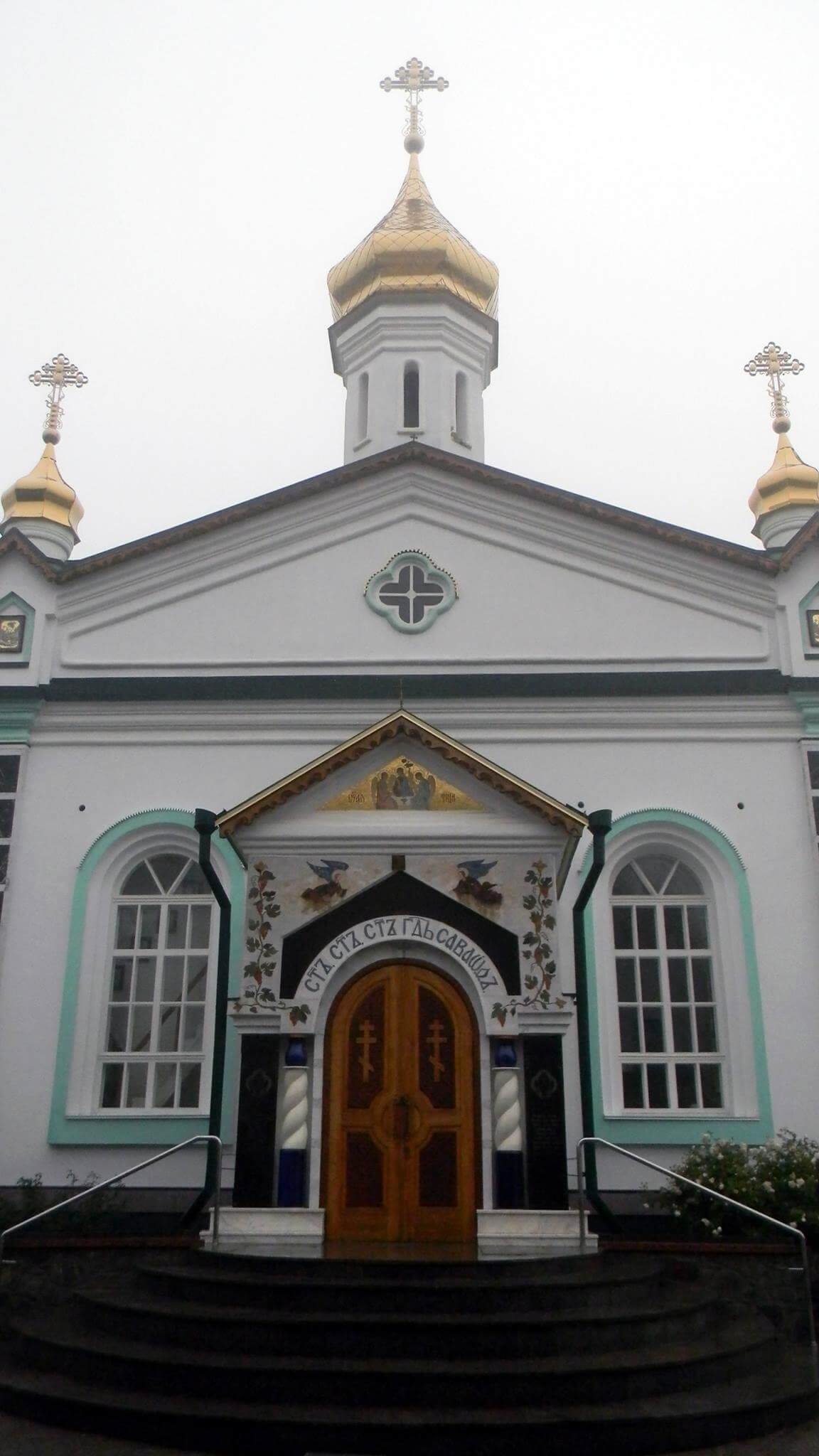
In 1923 the house was closed and its valuables confiscated1, 6. In 1942 a community of nuns obtained, through the restored eparchial administration, permission to resume - now as a women's monastery6. In 1960 the monastery was closed a second time: of eighty-seven sisters, forty-eight were moved to the Lebedyn St Nicholas convent in the Cherkasy region and thirty-nine sent to relatives and to homes for the elderly7. By a decision of the executive committee of the Poltava regional council of 19 February 1990 the buildings were handed to the eparchial administration, and the house was officially opened on 19 December 19917. The group of nuns that pressed for the monastery's return was led by the nun Antoniia (Zhartovska); her grave between the belfry and the cathedral was the first burial of the restored house2, 6, 7. In 1995-1999 a new church was raised on the site of the Holy Trinity church demolished in Soviet times, and in 1991 a memorial sign was set north of the belfry on the site of the destroyed monastic necropolis2. Connected with the house is also the venerable martyr Nil of Poltava, a hieromonk of the Poltava Exaltation monastery: on 14 June 2011, by a decision of the Holy Synod of the Ukrainian Orthodox Church, he was included in the Synaxis of the saints of Poltava, and on 5 January 2013 the Synod entered his name in the menologion of the Church with his memory on 4/17 July9.
The chief holy objects of the house are the icon of the Mother of God "The Hope of All the Ends of the Earth" and the relics of St Afanasii (Volkhovsky)3. The original image, painted in 1821 by the monk Daniil (Moskovchenko) on a cell wall in the monastery belfry, was lost in Soviet times; the single surviving copy, the cell icon of the hieromartyr Vasilii (Zelentsov), was brought to the monastery in the 1990s3. The relics of St Afanasii, believed lost in the 1943 fire at the regional museum where they had been confiscated in the 1920s, were found in the monastery on 2 June 2010; the decision on his canonisation and the rite of glorification followed on 28 May and 10 October of the same year3. The house is working today: the Poltava eparchy keeps the monastery on its list of working houses8.
Show sources
- 1. «Історія» (official site). Хрестовоздвиженський Полтавський жіночий монастир (офіційний сайт) (accessed: 2026-08-22)
- 2. «Архітектура» (official site). Хрестовоздвиженський Полтавський жіночий монастир (офіційний сайт) (accessed: 2026-08-22)
- 3. «Святині» (official site). Хрестовоздвиженський Полтавський жіночий монастир (офіційний сайт), 2013 (accessed: 2026-08-22)
- 4. Вечерський В. В. «Хрестовоздвиженський монастир у Полтаві» (encyclopaedia). Велика українська енциклопедія (accessed: 2026-08-22)
- 5. «Полтавський Хрестовоздвиженський монастир» (encyclopaedia). Енциклопедія Сучасної України (accessed: 2026-08-22)
- 6. «Ювілей Полтавського Хрестовоздвиженського монастиря» (heritage register). Полтавський краєзнавчий музей імені Василя Кричевського, 2020 (accessed: 2026-08-22)
- 7. Тристанов Б. «Полтавський Хрестовоздвиженський монастир» (academic publication). Історія Полтави (history.zmist.pl.ua) (accessed: 2026-08-22)
- 8. «Полтавський Хрестовоздвиженський жіночий монастир» (eparchy website). Полтавська єпархія Української Православної Церкви (accessed: 2026-08-22)
- 9. «Журнали засідання Священного Синоду Української Православної Церкви від 5 січня 2013 року» (church document). Священний Синод Української Православної Церкви (sinod.church.ua), 2013 (accessed: 2026-08-22)
- Journal No. 27 session of the Holy Synod of UOC on 17.08.2020 year
- Journal No. 11 session of the Holy Synod of UOC on 10.02.2011 year
- Journal No. 77 session of the Holy Synod of UOC on 23.09.2008 year