Inkerman St. Clement's Monastery
44.603878, 33.607583
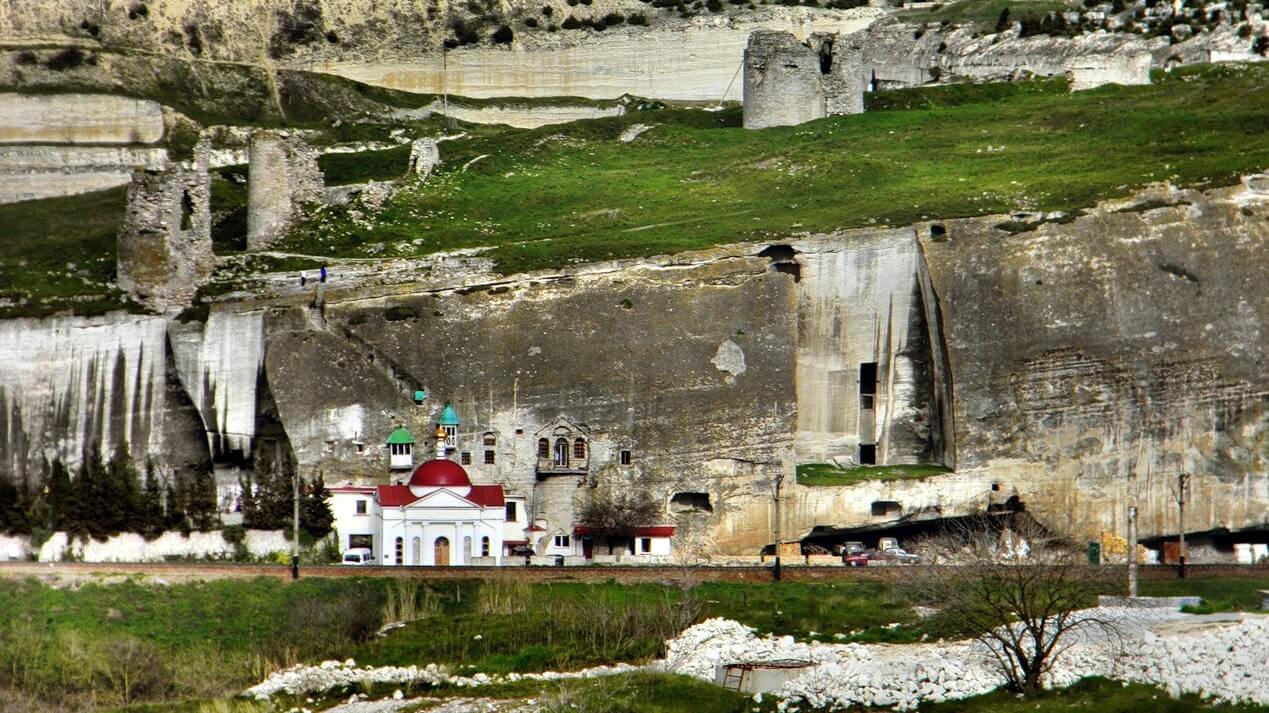
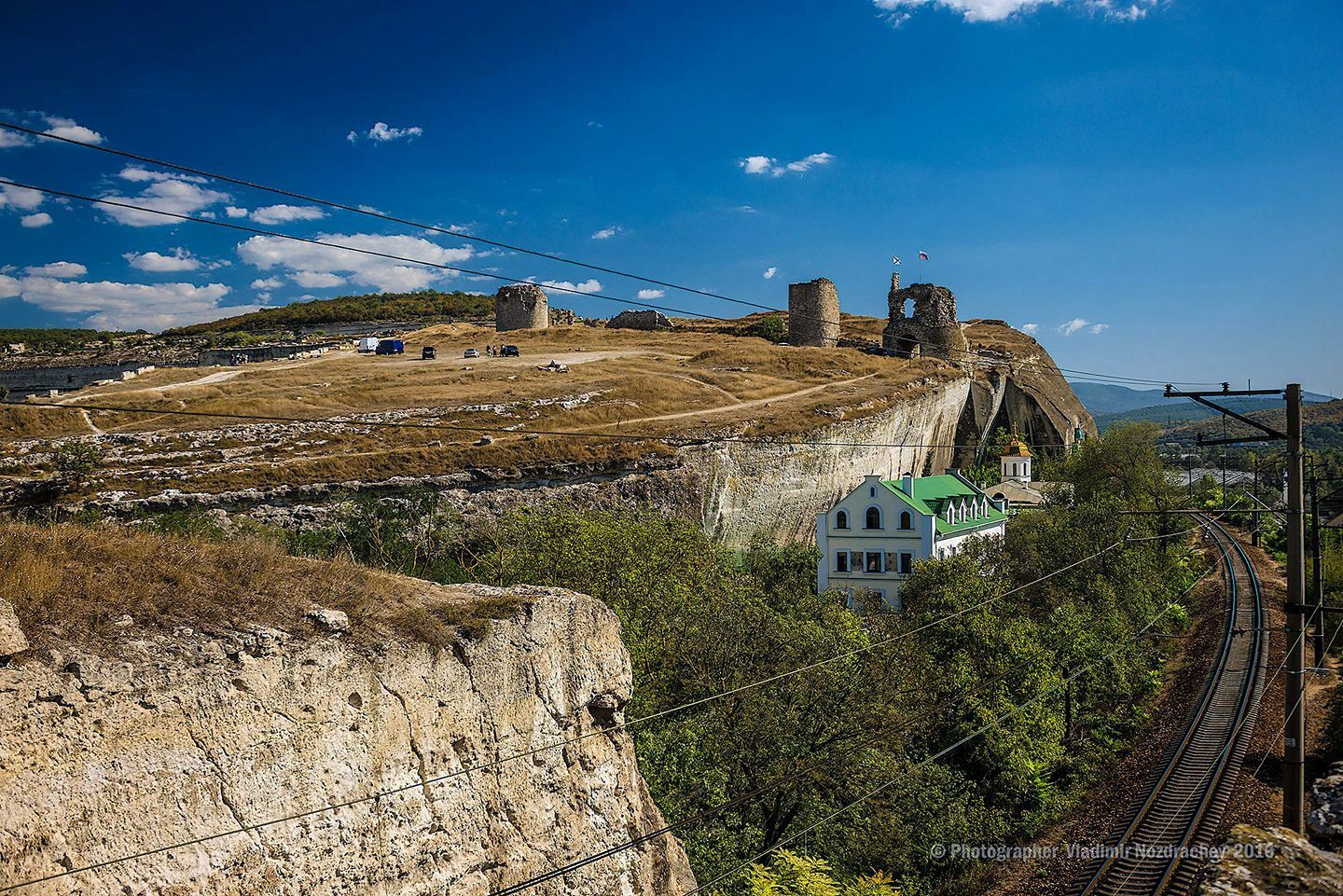
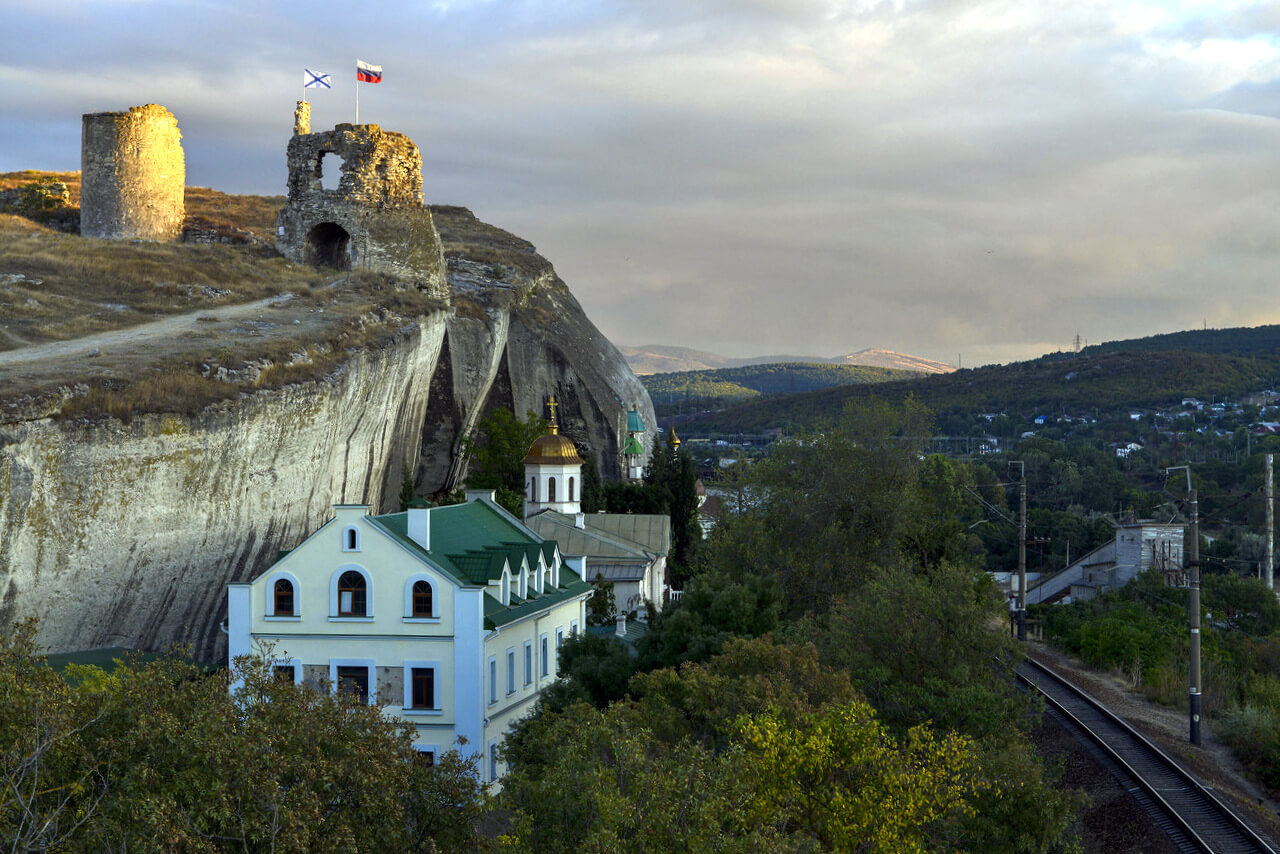
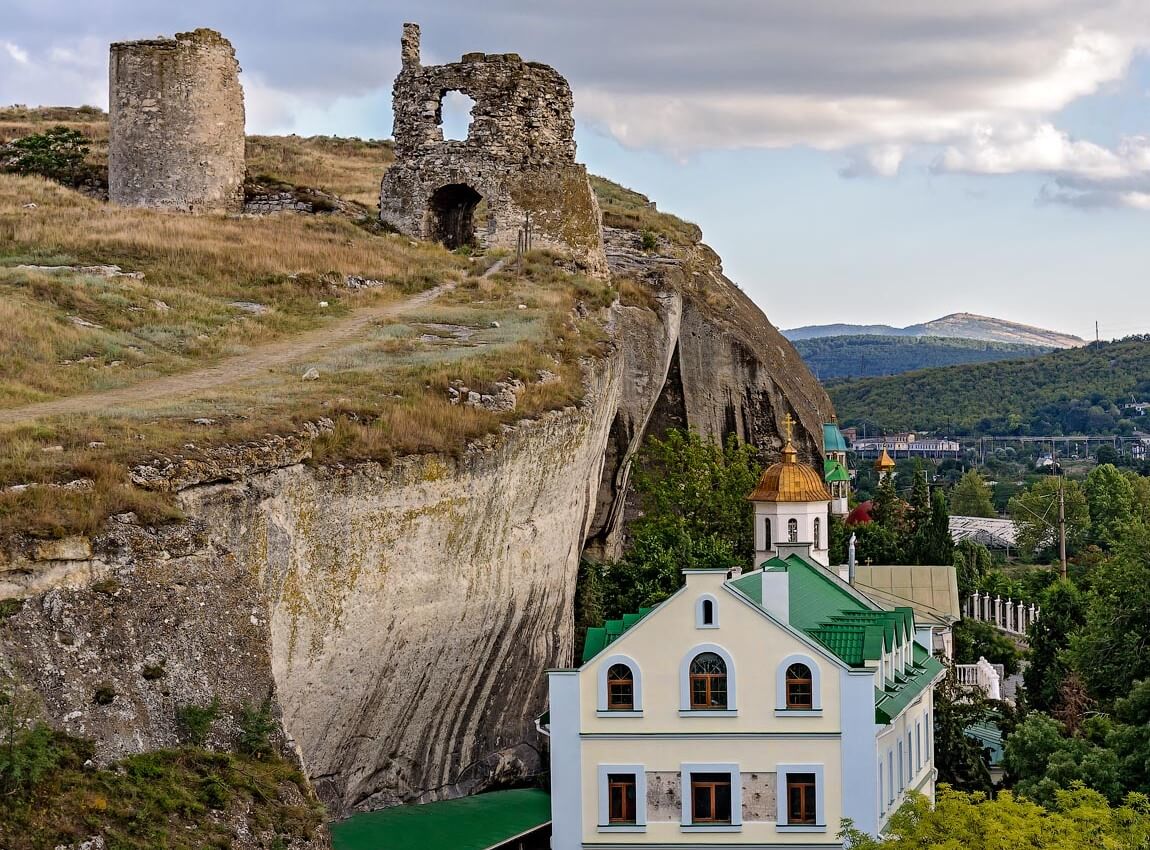
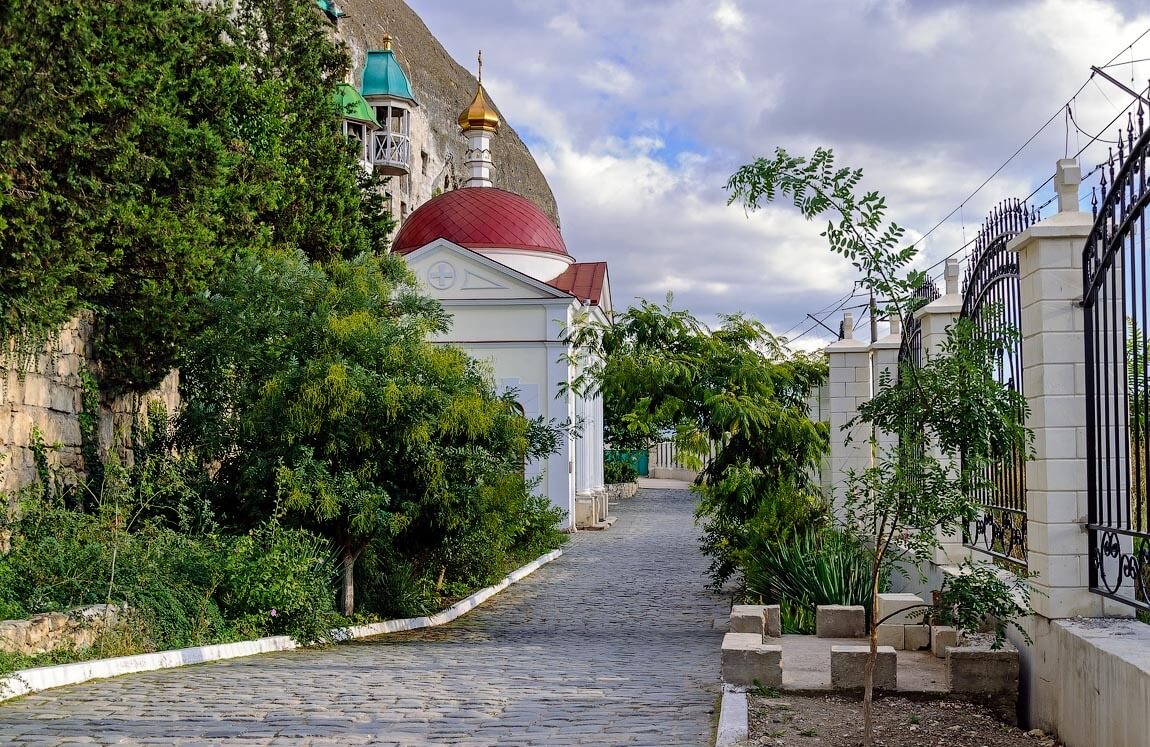
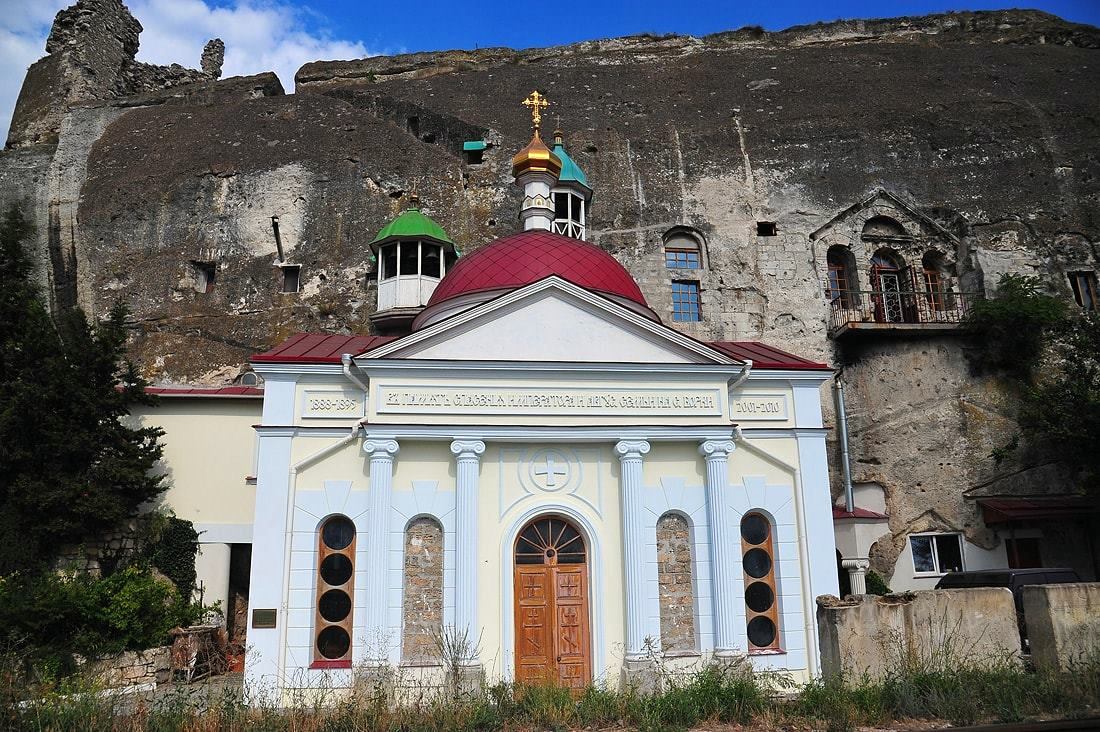
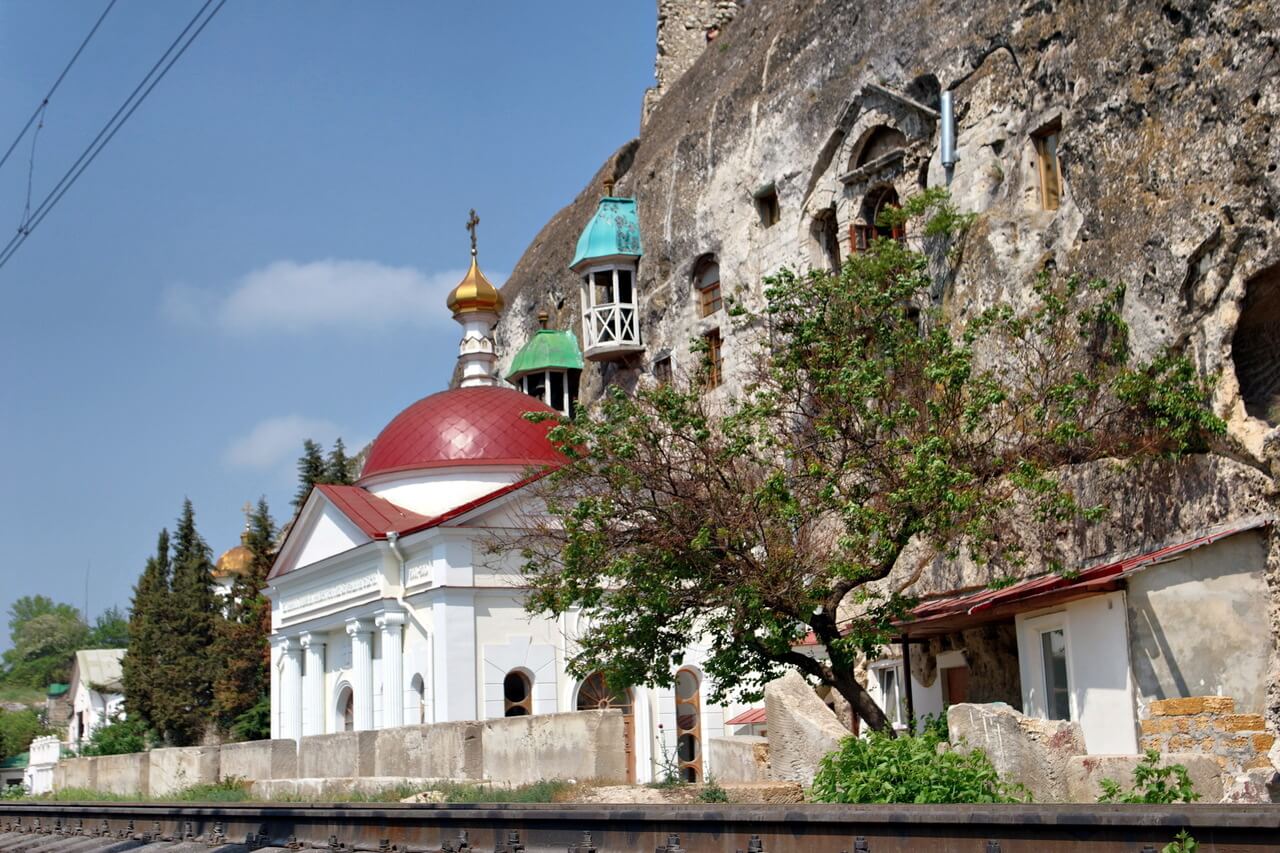
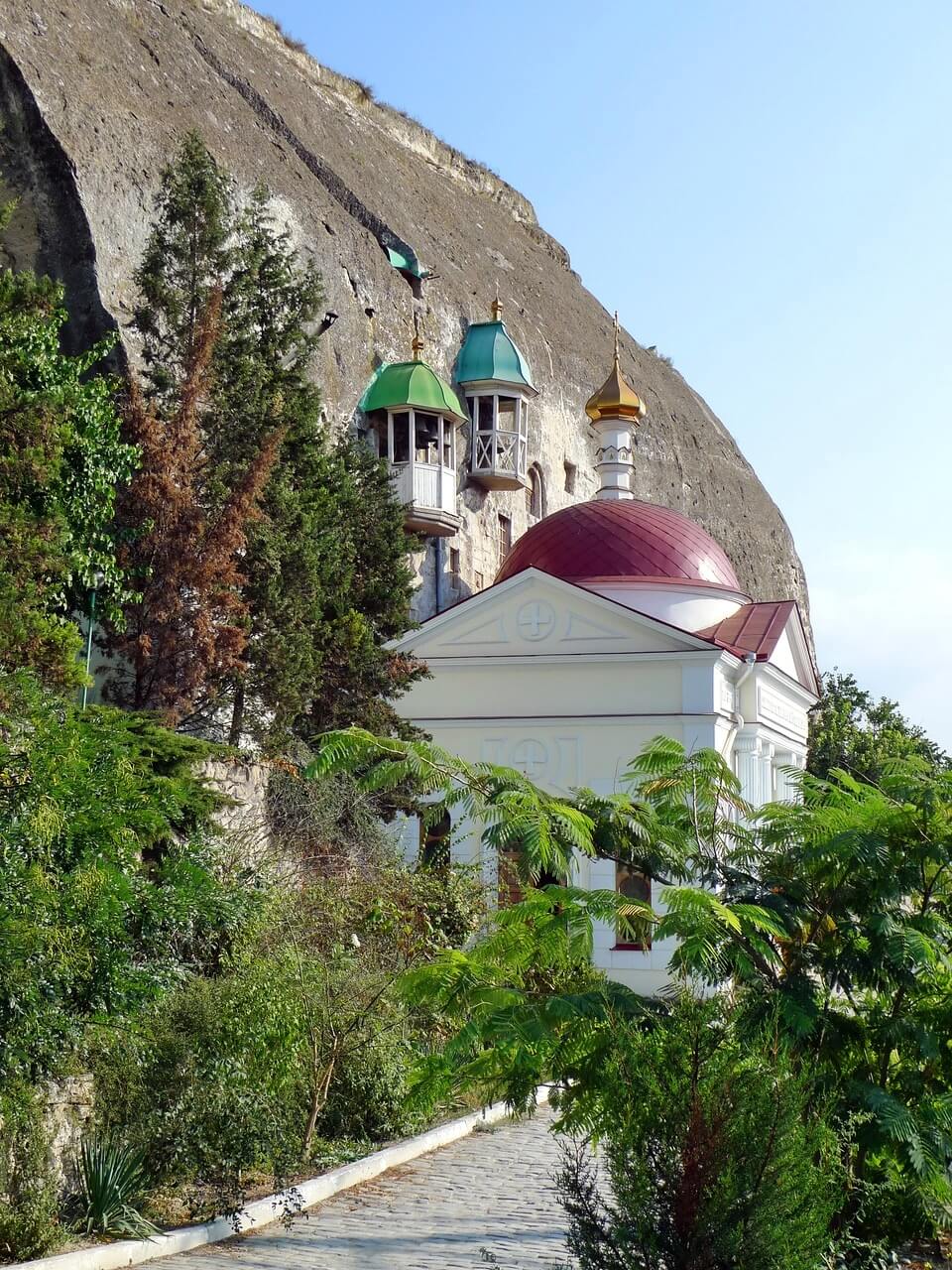
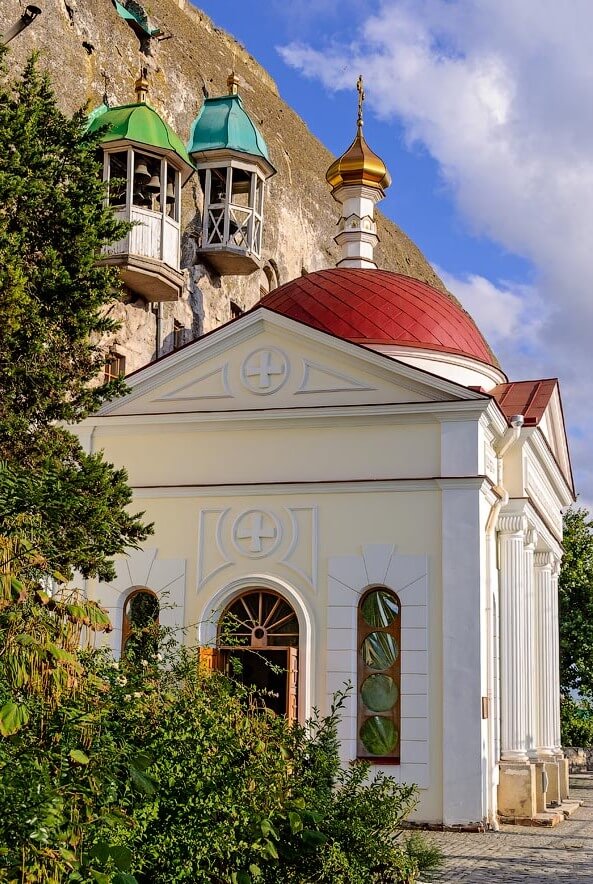
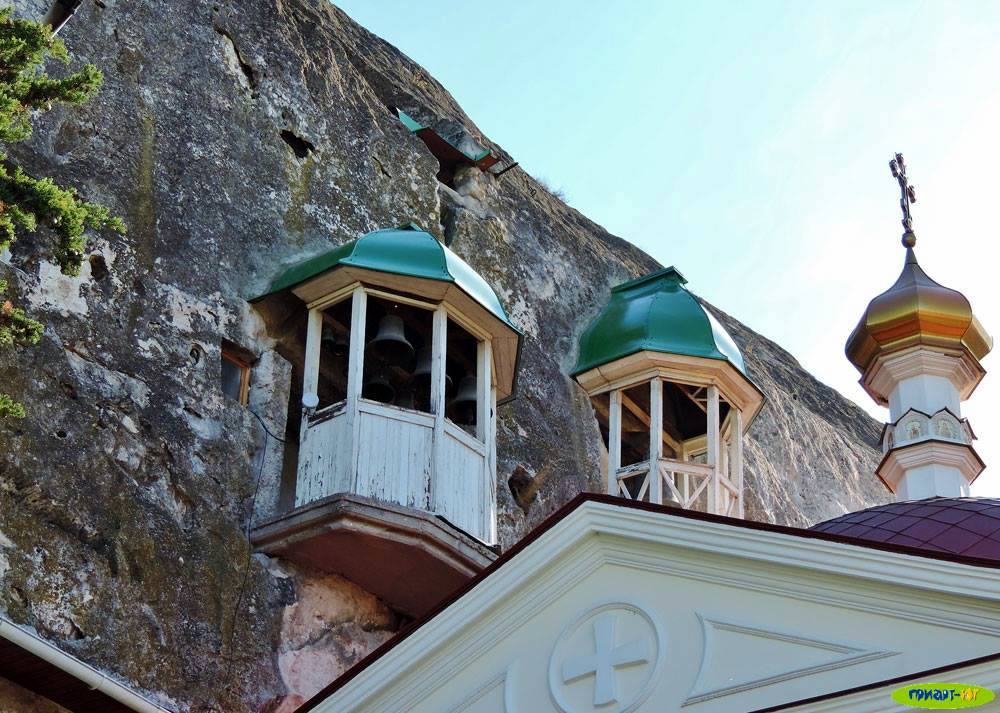
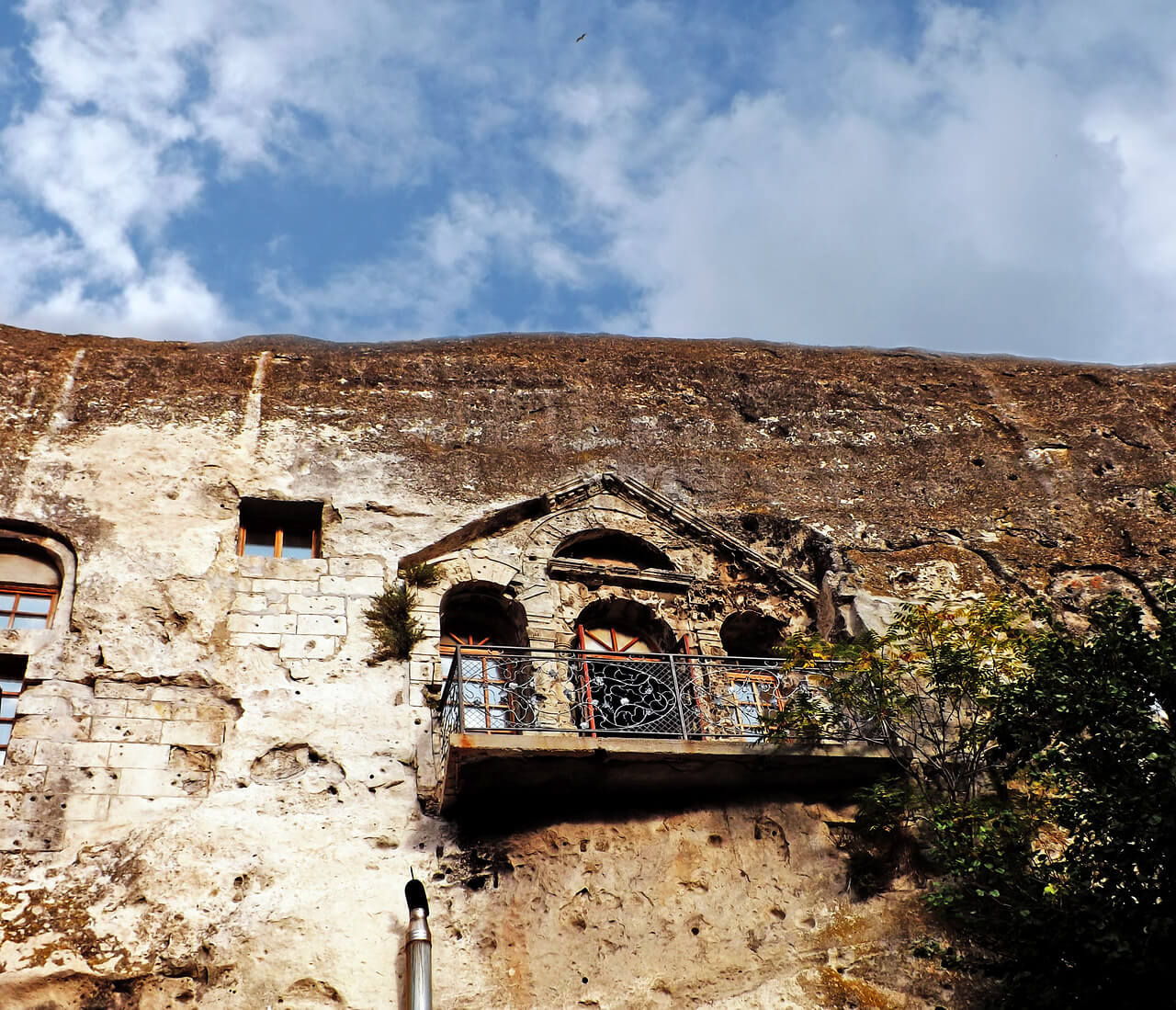
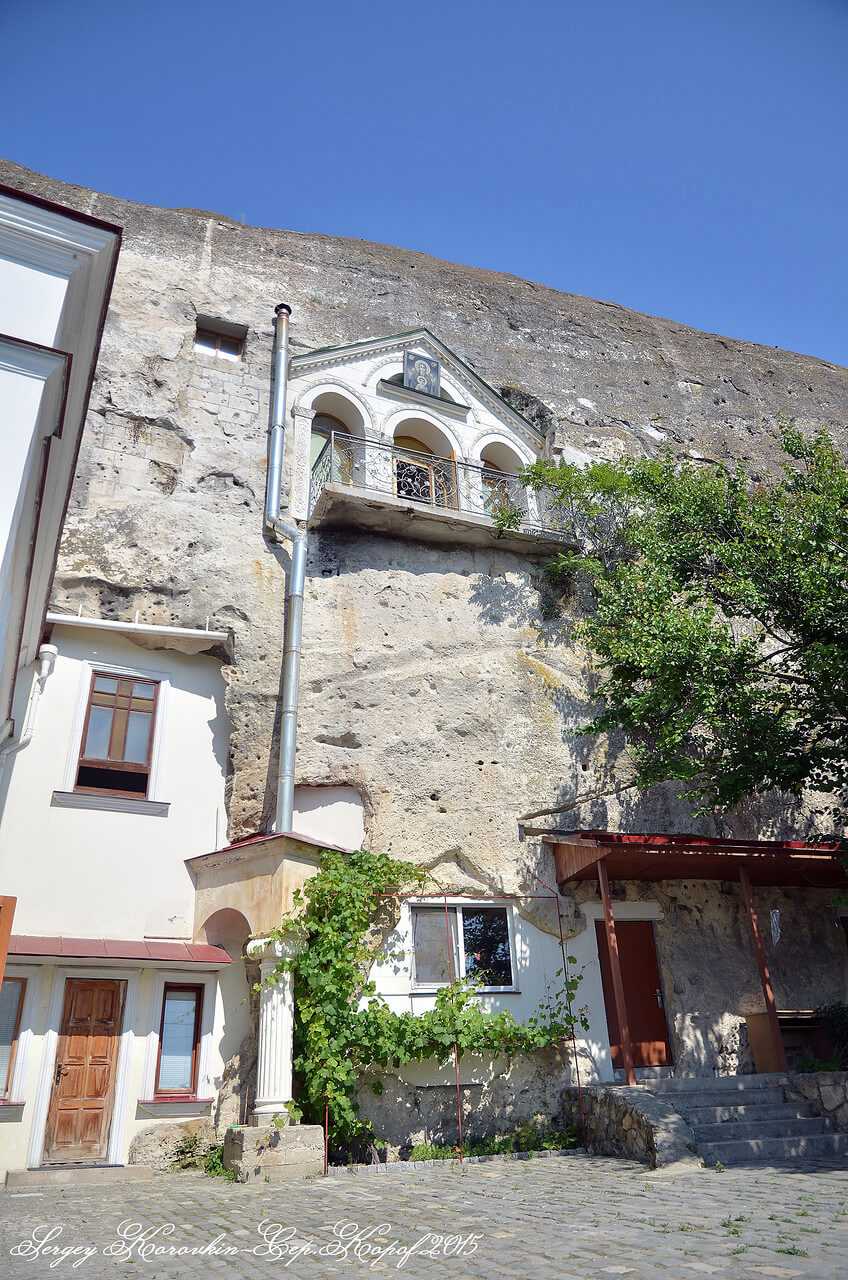
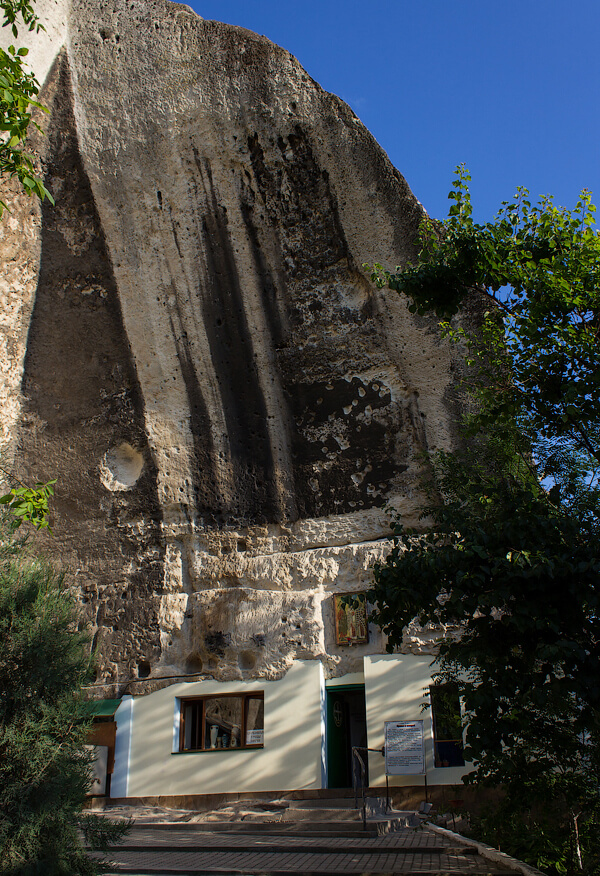
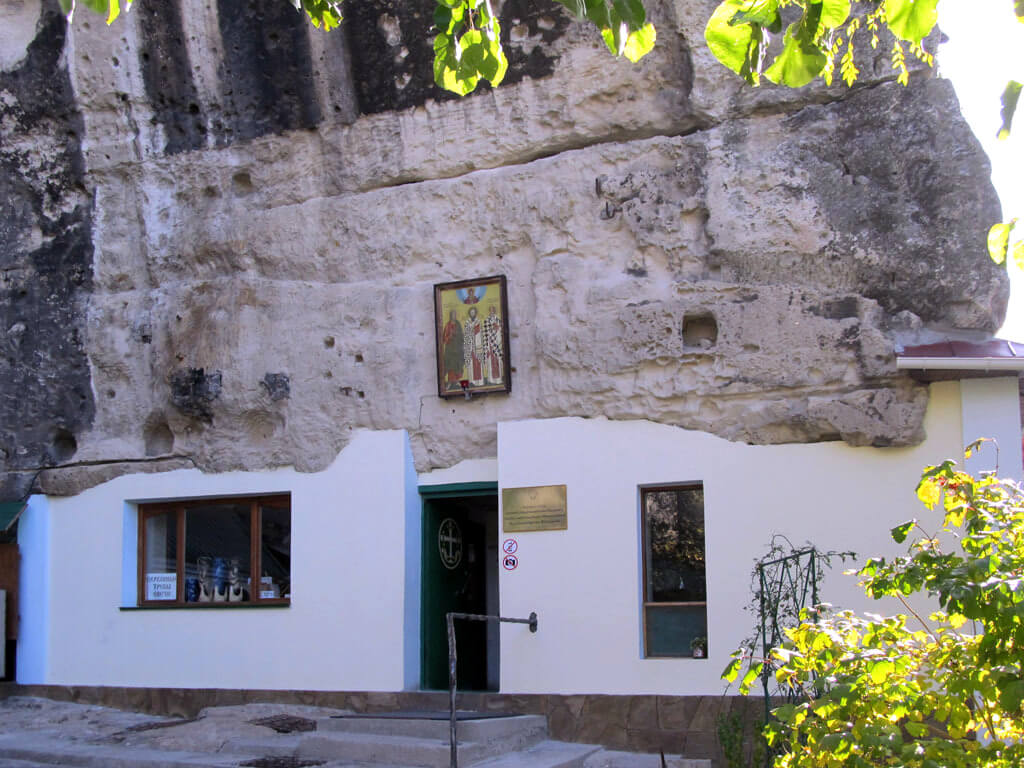
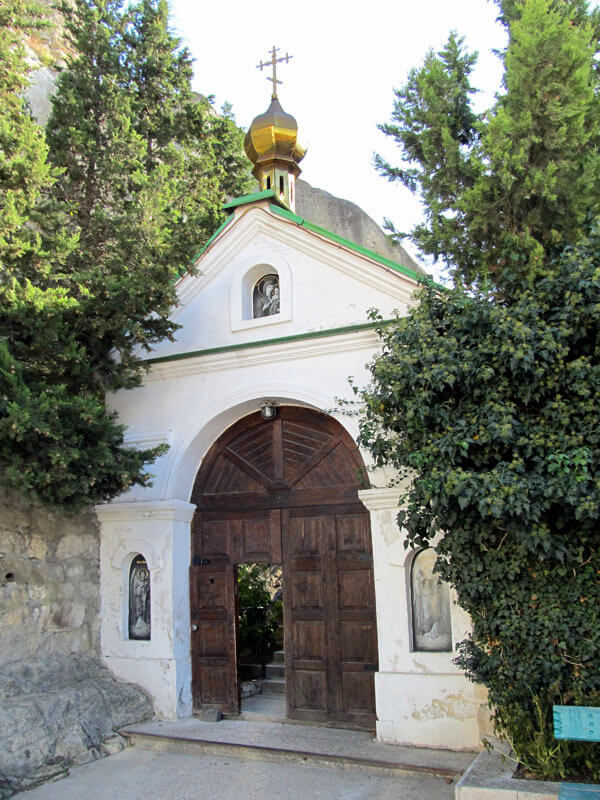
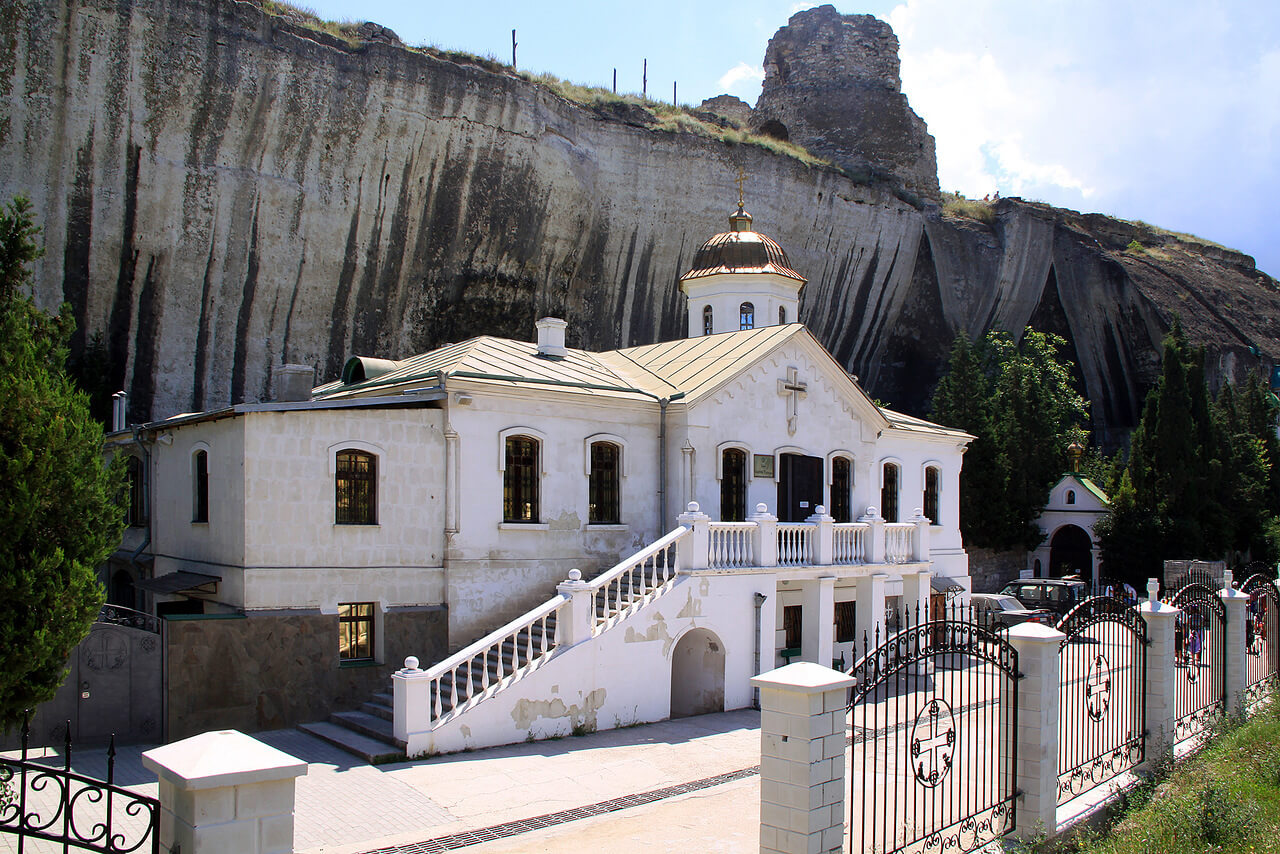
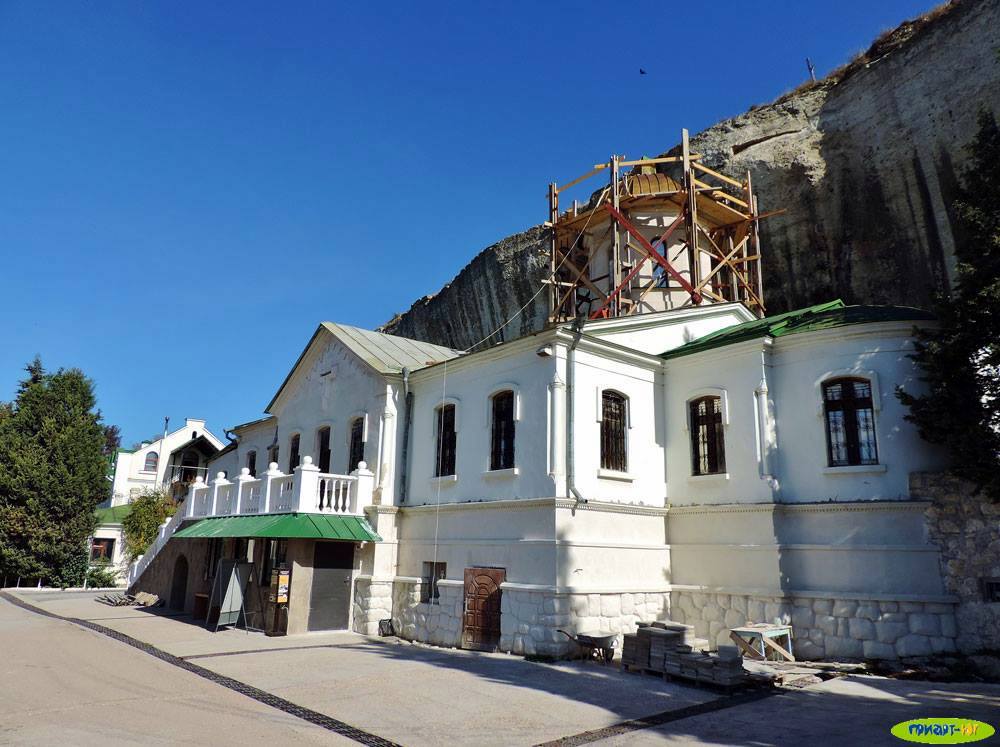
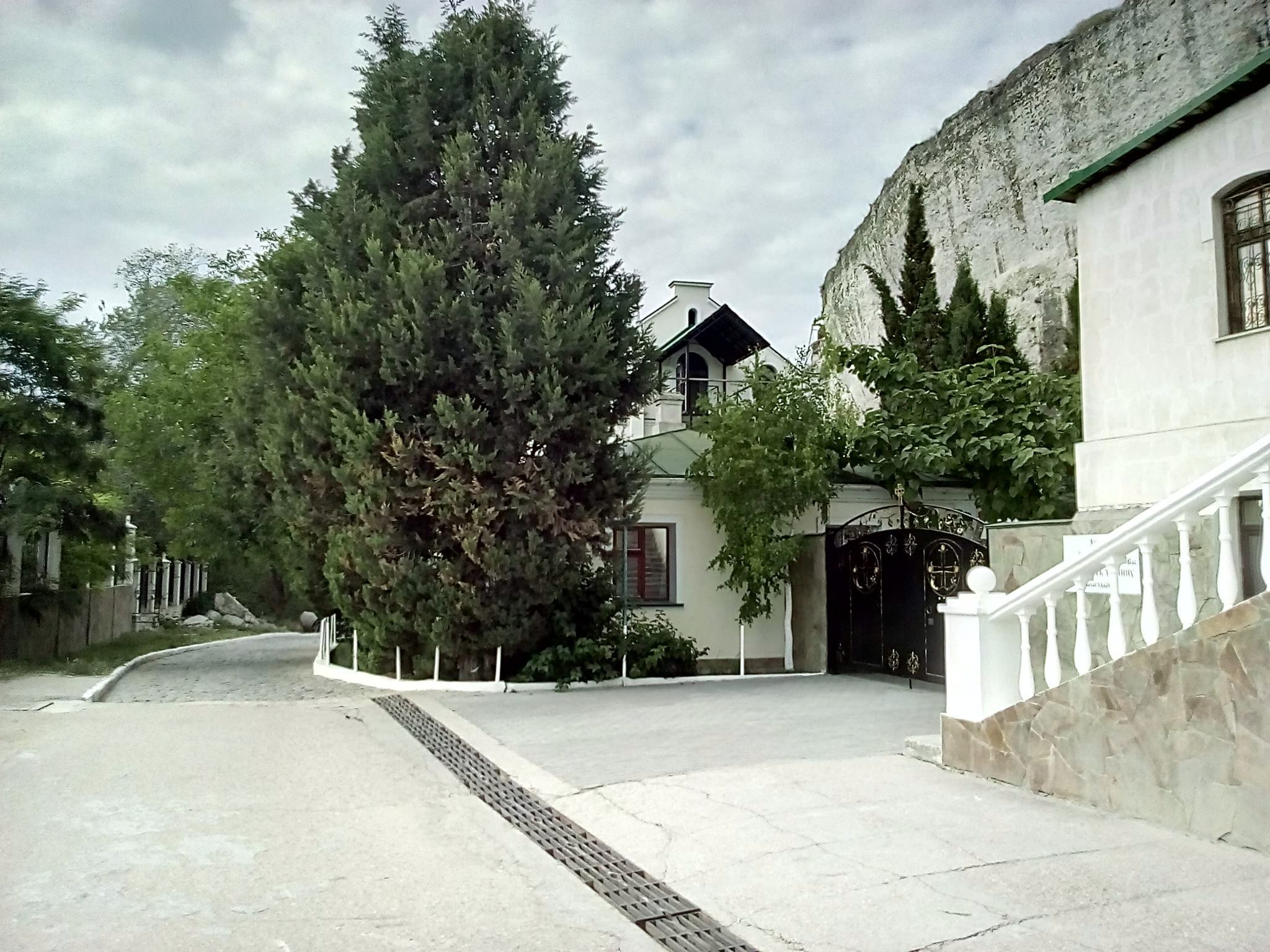
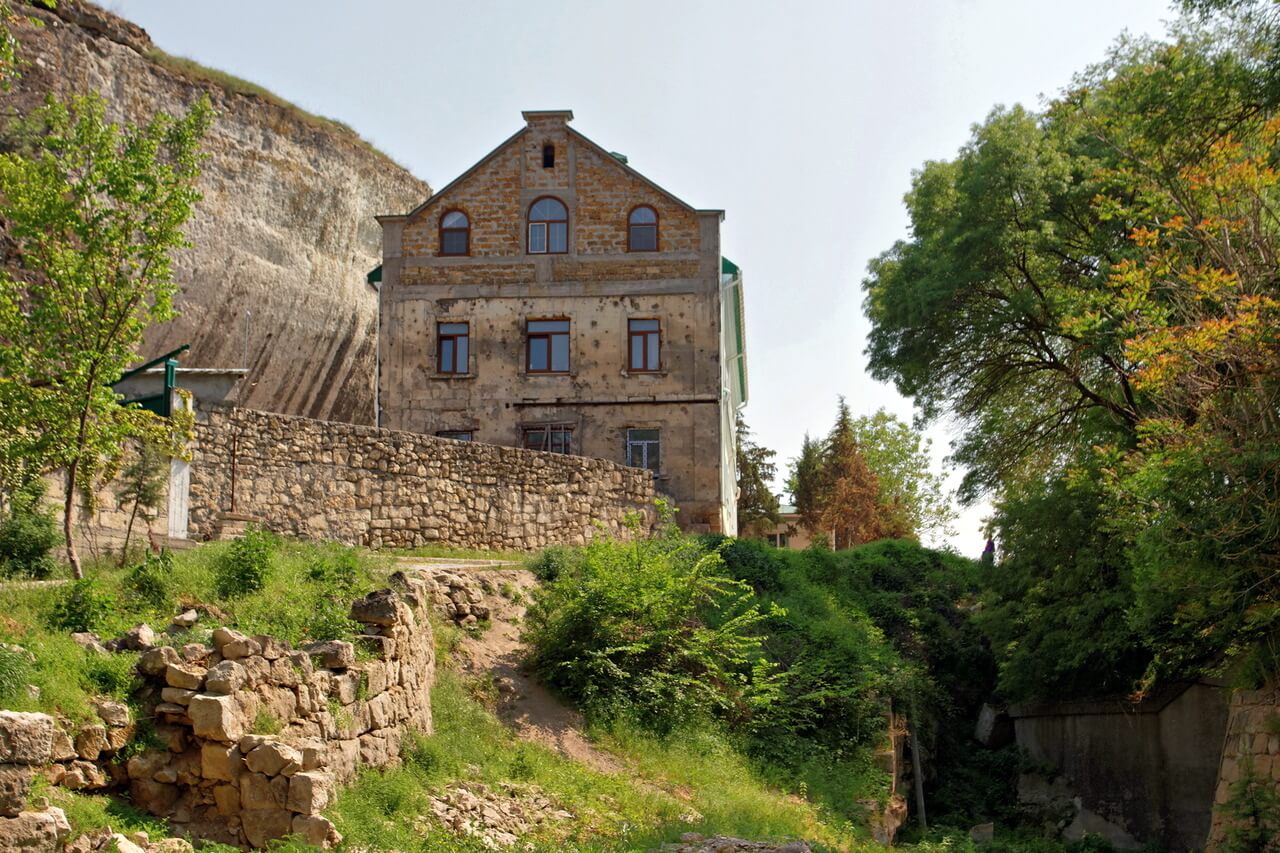
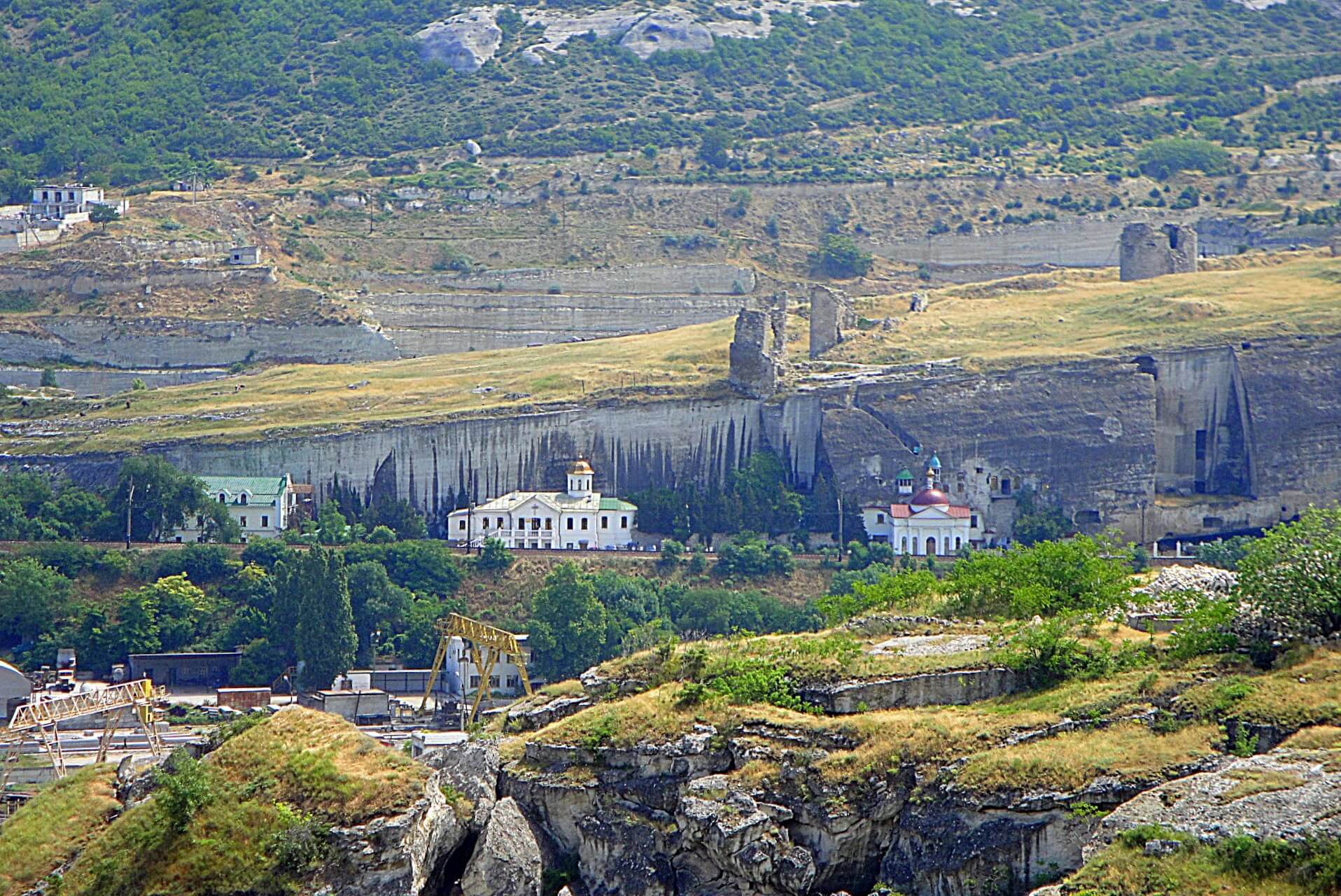
Inkerman St. Clement's Monastery, a male monastery, arose in caves at Inkerman (Kalamita), a town on the south-western coast of Crimea, in the eighth-ninth centuries: a medieval Orthodox monastic centre took shape there, together with an important trading port and a fortress of the principality of Theodoro1, 2. The caves are dated to the eighth-ninth through fifteenth centuries, while the monastery's above-ground buildings were built in the nineteenth century1, 2.
According to tradition, the monastery was founded by Clement I, bishop (pope) of Rome, who around the years 92-99 (by another account, 101) was exiled by order of the emperor Trajan to the local quarries near Chersonesos for preaching Christianity; there he suffered a martyr's death - he was drowned3. The saint's relics, according to tradition, were first kept in an underwater grotto, and in the year 861 Cyril and Methodius, equal to the apostles, translated them to a church in Chersonesos, from where they were later placed in a church on an island in the bay3. In the seventh century, the same place, according to tradition, held Pope Martin I in imprisonment2.
In 1427 Alexios Komnenos, ruler of the principality of Theodoro, built a fortress there1. In 1434 Genoese forces from the neighbouring fortress of Cembalo (Balaklava) attacked Kalamita, plundering and burning it; the monastery's fate at that time remained undetermined5.
From 1475, after the fall of Kalamita, these lands came under the control of the Ottoman Empire, and the fortress received a new name, Inkerman, which the town that grew up around it later took as well1, 2, 3. By 1634 the monastery ("the community"), according to the recollection of a seventeenth-century priest recorded in the Notes of the Odessa Society of History and Antiquities, was in a wretched state5.
In 1850 (by another account, 1852) the monastery was revived on the initiative of Archbishop Innokentii: reconstruction of three cave churches began, and the community received its modern double name - after the city and in honour of St Clement3, 4. On 15 October 1852 the church of St Clement was consecrated4.
In 1867, after replanning, the cave church of St Martin the Confessor was reopened; at the same time a superior's house and the house church of the Holy Trinity were built, and St Clement's spring was restored3, 4.
In 1875 the Sevastopol-Lozova railway was laid past the monastery, increasing the flow of pilgrims4. In 1895, in memory of the imperial family's survival of a railway accident, a pseudo-Byzantine church in honour of the great martyr Panteleimon was built, its altar section cut into the rock, and in 1896 a hotel for 24 people was built for pilgrims3, 4.
In 1905, by one account, a church in honour of St Nicholas of Myra was built on the upper plateau - in memory of the Crimean War, to a design by the architect Heorhii Dolin3; by another account, that same year, in the eastern part of Monastery Rock, on the site of the medieval cave church of St Evgraphius, the church of St Demetrius of Thessaloniki appeared, beneath whose whitewashed walls traces of medieval frescoes and a prayer inscription dated to 1272 could still be seen4.
From 1924 the monastery's churches began to be closed gradually3. In 1925 the believers of Inkerman, lacking funds, gave up five churches, keeping for themselves the cave church of St Clement and the house church of the Holy Trinity4. The following year, 1926, a sitting of the presidium of the Sevastopol district executive committee closed the Heorhiivsky and Inkerman monasteries4, 5.
In 1927 an earthquake in Crimea severely damaged the Annunciation and St Nicholas churches3, 4. In 1928 the church of the icon "Joy of All Who Sorrow" was closed3.
In 1931 services in the cave churches ceased, the monastery was finally closed, and its property was transferred to the Sevastopol museum association; after the closure its superior, archimandrite Venedykt (Chebotarov), father Prokopii, and two 85-year-old elders - father Herman and father Mytrofan - remained living there3, 5. In 1932 the St Nicholas church was destroyed (blown up)3, 4, 5.
During the Great Patriotic War the headquarters of the 25th Chapaev Rifle Division of the Coastal Army was stationed in the monastery's caves; in June 1942 soldiers of this division held the Inkerman heights against the German advance on Sevastopol3, 4.
The revival of the monastery began in 1991 through the efforts of archimandrite Avhustyn (Oleksandr Polovetskyi); in 1996 archimandrite Avhustyn died in a road accident, and he was buried on the grounds of the monastery he had revived3, 5.
Show sources
- 1. Вирський Дмитро Станіславович. «ІНКЕРМАН» (encyclopaedia). Енциклопедія історії України, т. 3 (resource.history.org.ua), 2005 (accessed: 2026-09-01)
- 2. М. М. Буртовой. «Інкерман» (encyclopaedia). Енциклопедія Сучасної України (esu.com.ua), 2011 (accessed: 2026-09-01)
- 3. «Инкерманский Свято-Климентовский пещерный мужской монастырь» (heritage register). Азбука паломника (azbyka.ru) (accessed: 2026-09-01)
- 4. «Інкерман - Монастир» (heritage register). castles.com.ua (accessed: 2026-09-01)
- 5. «Інкерман - Архітектурні та природні пам'ятки України» (heritage register). landmarks.in.ua (accessed: 2026-09-01)