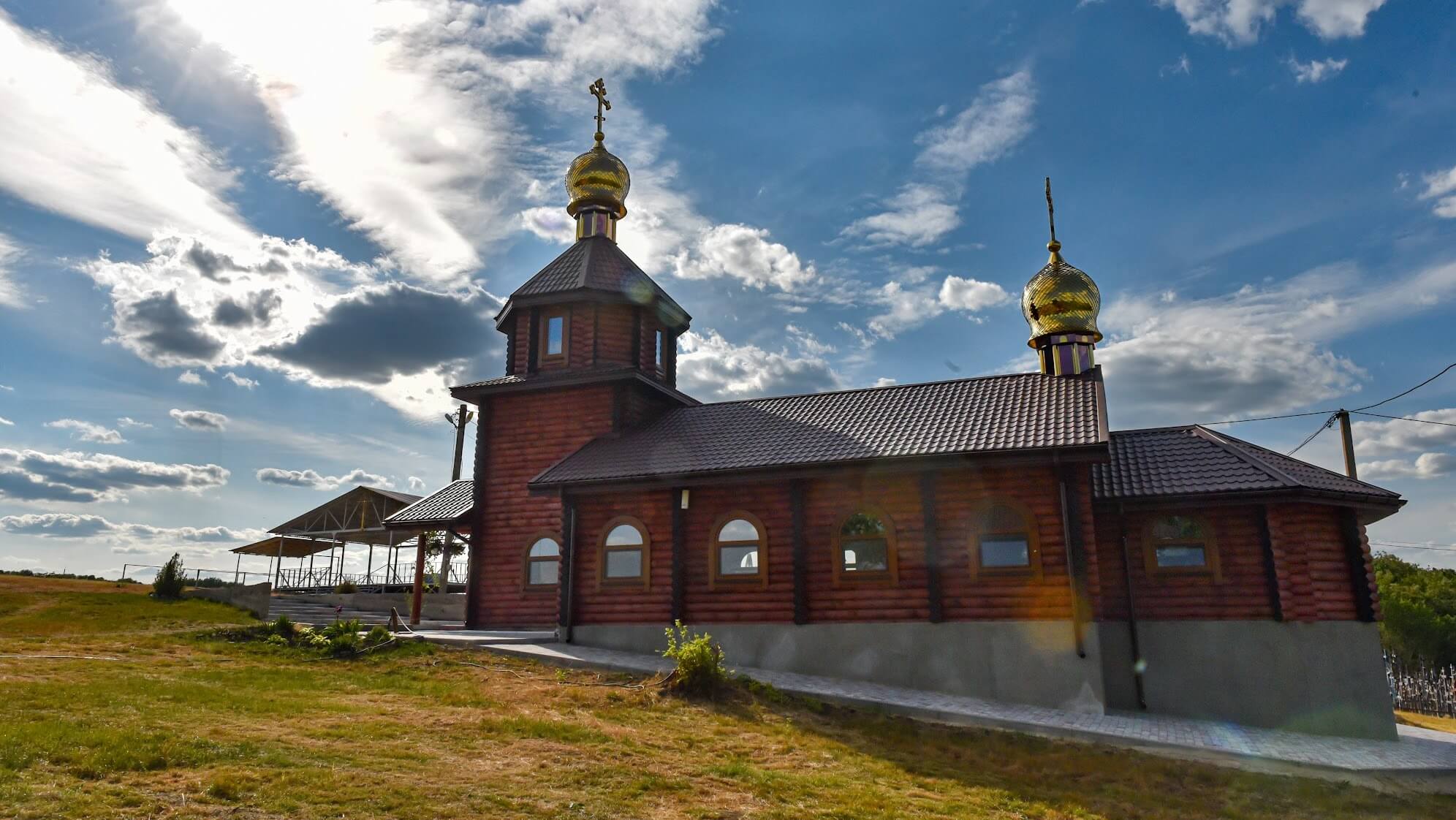
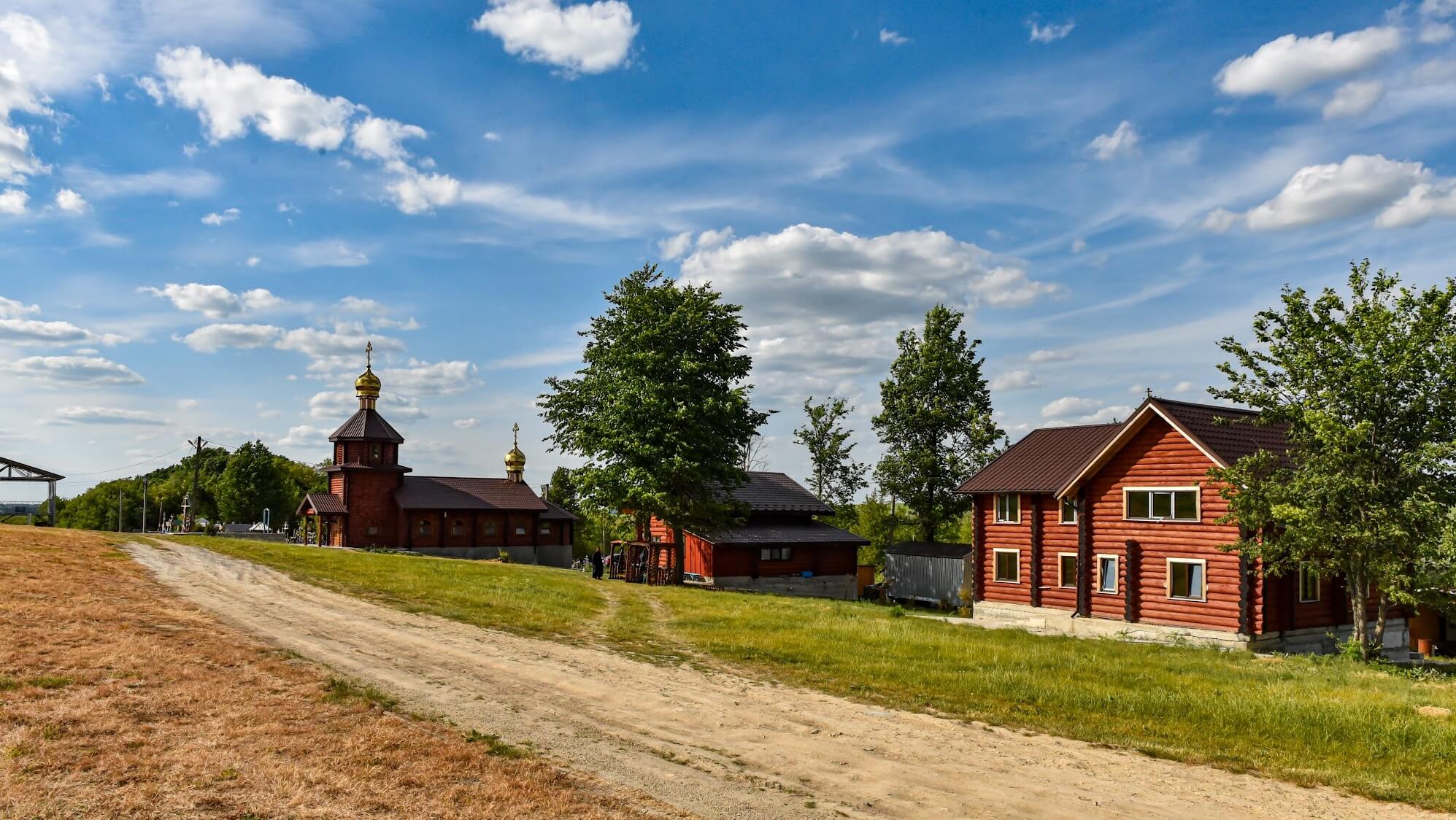
Life-Giving Cross Monastery
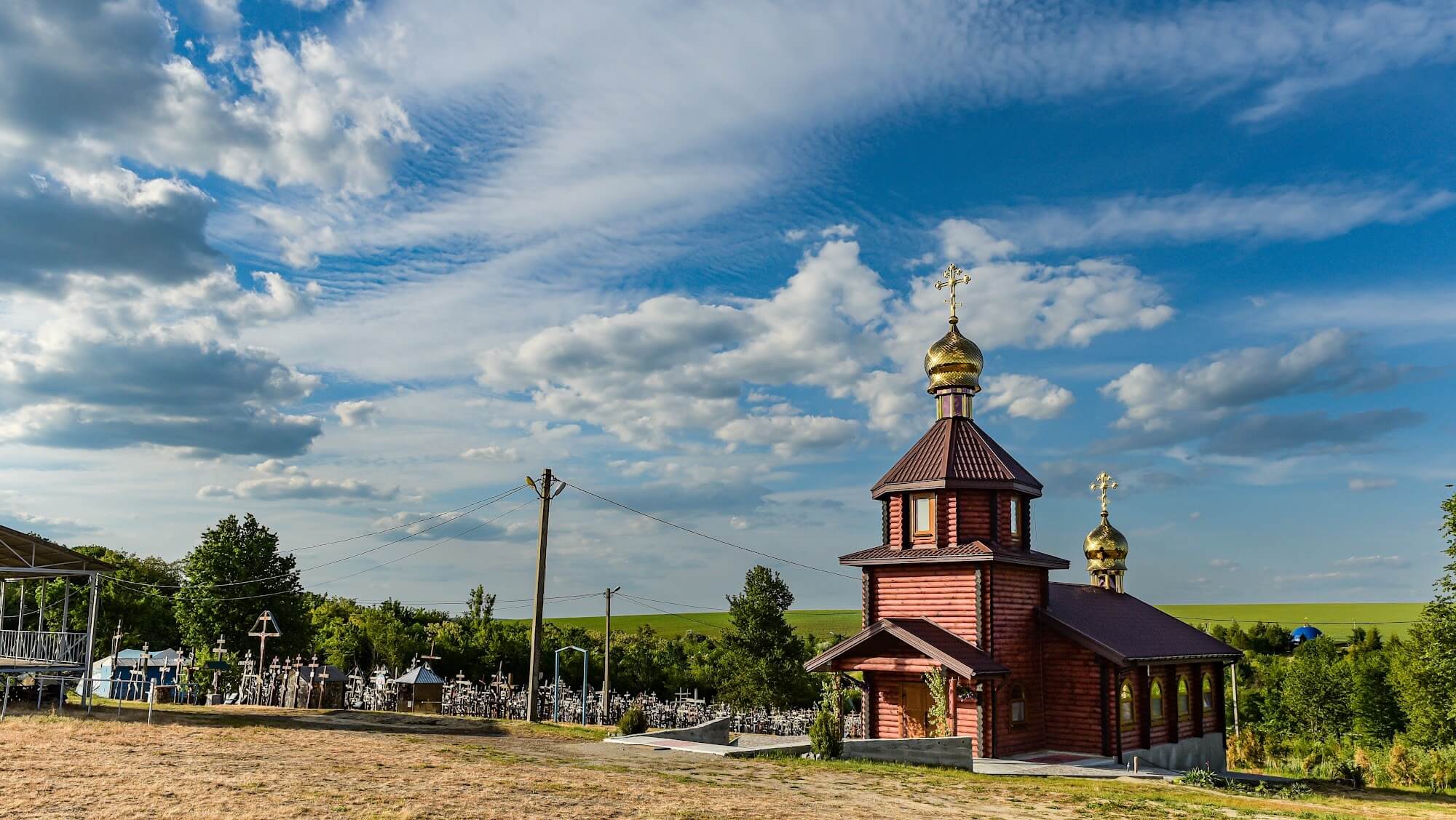
48.688155, 28.409677
- the document of appointment to the post:
Journal No. 6 session of the Holy Synod of UOC on 10.04.2024 year
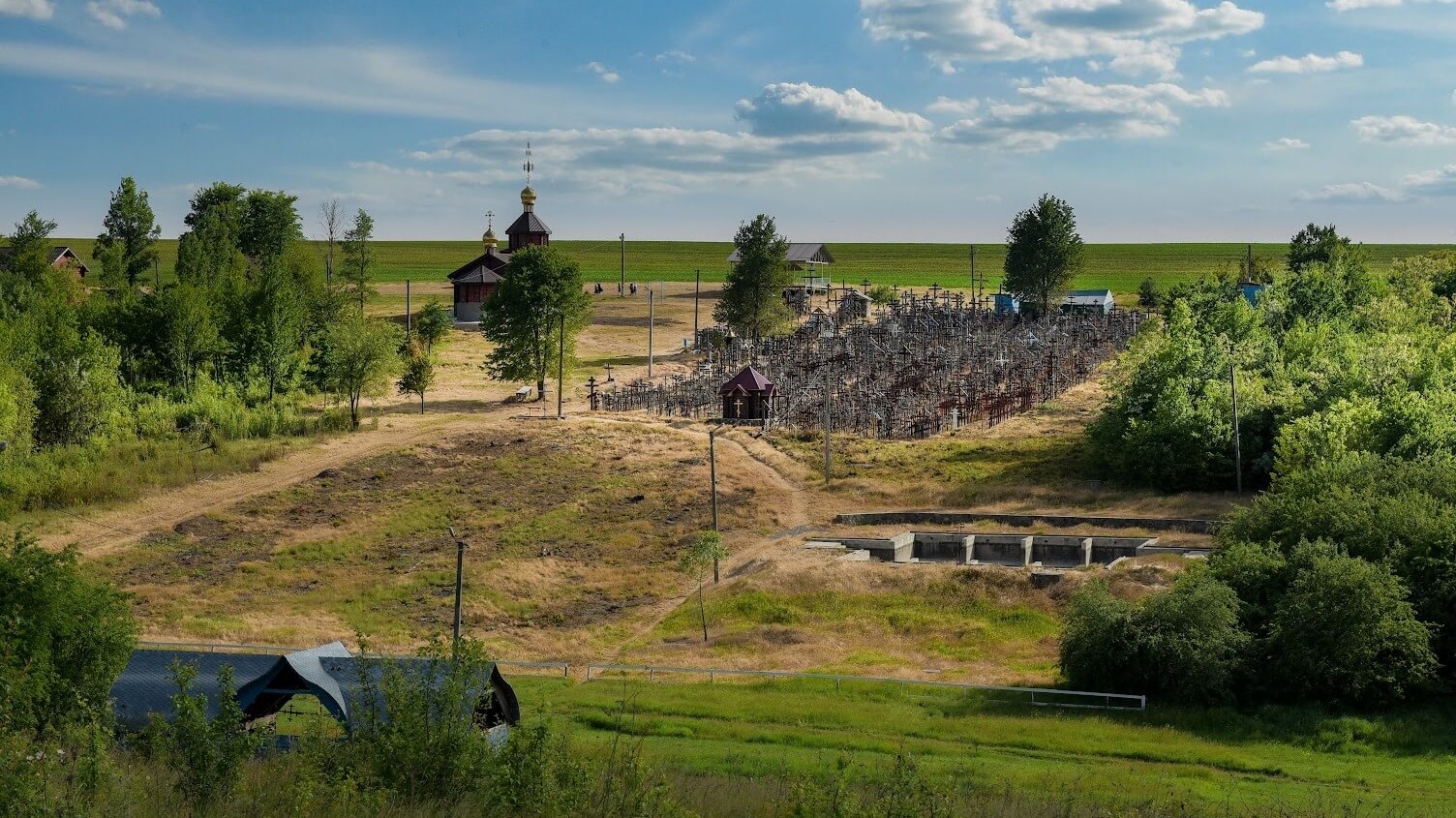
The monastery of the Precious and Life-Giving Cross of the Lord stands in Yosafatova Valley, three and a half to four kilometres from the village of Holynchyntsi in the Vinnytsia region, and belongs to the Mohyliv-Podilsky eparchy3, 1. Its second name - the Valley of Crosses - the place took from the crosses that people began to set up here after 19235.
The valley was called Yosafatova by analogy with the well-known valley near Jerusalem1. At its centre is a well of spring water beside which, according to the eparchy's tradition, services of supplication were held from of old1; the Encyclopedia of Modern Ukraine dates the fame of that water to the end of the seventeenth century2.
Tradition places the beginning of monastic life in these parts in the time of Ottoman rule over Podillia. In the account given alike by the eparchy and by the Church's central information department, the people of the surrounding villages sought refuge then in the Orthodox monastery of Kalynivka near Sharhorod, but that house too was in danger1, 4.
Tradition goes on to say that the Mother of God appeared in a dream to some of the monks and blessed them to go towards the morning star; the brethren and a crowd of people set out eastwards and on the third day stopped for the night beside a well, where the Theotokos appeared to them a second time and blessed the district1, 4. On that spot the monks founded a new house, and from their poverty, the same tradition says, came the name of the village1, 3.
In the summer of 1923 an event took place at the well from which the fame of the valley began. The shepherd Yakiv Mysyk, who often prayed by the water, saw in it the image of the Mother of God with the Child and managed to ask what they were to do; tradition has handed down the answer: "Praise Christ, set up crosses"1, 2, 4. The Encyclopedia of Modern Ukraine names two local shepherds as the witnesses of the apparition, Ya. Mysyk and Kh. Masloid, while the eparchy names Yakiv and a twelve-year-old girl, Khrystyna, who was pasturing sheep nearby1, 2.
The villagers came to the well with banners and an image of Saint Nicholas, together with their priest Tykhon Petrynsky, and set up the first oak cross here1; the encyclopedia names the Babii couple beside the priest2. On the same day the inhabitants of the neighbouring villages set up crosses, and by autumn the whole valley was strewn with them1.
Crosses were carried and sent from far away - from the Kuban and Odesa, the Dniester region, Bessarabia and the Donbas, and some people came by train from the Far East1. According to the report of the civil prosecutor, which the eparchy quotes, more than one and a half million people visited the valley during five months of 19231; the encyclopedia gives the same figure and counts about seventeen thousand crosses set up2.
The Soviet authorities answered quickly. A secret memorandum of 24 November 1923, quoted by the eparchy, described the healings and the influx of people in the valley as harmful to the communist idea1. A special commission of the provincial executive committee resolved to destroy the crosses and stop the pilgrimage: mounted police patrols turned pilgrims back, crosses were sawn up for firewood, and those who sheltered pilgrims were arrested1, 2.
In November fifty inhabitants of Holynchyntsi were arrested2. Beaten and barefoot, they were driven first to Sharhorod and from there under escort to Vinnytsia; in the eparchy's account not one of them admitted guilt or renounced the faith1. Yakiv Mysyk died of torture in his cell, and the rest were released in January 19242; in the spring of that year all the crosses in the valley were taken down2.
Returning home on foot, those who had been released found crosses set up anew in the valley: the eparchy counts sixteen thousand that appeared over the winter, and explains this by their being sent from distant places which the news of the reprisal had not yet reached1.
On 21 June 1925, in the hall of the Vinnytsia provincial court, there opened the trial which the chronicles called the case of the crosses in Yosafatova Valley1, 4. In the dock were nine priests and eighteen laypeople1, 2, 4. The sentences were forced labour for various terms2 - in the eparchy's account up to four years with strict isolation, while the lawyer Vasyl Sumnevych and the priests were forbidden to live in Ukraine for three years after serving their sentences1.
The memory of the valley was preserved by a priest's family. Father Tykhon Petrynsky served in the village for almost half a century; after his death the family was driven out of their home, and his mortally ill widow Neonila Petrynska was taken in by the Zaletsky family, with whom she lived from 19441.
Her account so affected Ivan Artemovych Zaletsky that he later collected the recollections of old inhabitants and of witnesses of the trial, worked with archival material, wrote for newspapers and journals and spoke about the valley on the radio; the eparchy credits his efforts with the revival of the pilgrimage to the well as well1.
The pilgrimage revived in the new century: the encyclopedia dates the revival to 2005 and counts about a thousand crosses set up anew2. On 15 August 2006 thousands of people came to the valley for the first time with crosses, icons and banners, and two bishops and about two hundred priests took part in the celebration1, 4. In the same year an icon was painted depicting the apparition of 19231.
From then on the cross procession of 15 August became annual. In 2015 it gathered more than twenty thousand pilgrims5, in 2016 it was led by three hierarchs4, and in 2017 by the Primate of the Ukrainian Orthodox Church6, 7. Two official sources reported different numbers of participants for that procession: the Church's central information department about fifteen thousand faithful7, and the Vinnytsia Oblast Council more than thirty-five thousand8.
In that same year of 2017 the oblast council counted more than seventeen thousand crosses in the valley8. On 18 July, at a session of the council, forty-three deputies at the second attempt resolved to transfer into permanent use of the St Nicholas Sharhorod Monastery the plot of 9.8 hectares on which the valley lies, for the building of a church of the Most Holy Theotokos and of cells9. The document of transfer was handed to the superior of that monastery, Archimandrite Kyprian, on 15 August 2017, the day of the procession8.
The house became a monastery in its own right on 12 May 2021: at the first session of that year of the Holy Synod of the Ukrainian Orthodox Church it was resolved to establish a men's monastery in honour of the Precious and Life-Giving Cross of the Lord (the Valley of Crosses) of the Mohyliv-Podilsky eparchy10, 11. The annual report of the Chancellor of the Church for 2021 cites this act as journal No. 7 of 12 May 202112. In the summer of the same year, on 15 August, the celebration in the valley was led by the head of the Synodal Commission for Monasteries, and about eight thousand faithful took part in the procession and the liturgy13.
The community was already keeping the patronal feast in the valley on 27 September 202214, and on 27 September 2023, the feast of the Exaltation of the Precious and Life-Giving Cross of the Lord, the church of the same dedication was consecrated in the monastery: the rite of consecration was led by Metropolitan Ahapit of Mohyliv-Podilsky and Sharhorod, concelebrating with Metropolitan Panteleimon of Uman and Zvenyhorod15, 16. The valley remains a place of annual hierarchical services: on 15 August 2025 a council of hierarchs headed by Metropolitan Serhiy of Ternopil and Kremenets served at the place of the apparition, and at that service they blessed the crosses which the faithful had brought to the house17.
Show sources
- 1. «Хресто-Воздвиженський чоловічий монастир (Долина Хрестів)» (eparchy website). Могилів-Подільська єпархія Української Православної Церкви, офіційний сайт (moh-pod.church.ua), 2022 (accessed: 2026-08-31)
- 2. А. М. Подолинний. «Йосафатова долина (Поділля)» (encyclopaedia). Енциклопедія Сучасної України (esu.com.ua), 2011 (accessed: 2026-08-31)
- 3. «Історична довідка» (government website). Джуринська сільська територіальна громада, офіційний сайт (dzhurynska-gromada.gov.ua) (accessed: 2026-08-31)
- 4. Інформаційно-просвітницький відділ Української Православної Церкви. «На Преображення розпочнуться дві масштабні хресні ходи до Почаївської Лаври» (UOC news). Українська Православна Церква, синодальний інформаційно-просвітницький відділ (news.church.ua), 2016 (accessed: 2026-08-31)
- 5. Прес-служба Вінницької єпархії. «ВІННИЦЬКА ОБЛАСТЬ. Хресна хода на Іосафатову долину зібрала понад 20 тисяч вірян» (UOC news). Українська Православна Церква, синодальний інформаційно-просвітницький відділ (news.church.ua), 2015 (accessed: 2026-08-31)
- 6. Інформаційно-просвітницький відділ Української Православної Церкви. «Блаженніший Митрополит Онуфрій візьме участь у хресній ході на «Йосафатову долину»» (UOC news). Українська Православна Церква, синодальний інформаційно-просвітницький відділ (news.church.ua), 2017 (accessed: 2026-08-31)
- 7. Інформаційно-просвітницький відділ Української Православної Церкви. «Близько 15 тисяч вірян УПЦ взяли участь у хресному ході на Йосафатову долину, який очолив Предстоятель (відео)» (UOC news). Українська Православна Церква, синодальний інформаційно-просвітницький відділ (news.church.ua), 2017 (accessed: 2026-08-31)
- 8. ««Христа славте, хреста ставте!» – в селі Голинчинці Шаргородського району відбулася традиційна хресна хода» (government website). Вінницька обласна Рада, офіційний інформаційний сайт (vinrada.gov.ua), 2017 (accessed: 2026-08-31)
- 9. «У Долині хрестів з'явиться чоловічий монастир УПЦ [...]» (press). Релігійно-інформаційна служба України (risu.ua), 2017 (accessed: 2026-08-31)
- 10. Інформаційно-просвітницький відділ Української Православної Церкви. «Підсумки Священного Синоду Української Православної Церкви від 12 травня 2021 року (+відео)» (UOC news). Українська Православна Церква, синодальний інформаційно-просвітницький відділ (news.church.ua), 2021 (accessed: 2026-08-31)
- 11. Інформаційно-просвітницький відділ Української Православної Церкви. «У Могилів-Подільській, Чернівецько-Буковинській та Львівській єпархіях утворено нові монастирі — Священний Синод УПЦ» (UOC news). Українська Православна Церква, синодальний інформаційно-просвітницький відділ (news.church.ua), 2021 (accessed: 2026-08-31)
- 12. Керуючий справами Української Православної Церкви. «Звіт Керуючого справами УПЦ за 2021 рік» (church document). Українська Православна Церква, синодальний інформаційно-просвітницький відділ (news.church.ua), 2021 (accessed: 2026-08-31)
- 13. Інформаційно-просвітницький відділ Української Православної Церкви. «На Вінничині 8 тисяч віруючих взяли участь у хресному ході у “Долину хрестів”» (UOC news). Українська Православна Церква, синодальний інформаційно-просвітницький відділ (news.church.ua), 2021 (accessed: 2026-08-31)
- 14. «Митрополит Агапіт звершив богослужіння престольного свята у Хресто-Воздвиженському чоловічому монастирі» (eparchy website). Могилів-Подільська єпархія Української Православної Церкви, офіційний сайт (moh-pod.church.ua), 2022 (accessed: 2026-08-31)
- 15. «У Хресто-Воздвиженському монастирі (Долина хрестів) двома архієреями освячено православний храм» (eparchy website). Могилів-Подільська єпархія Української Православної Церкви, офіційний сайт (moh-pod.church.ua), 2023 (accessed: 2026-08-31)
- 16. Інформаційно-просвітницький відділ Української Православної Церкви. «У Хрестовоздвиженському монастирі (Долина хрестів) освячено новий храм» (UOC news). Українська Православна Церква, синодальний інформаційно-просвітницький відділ (news.church.ua), 2023 (accessed: 2026-08-31)
- 17. «У Могилів-Подільській єпархії соборно відзначили свято явлення Пресвятої Богородиці в Долині Хрестів (+Відео)» (eparchy website). Могилів-Подільська єпархія Української Православної Церкви, офіційний сайт (moh-pod.church.ua), 2025 (accessed: 2026-08-31)
- Journal No. 6 session of the Holy Synod of UOC on 10.04.2024 year
- Journal No. 7 session of the Holy Synod of UOC on 12.05.2021 year