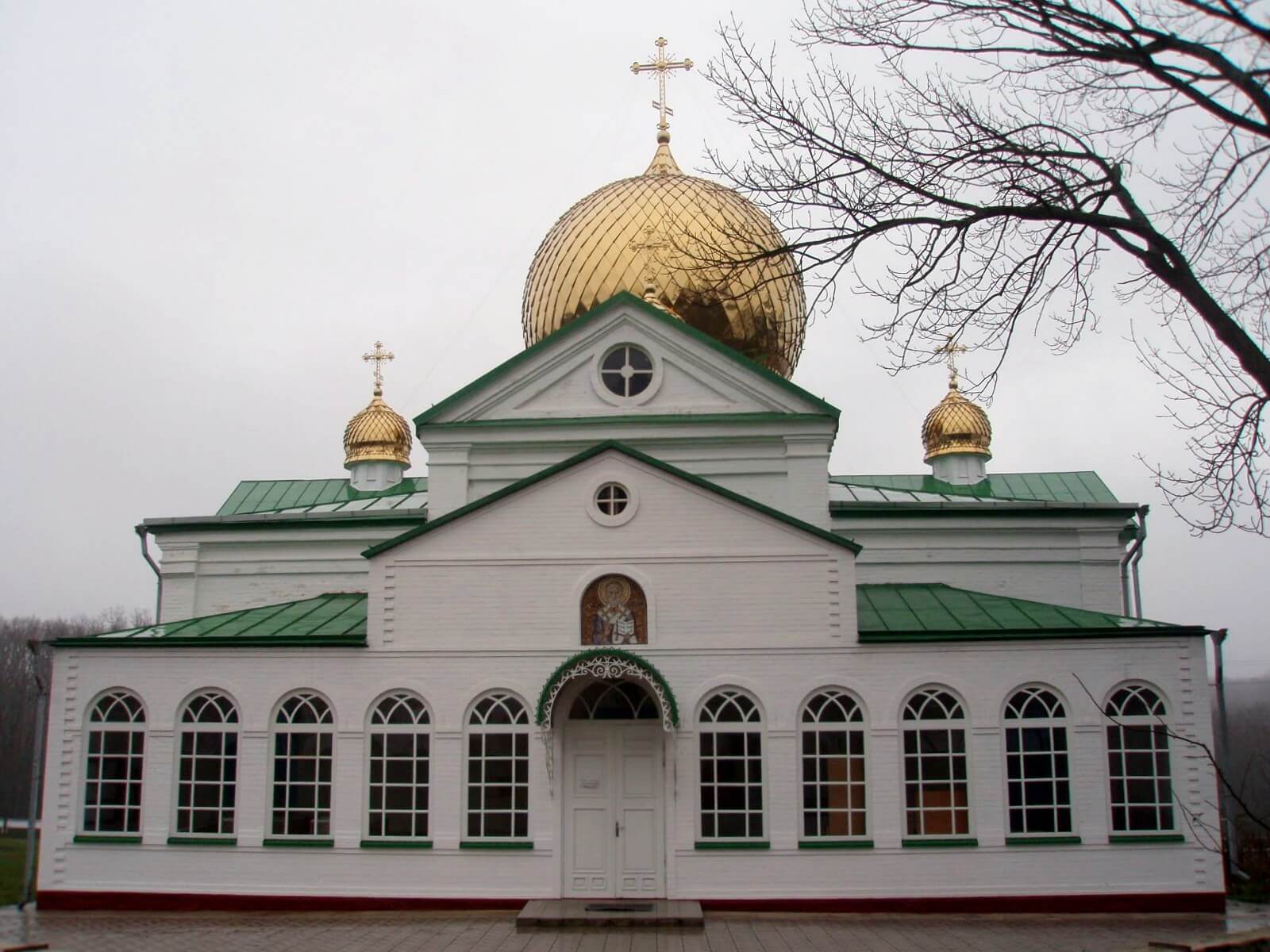
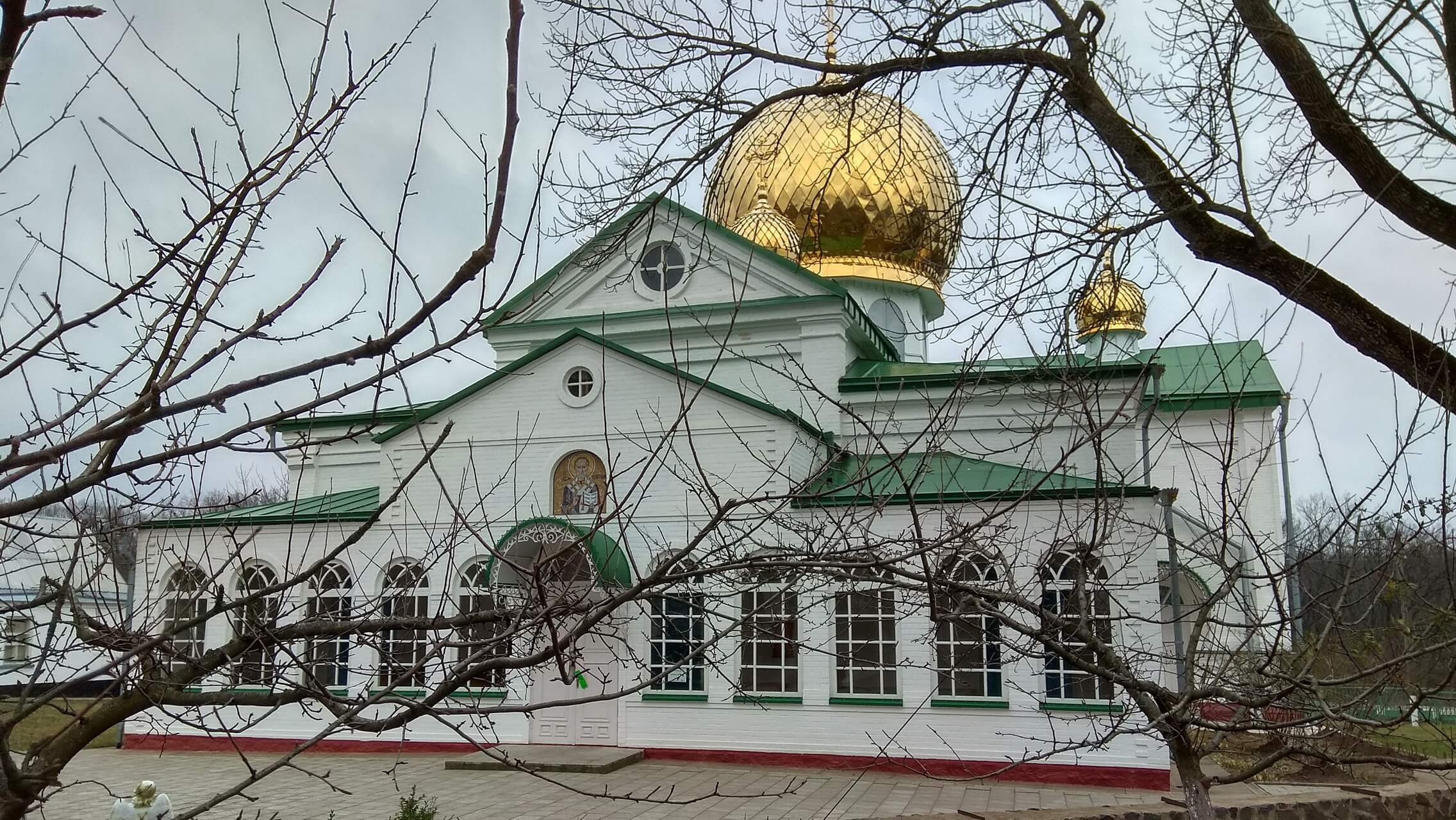
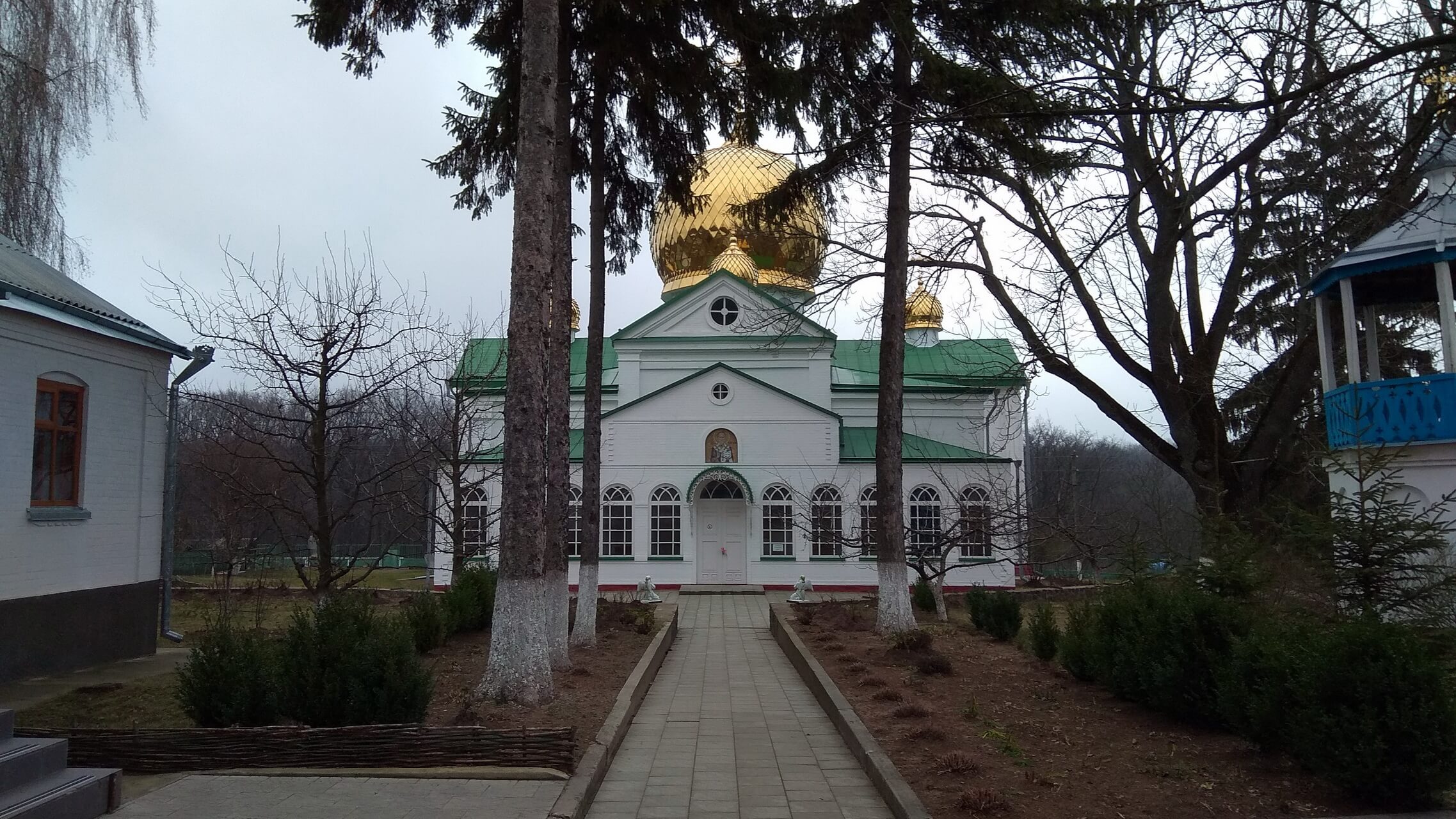
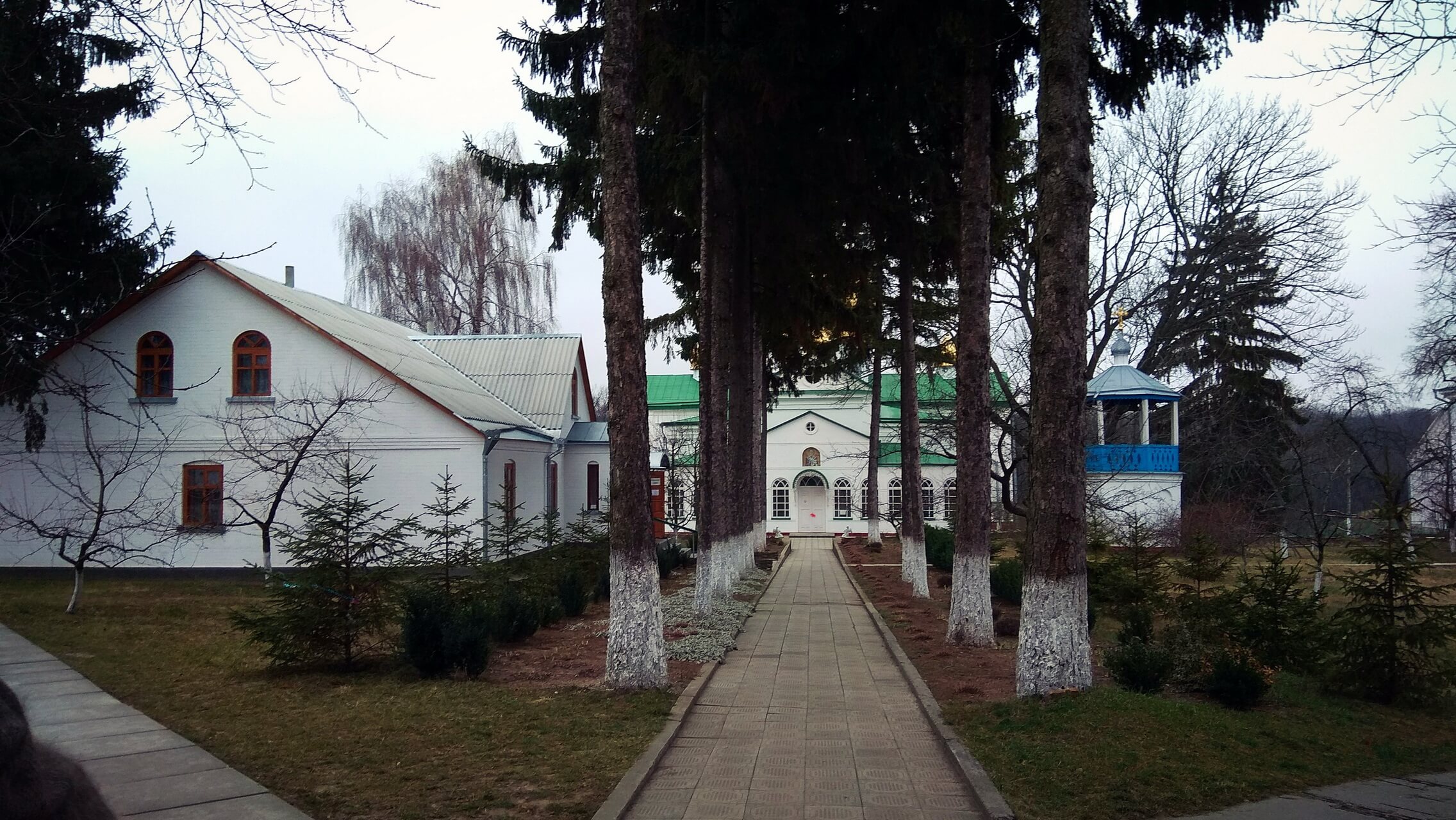
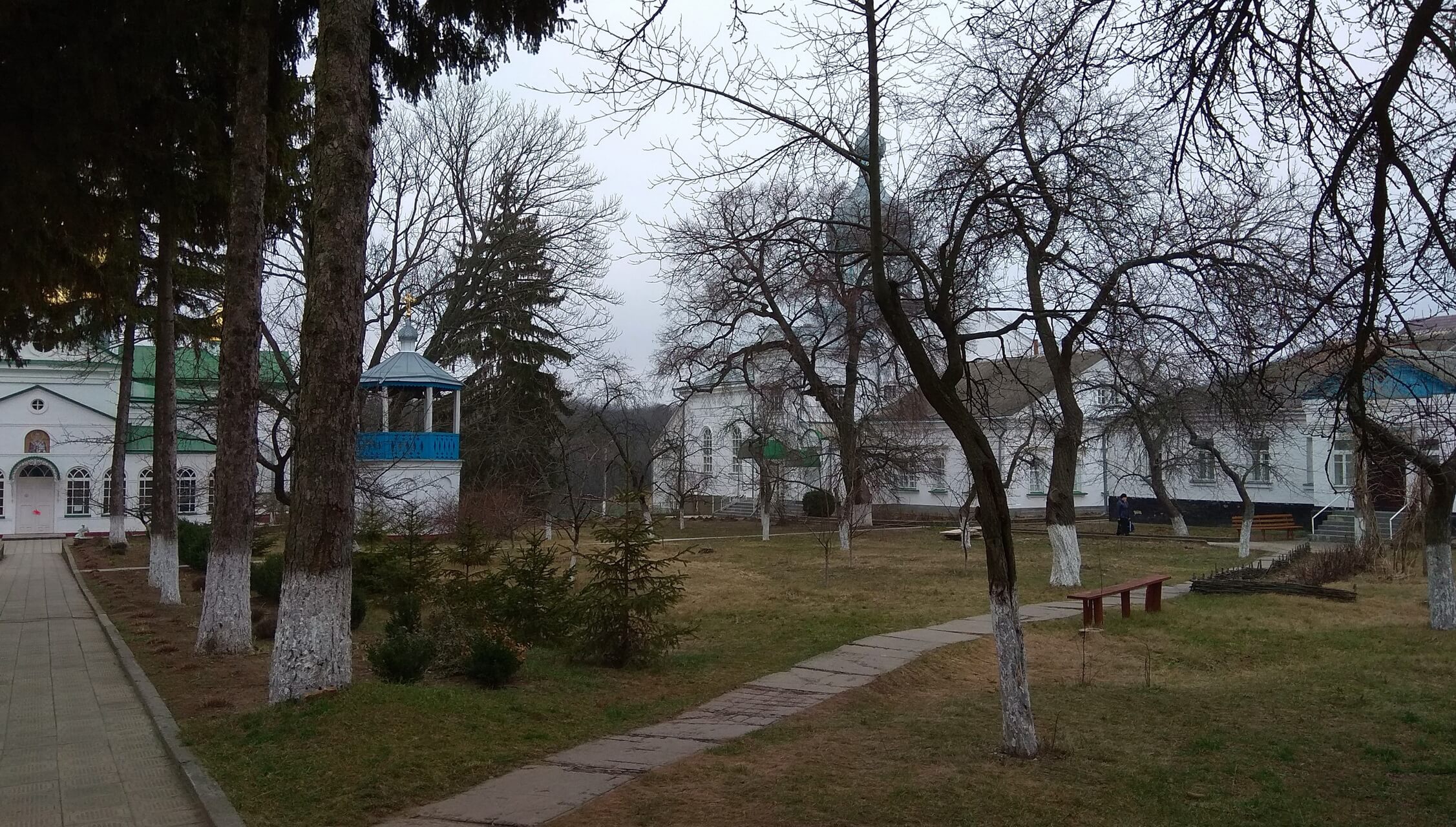
Lebedyn St. Nicholas's Convent
48.966112, 31.585575
- the document of appointment to the post:
Journal No. 4 session of the Holy Synod of UOC on 09.03.2004 year
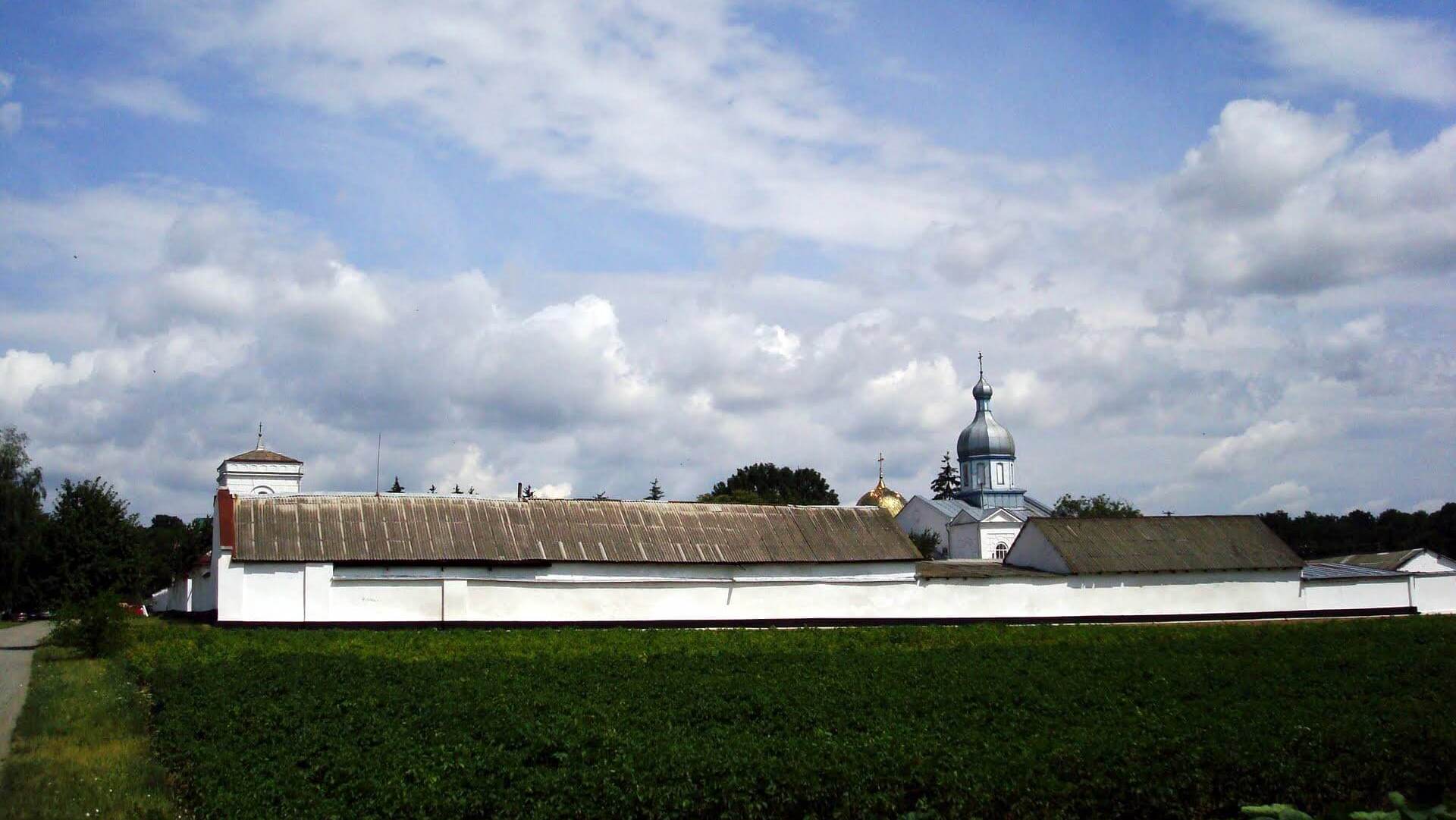
The St Nicholas Convent of Lebedyn stands in the forest five kilometres east of the village of Lebedyn, in the Shpola district of the Cherkasy region, beside a small river3, 9. Local tradition connects the river's name with a battle between Cossacks and Turks said to have taken place here3; the name itself is recorded differently in the sources - Hepturka on the convent's own site and Hapturka in Konysky3, 9.
The sources speak differently about the foundation, and this text does not choose between them. The Encyclopedia of Modern Ukraine dates it to 1779 and writes that the convent arose on the lands of Prince Ksaverii Liubomyrskyi, founded by the nuns Mahdalyna, Tryfileia, Dariia and Fevroniia, who came from a Dormition monastery on the territory of present-day Moldova that had been laid waste by the Turks1. The Encyclopedia of the History of Ukraine states that the house was founded under a grant of Prince Ksaverii Liubomyrskyi dated 24 May 1779, and names Mahdalyna as its first superior2. A register of 1893, quoted by the convent itself, adds that the monastery was built with the blessing of the Kyiv metropolitans Havryil and Samuil, and dates the building to 1779-17843. The Moldavian house the sisters came from has still not been identified: for want of evidence historians suppose it to have been the Dormition monastery of Calarasovca or the Annunciation skete of Caratur3, while Konysky calls it Wallachian and Kazhhur9.
The convent keeps its own tradition of its founding: searching for a site, the sisters spent a night in the Lebedyn forest, and in the night they had a vision that St Nicholas was blessing them to found a monastery here; in the morning they found his icon in a stream6.
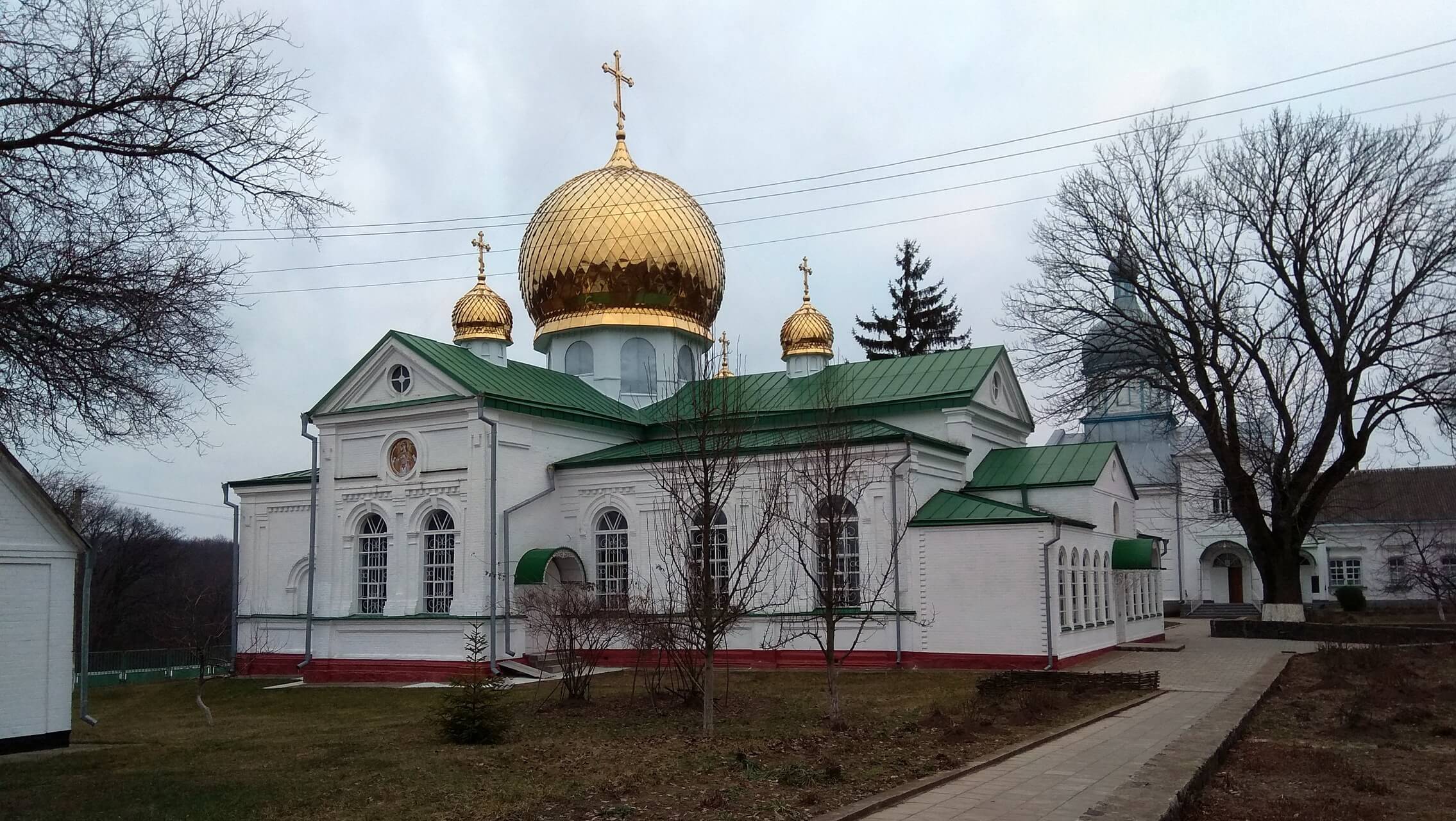
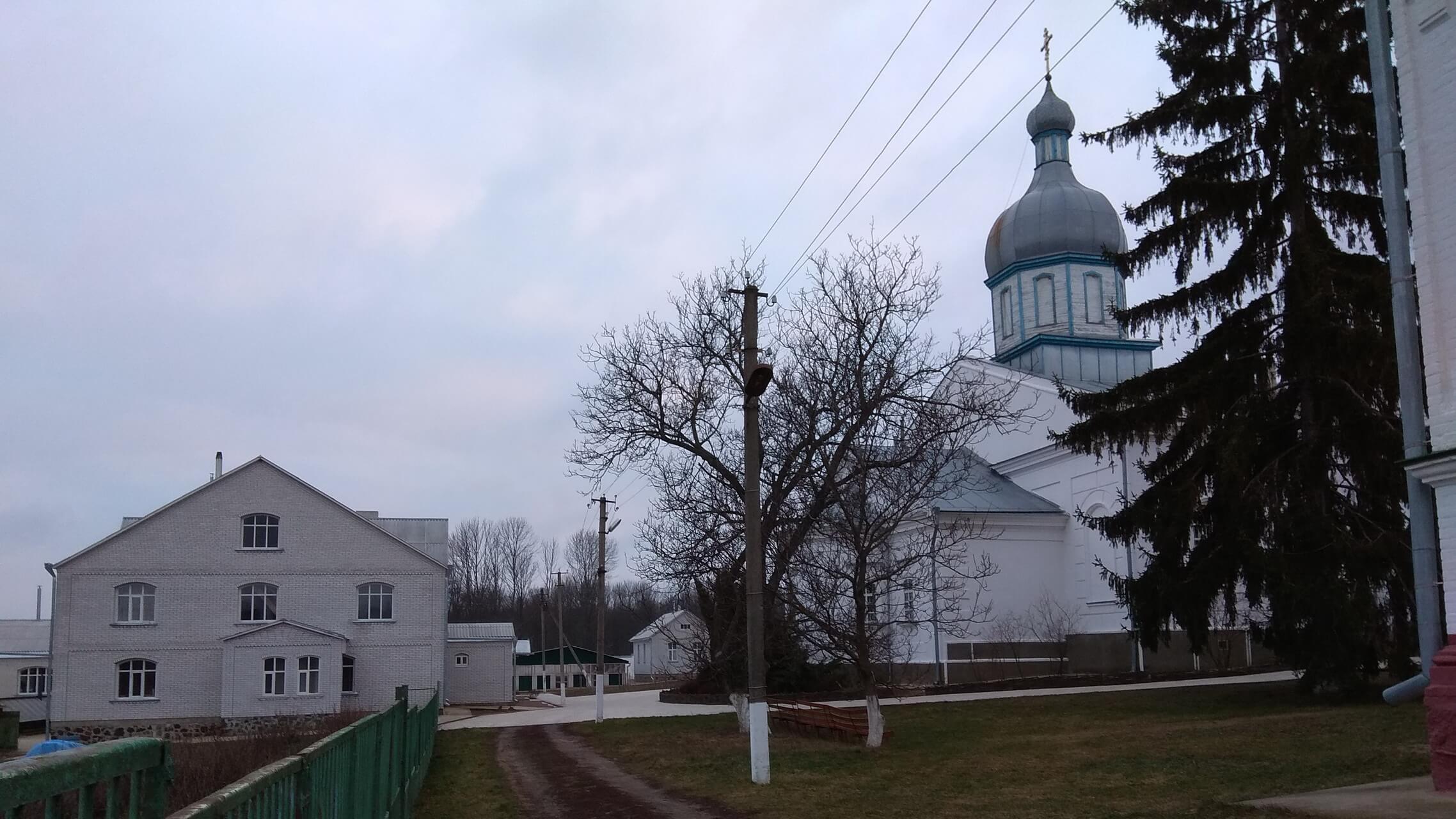
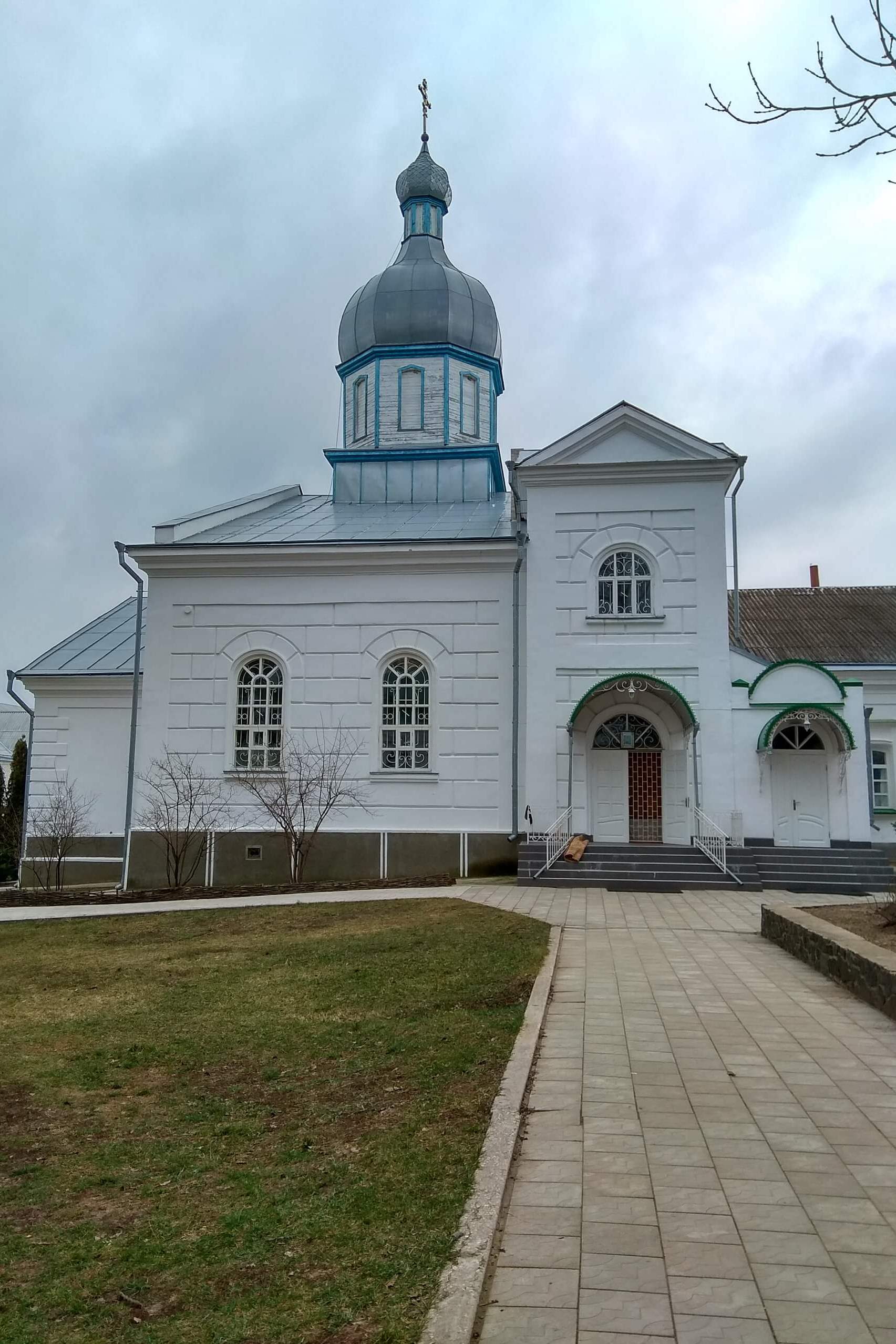
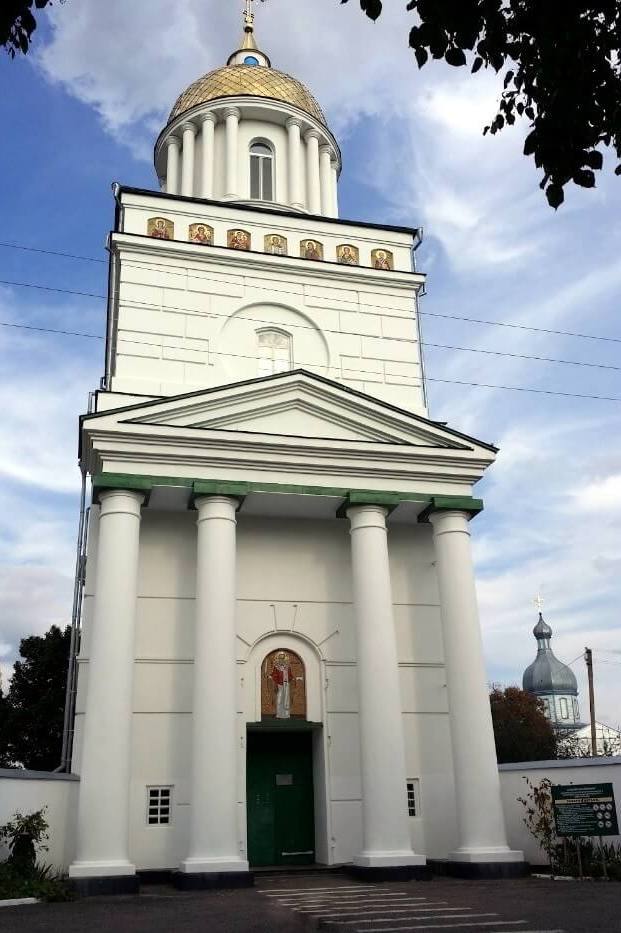
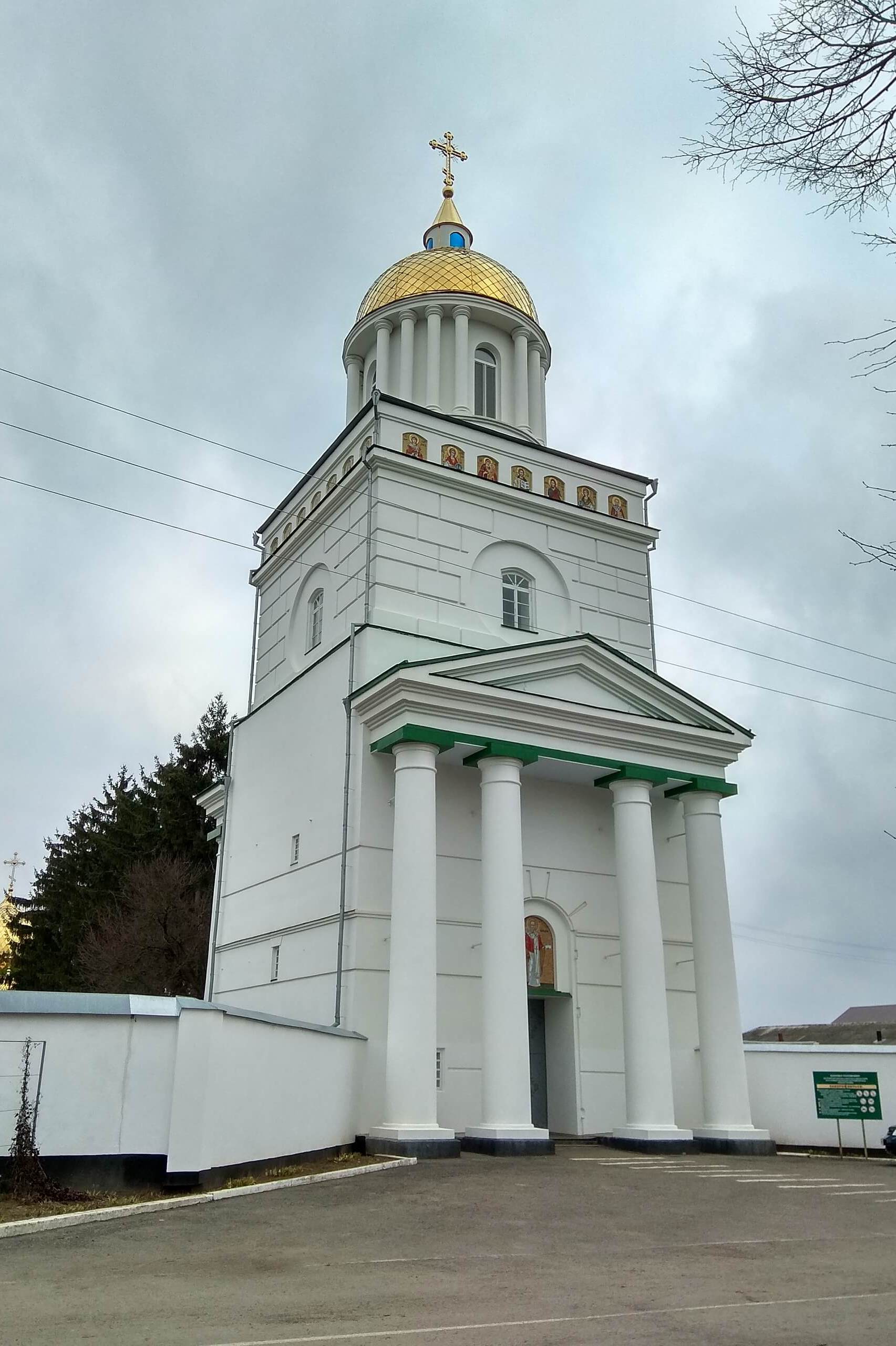
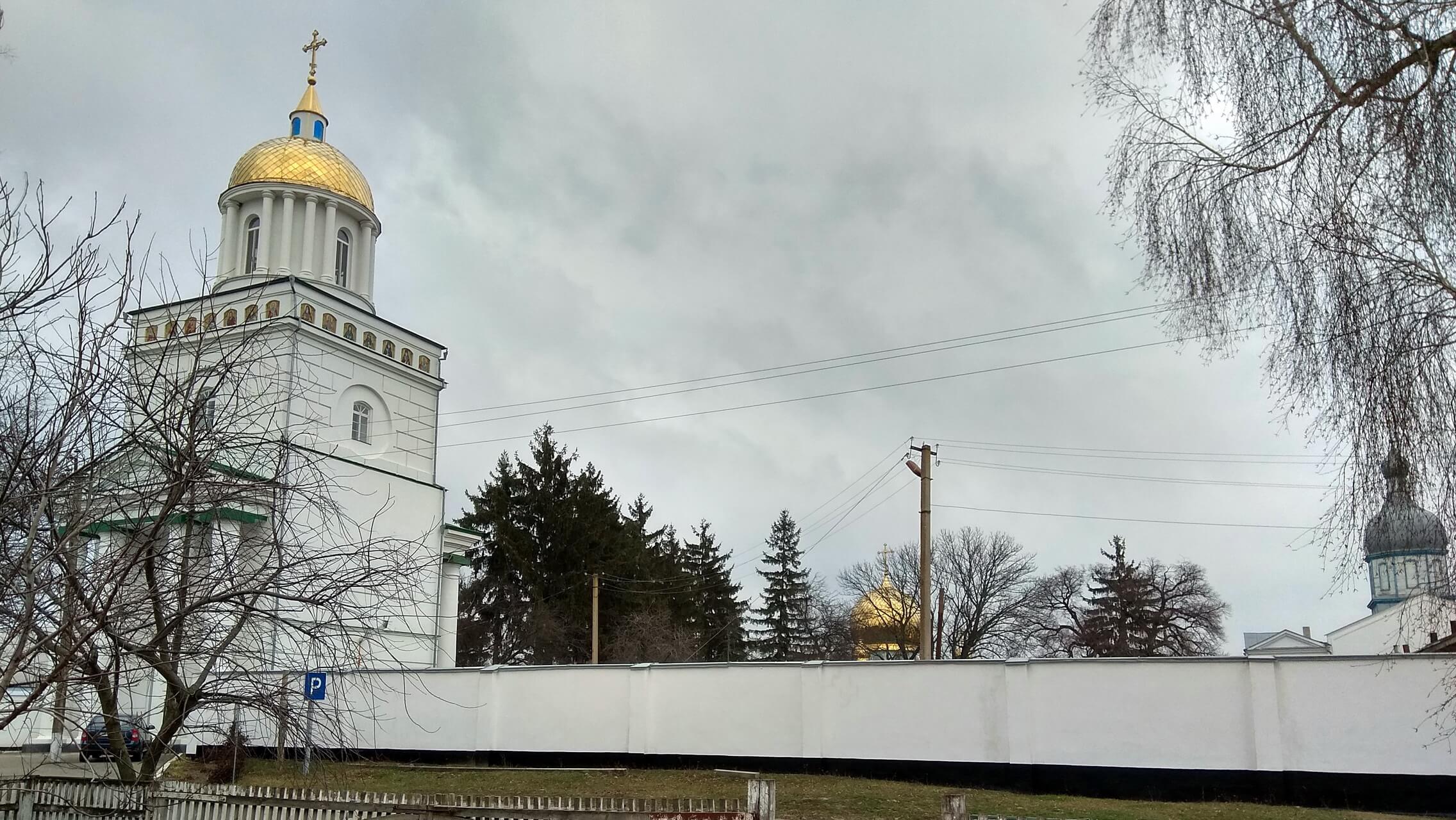
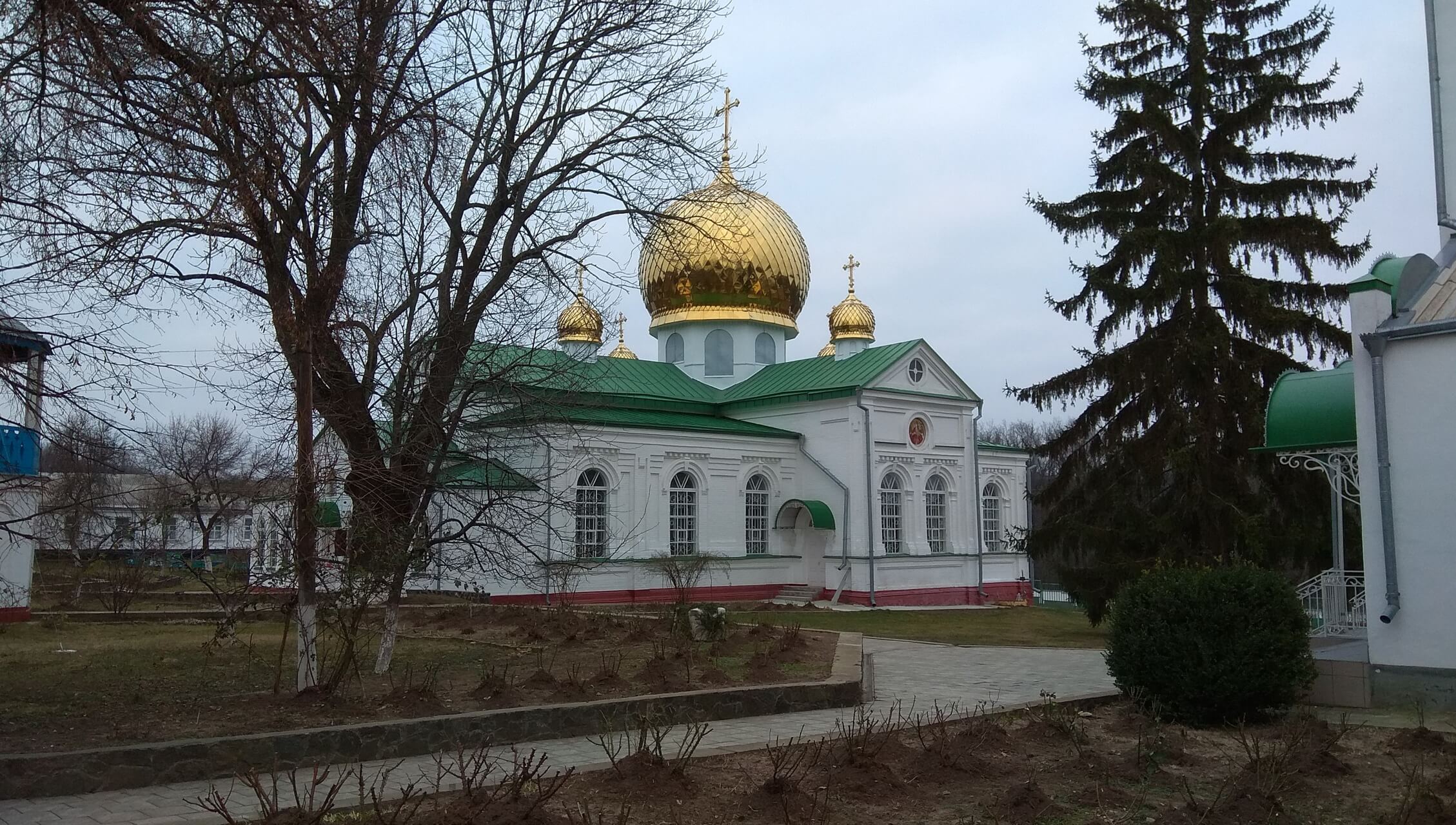
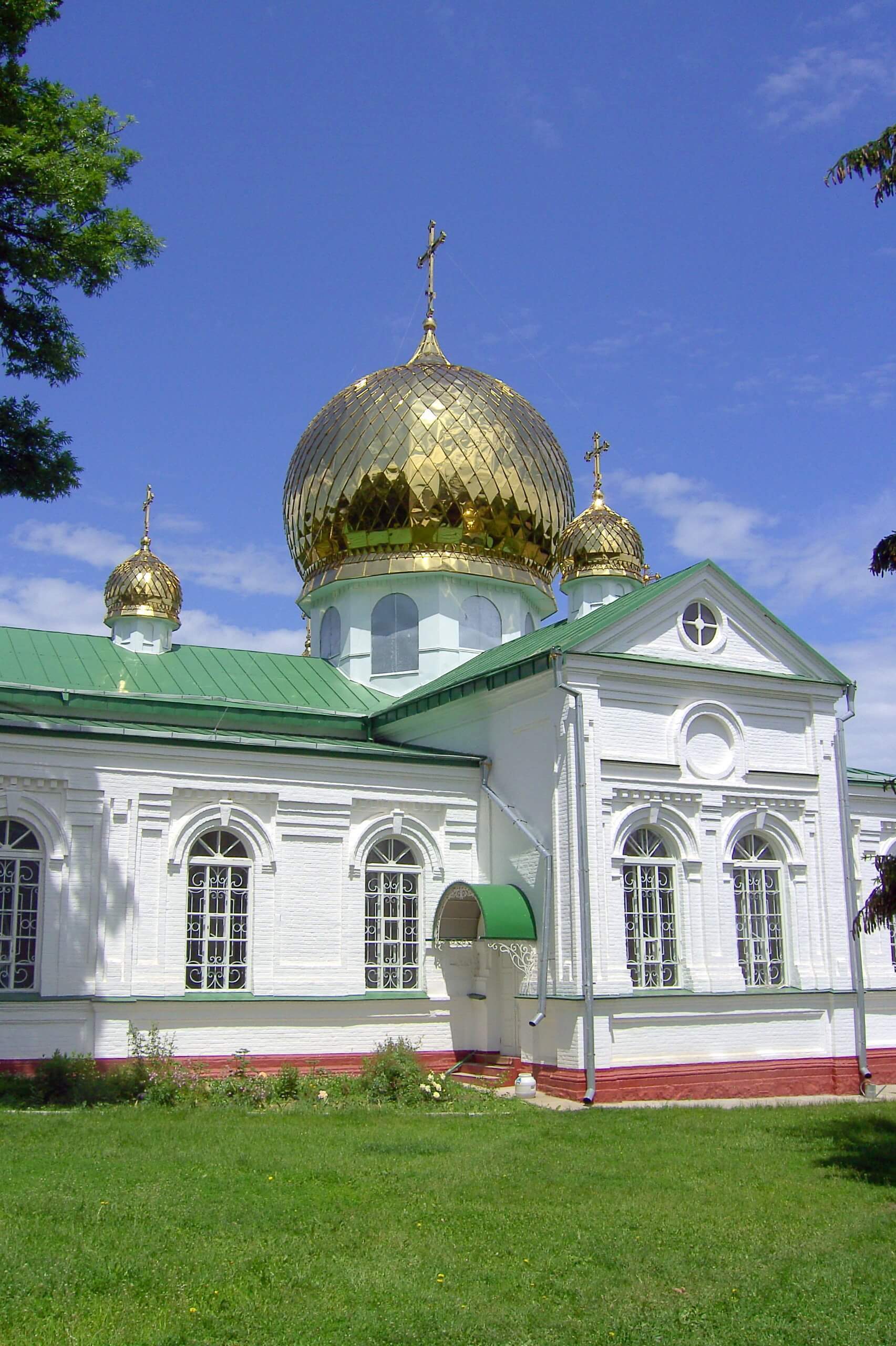
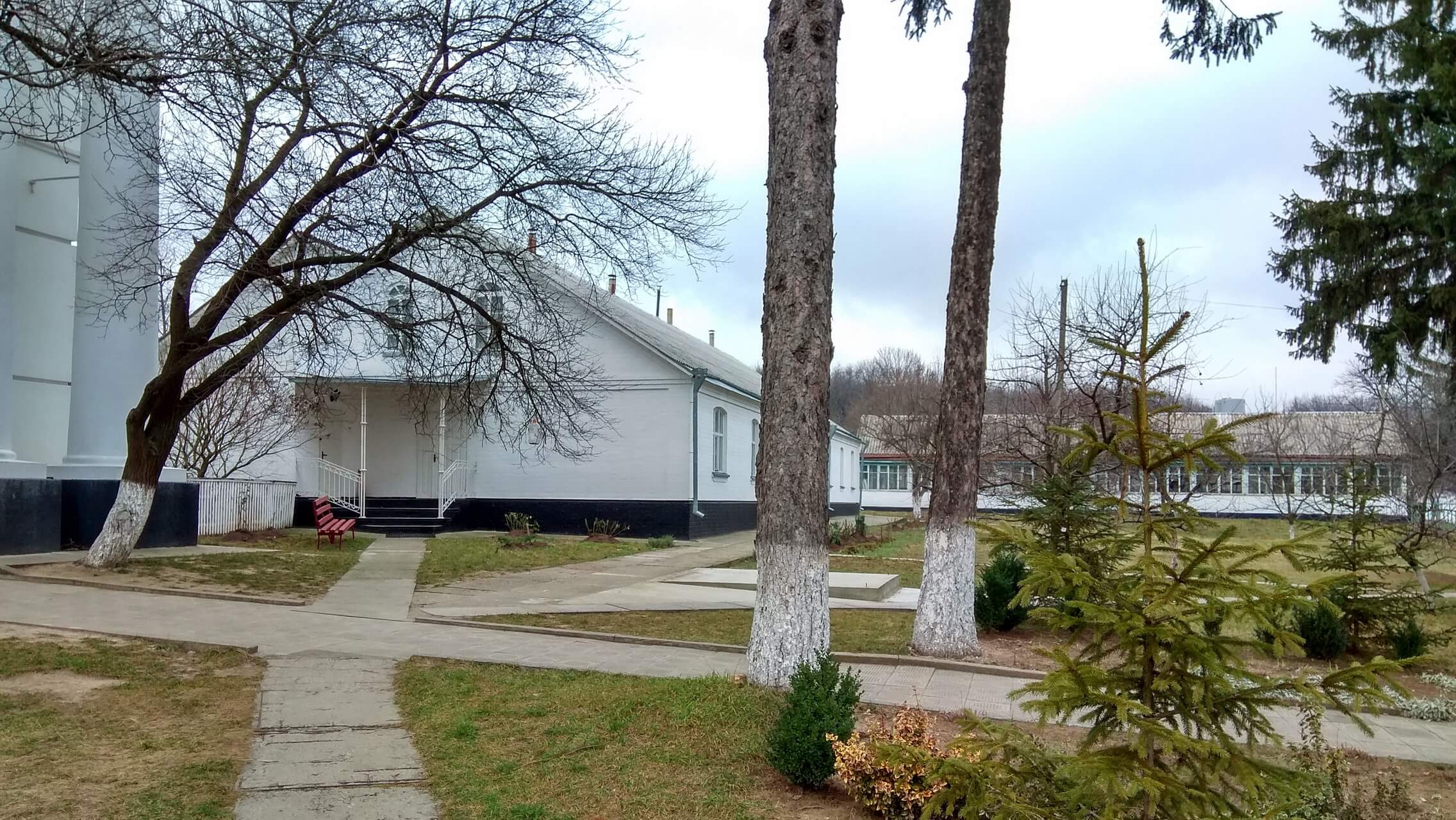
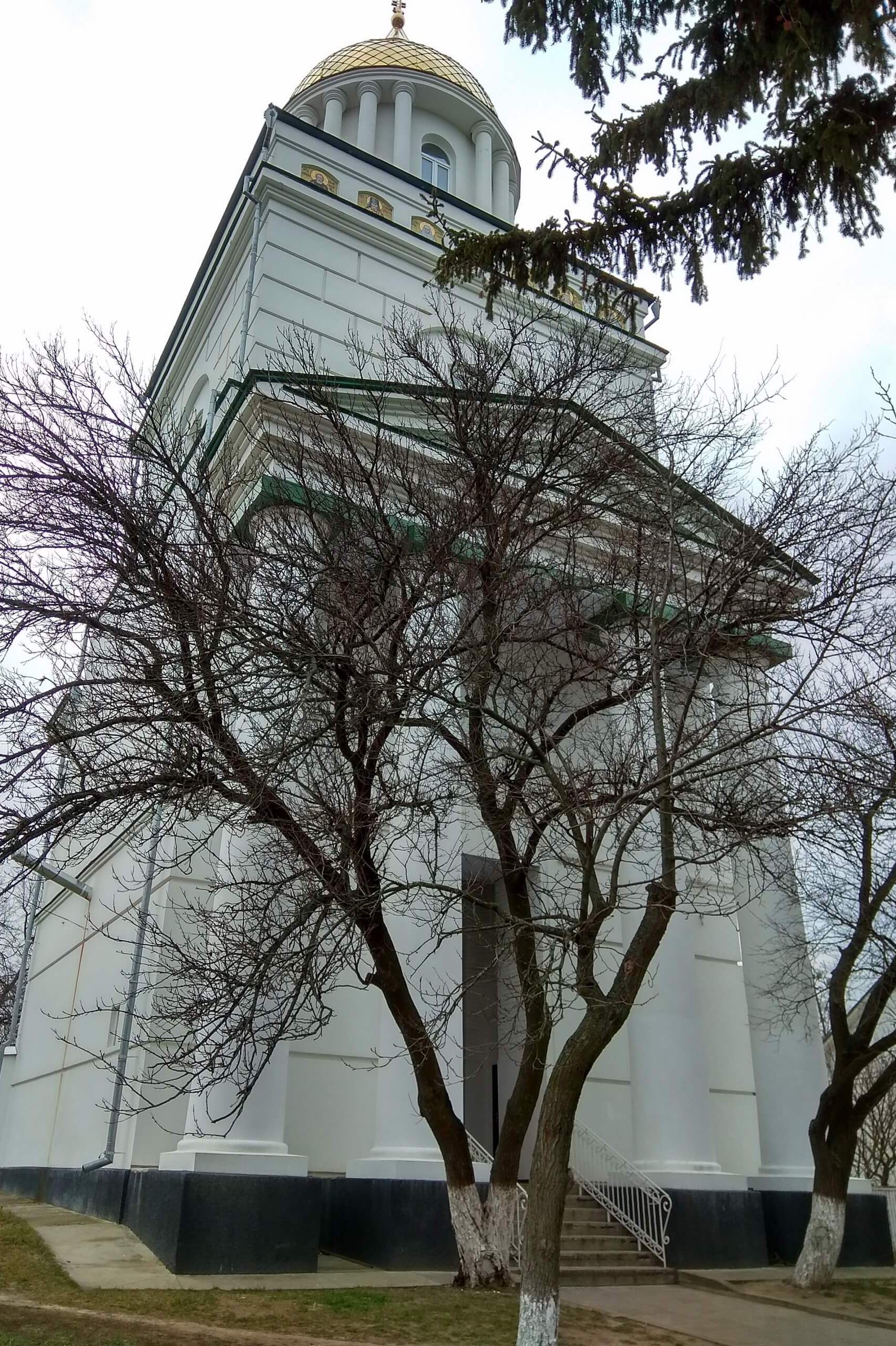
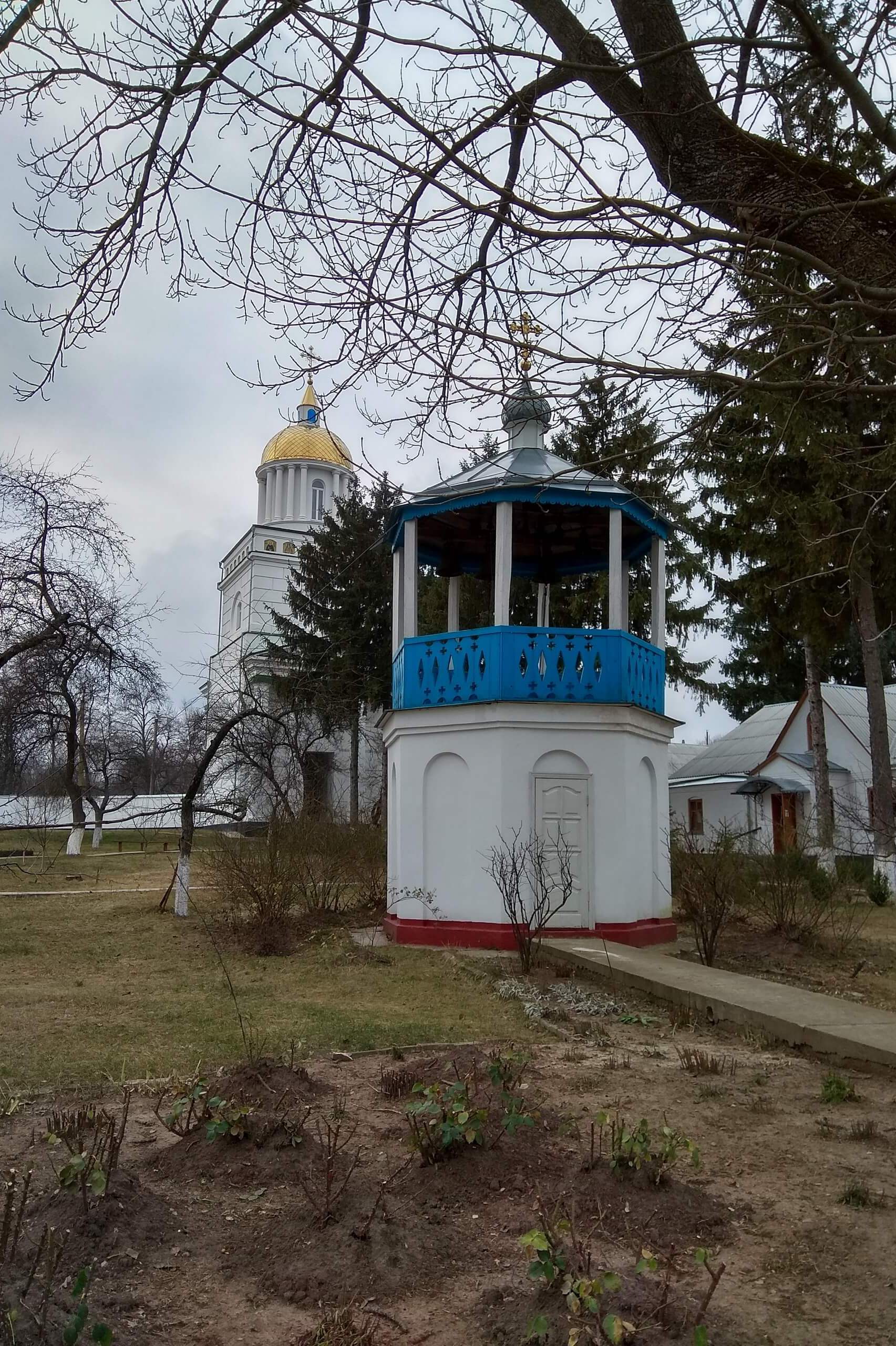
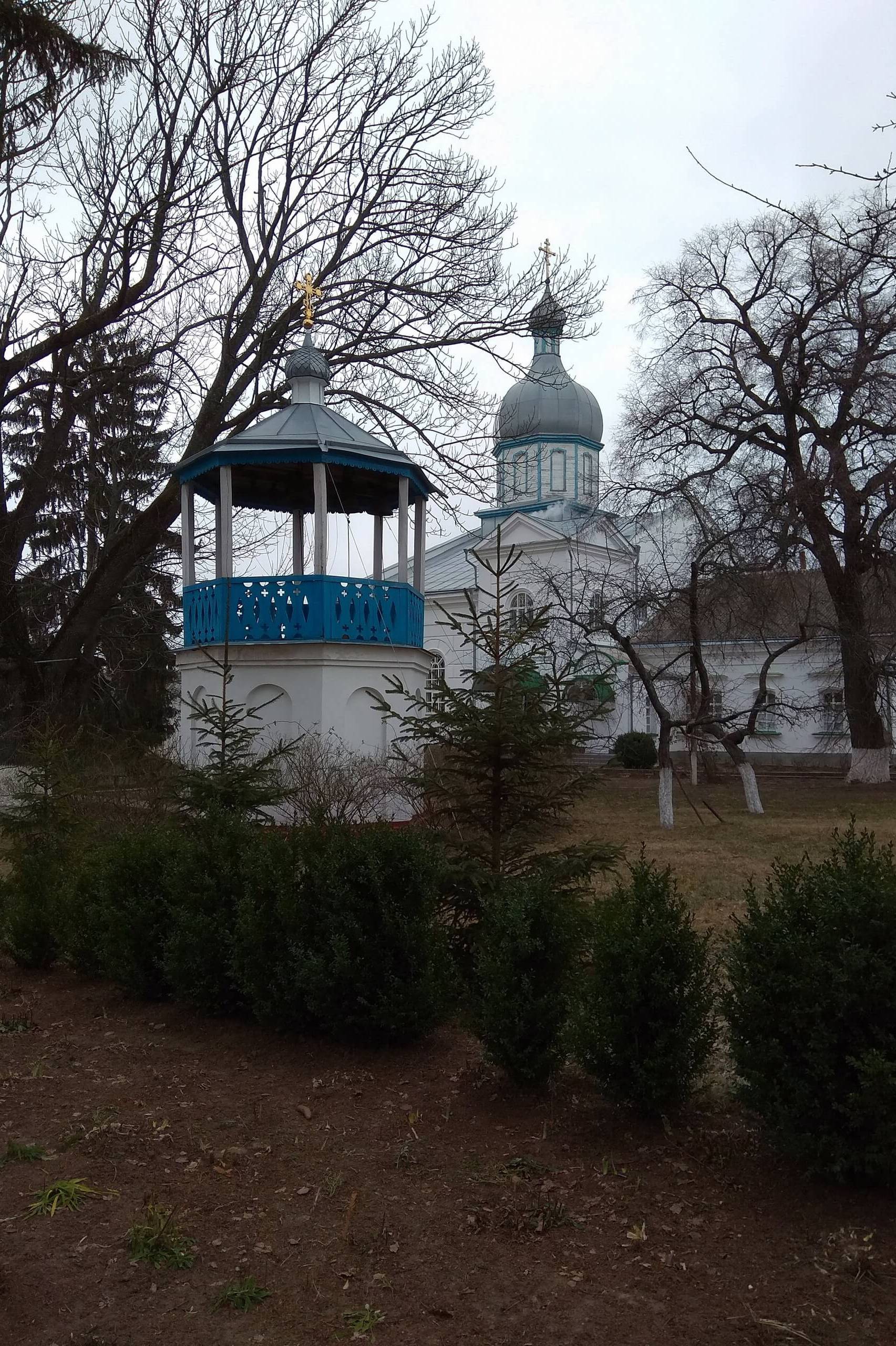
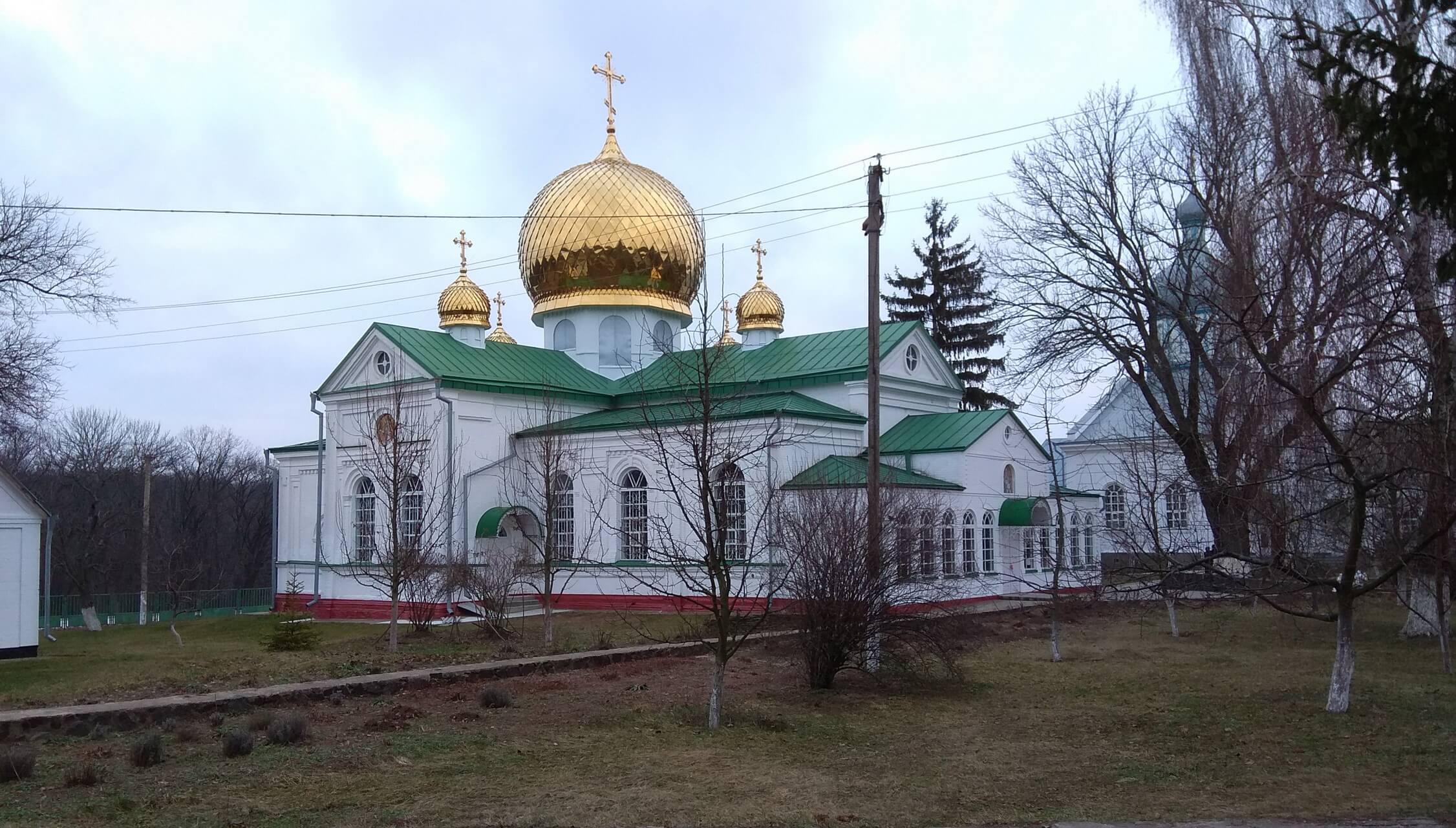
The building history of the house ran across a whole century. The wooden church of St Nicholas of Myra was raised in 1779-1784, replaced in 1798-1800 by a larger one with two altars, rebuilt at the turn of the 1850s and 1860s and in time faced with brick, and in 1883-1884 a third altar was set up in it in honour of the Dormition of the Mother of God4. The warm wooden church of the Great Martyr Barbara, put up in 1780-1784, was replaced by a stone one in 1839-1844, consecrated by Metropolitan Filaret of Kyiv, and in 1866-1867 rebuilt with three altars: the main one of the Ascension of the Lord, the right one of the Great Martyr Barbara, the left one of St Mitrofan of Voronezh4. In the 1830s a stone wall appeared with a three-tier gate bell tower; the convent itself notes that the bell tower is dated variously to 1827, 1833 or 1832-1838, while the Encyclopedia of Modern Ukraine assigns it to 18231, 4. Its height was 34 metres, and only the lower part has survived to our day1, 4.
From 1859 a school for girls from clergy families, mostly orphans, worked at the convent1, 3: in 1872 it had about a hundred pupils, of whom forty-five were orphans kept free of charge1. As of 1908 the convent had 409 residents; it owned 103 desiatinas of land, and a brickworks, an apiary and two hostelries operated there1.
The convent lived through the Soviet period closed twice. By a resolution of the secretariat of the All-Ukrainian Central Executive Committee of 21 November 1929, minutes of session no. 31/424, the house was closed and its territory handed to the agricultural commune "Chervonyi Zhovten"2; Abbess Smarahda was arrested, the commune fell apart in 1932, and from 1934 a home for homeless children and for children of repressed families was housed here1. During the German occupation in 1941 the convent resumed its life1. After the liberation in 1944 Abbess Valentyna was arrested and imprisoned on a charge of sheltering fighters of the Ukrainian Insurgent Army1. Nuns from the closed convents of Kozelshchyna, Chyhyryn, Motronyn and Poltava were moved here, so that by the middle of the 1950s more than 250 sisters and five abbesses were living here1. In 1961 the authorities closed the monastery again, and part of the community, together with the last abbess Yevfaliia, was moved to the Krasnohirka Convent of the Protecting Veil near Zolotonosha1, 2; in 1962 a tuberculosis clinic was opened here, and in 1972 a hospital for children with cerebral palsy1.
In 1992 the convent was revived1, 2. The burden of its restoration was carried from 1993 until her death by Abbess Valentyna (Tsvietkova), buried in 2003 by the southern chapel of the church of St Nicholas3. The convent locally venerates the memory of the Lebedyn abbesses, the venerable martyrs Smarahda (died 1929) and Valentyna (died 1944), who suffered from the persecutors of the faith3 - a different Valentyna from the superior who rebuilt the monastery at the end of the twentieth century, and the sources name them separately.
The memory of the venerable confessor Avakum (Starov), confessor of Cherkasy, is bound up with the convent; he was a dean and the spiritual father of the monasteries of the Kyiv eparchy5. The Ukrainian Orthodox Church canonised him in November 2005 as a locally venerated saint of the Cherkasy eparchy within the Synaxis of the New Martyrs and Confessors of Cherkasy5. On the day of his repose in 2008 the relics of the saint were solemnly translated to the St Nicholas Convent of Lebedyn5, 6; the eparchial and the monastic accounts name that day by different calendar styles - 21 and 8 July of the same year5, 6. The convent itself places the saint's repose in 19646.
The monastery has a literary trace of its own. In a note to his life of Taras Shevchenko, Konysky identifies this very house - "the women's monastery of Lebedyn, of St Nicholas", which "stands by the river Hapturka in the forest called Lebedyn", settled in 1779 by nuns of a Wallachian monastery destroyed by the Turks and built chiefly with the help of Prince Ksaverii Liubomyrskyi - with the "Lebedyn of the maidens between Chyhyryn and Zvenyhorod" that Shevchenko mentions in "The Haidamaks"; and he remarks in the same place that the poet wrote of it "not knowing that the convent was settled more than ten years after the events described in 'The Haidamaks'"9. A local tradition recorded in an eparchial historical note goes further and relates that in 1823 the young Taras Shevchenko visited Lebedyn with his sister Kateryna, who came to the St Nicholas convent to pray before her wedding7. Konysky does not confirm this: he rejects the very name of the monastery to which Taras is said to have gone with his sisters as one that "never was and is not"9. The tradition is given here as tradition, and Konysky's documentary caution as what it is.
This house should not be confused with the men's monastery of St George at Lebedyn, which stood elsewhere in the same village: it was suppressed by a decree of the Most Holy Synod of 31 December 1845, no. 18475, and one of the reasons given for the closure was that a new St Nicholas convent, gaining strength quickly, was already at work not far away in the forest7.
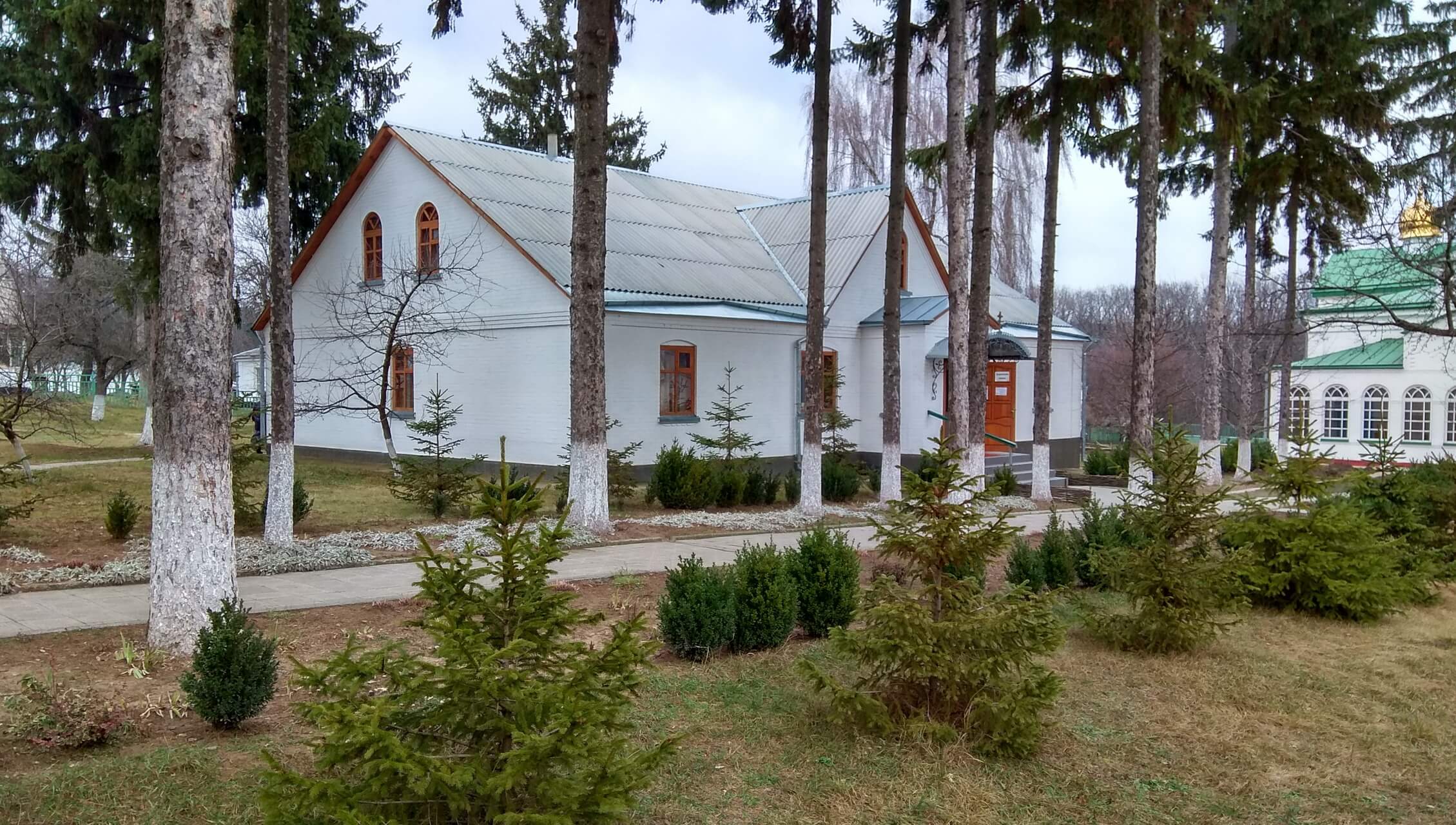
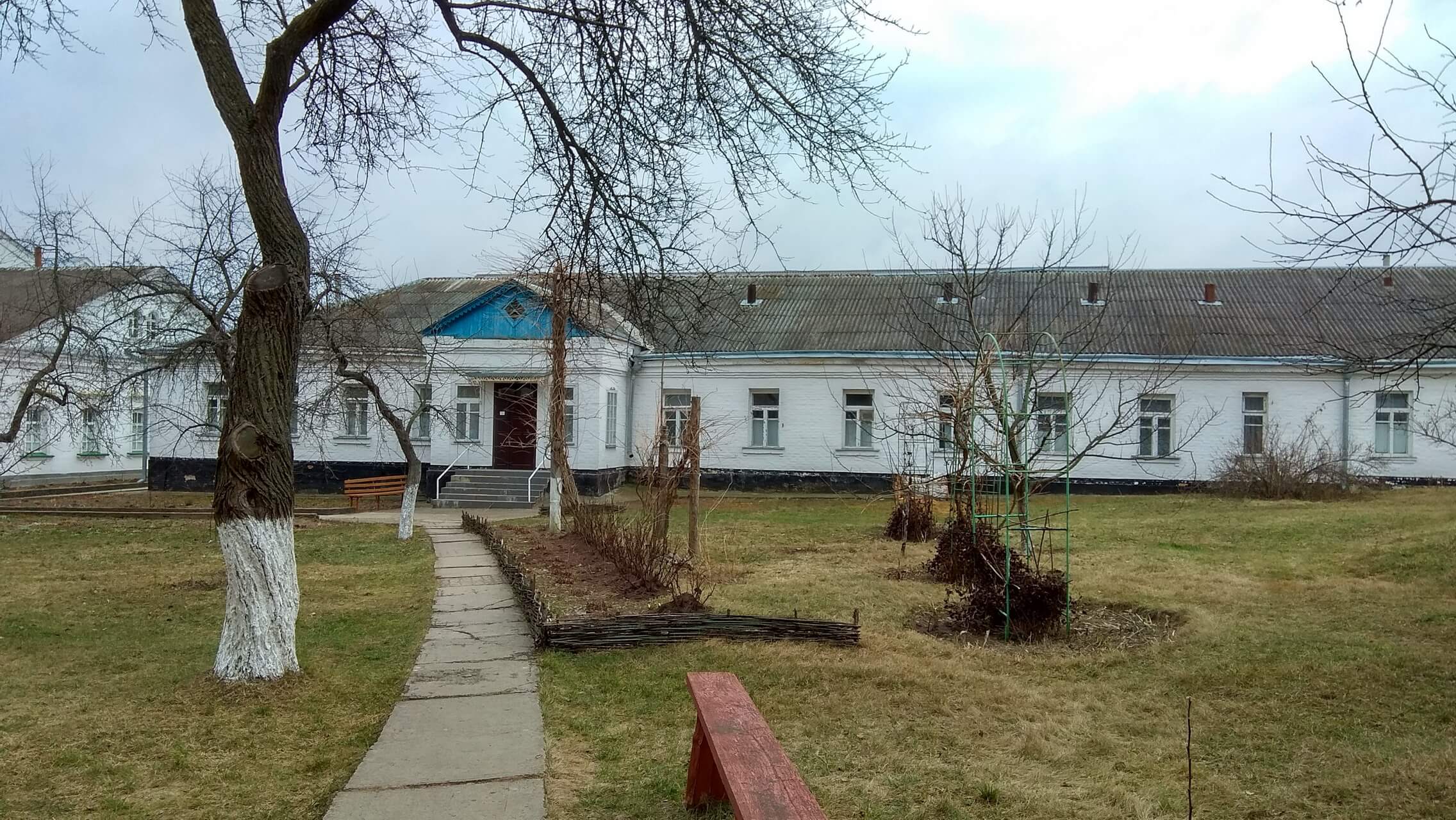
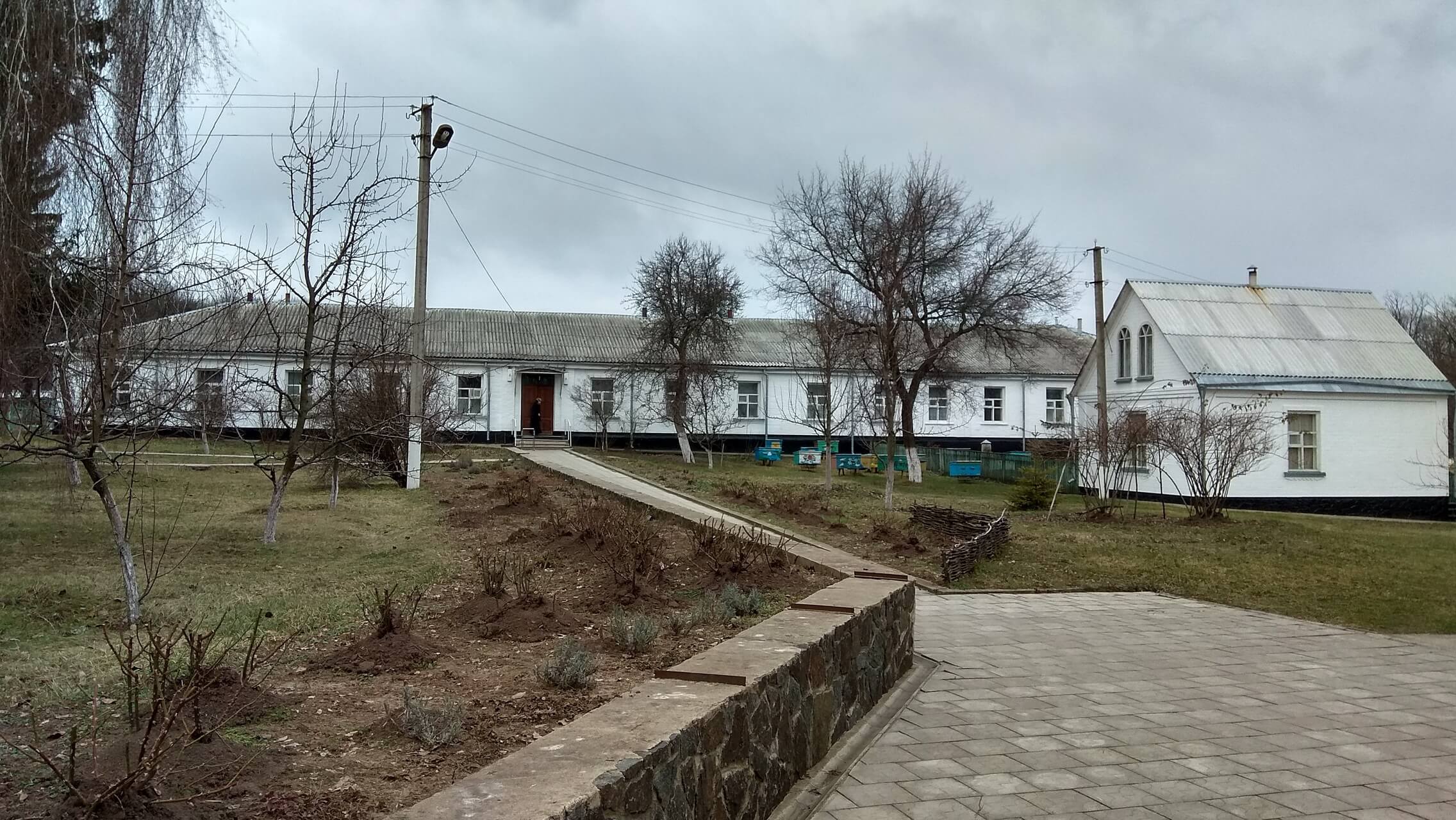
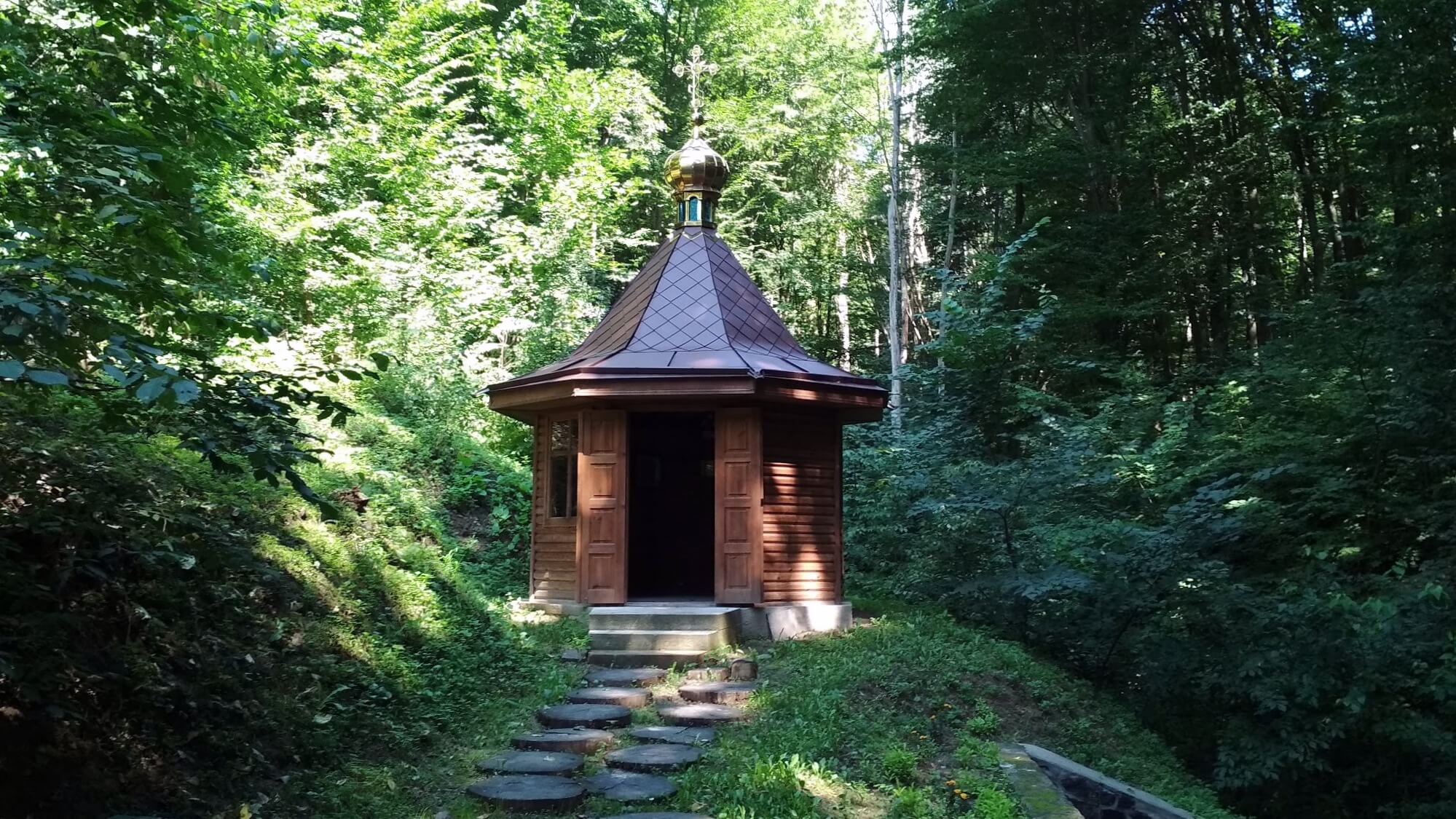
As of 2016, when the article of the Encyclopedia of Modern Ukraine appeared, 43 sisters lived in the convent and two churches were in use - that of St Nicholas (the summer church) and the three-altar church of the Ascension, which incorporates the church of St Barbara and serves for the cold season - along with a chapel, cell blocks and a complex of utility buildings1. On 16 April 2021, the Friday of the fifth week of the Great Fast, a monastic tonsure was performed in the convent: three novices - Arkadiia, Lavrentiia and Tarasiia - were tonsured into the lesser schema with the monastic names Yevfrosyniia, Makariia and Dymytra8; on that day 30 nuns were living in the Lebedyn monastery8.
Show sources
- 1. Іванченко Н. І. «Лебединський Свято-Миколаївський жіночий монастир» (encyclopaedia). Енциклопедія Сучасної України, т. 16, Інститут енциклопедичних досліджень НАН України, 2016 (accessed: 2026-08-29)
- 2. Мариновський Ю. Ю. «Лебединський Свято-Георгіївський монастир та Лебединський Свято-Миколаївський монастир» (encyclopaedia). Енциклопедія історії України, т. 6 (Ла-Мі), Інститут історії України НАН України, вид-во «Наукова думка», 2009 (accessed: 2026-08-29)
- 3. «Історія» (official site). Миколаївський Лебединський жіночий монастир, офіційний сайт обителі (accessed: 2026-08-29)
- 4. «Архітектура» (official site). Миколаївський Лебединський жіночий монастир, офіційний сайт обителі (accessed: 2026-08-29)
- 5. Пресслужба Черкаської єпархії. «У річницю канонізації прпсп. Авакума (Старова) єпископ Антоній звершив Літургію у Свято-Миколаївському Лебединському монастирі» (UOC news). Черкаський благовісник, офіційний сайт Черкаської єпархії, 2023 (accessed: 2026-08-29)
- 6. Пресслужба Черкаської єпархії. «Молитва за сім'ю на Шполянщині» (UOC news). Черкаський благовісник, офіційний сайт Черкаської єпархії, 2022 (accessed: 2026-08-29)
- 7. Пресслужба Черкаської єпархії. «Архієпископ Феодосій відзначив свято ікони Божої Матері «Казанська» у Лебединському Миколаївському монастирі (історична довідка)» (UOC news). Черкаський благовісник, офіційний сайт Черкаської єпархії, 2020 (accessed: 2026-08-29)
- 8. Синодальний інформаційно-просвітницький відділ. «Архієпископ Черкаський Феодосій звершив чернечий постриг у Миколаївському Лебединському жіночому монастирі» (UOC news). Українська Православна Церква, синодальний інформаційний ресурс (uoc-news.church), 2021 (accessed: 2026-08-29)
- 9. Кониський О. Я. «Тарас Шевченко-Грушівський: хроніка його життя, розділ «До укінчення Академії», примітка 235» (academic publication). Електронна бібліотека «Ізборник» (litopys.org.ua) (accessed: 2026-08-29)
- Journal No. 4 session of the Holy Synod of UOC on 09.03.2004 year
- Journal No. 11 session of the Holy Synod of UOC on 16.09.1992 year