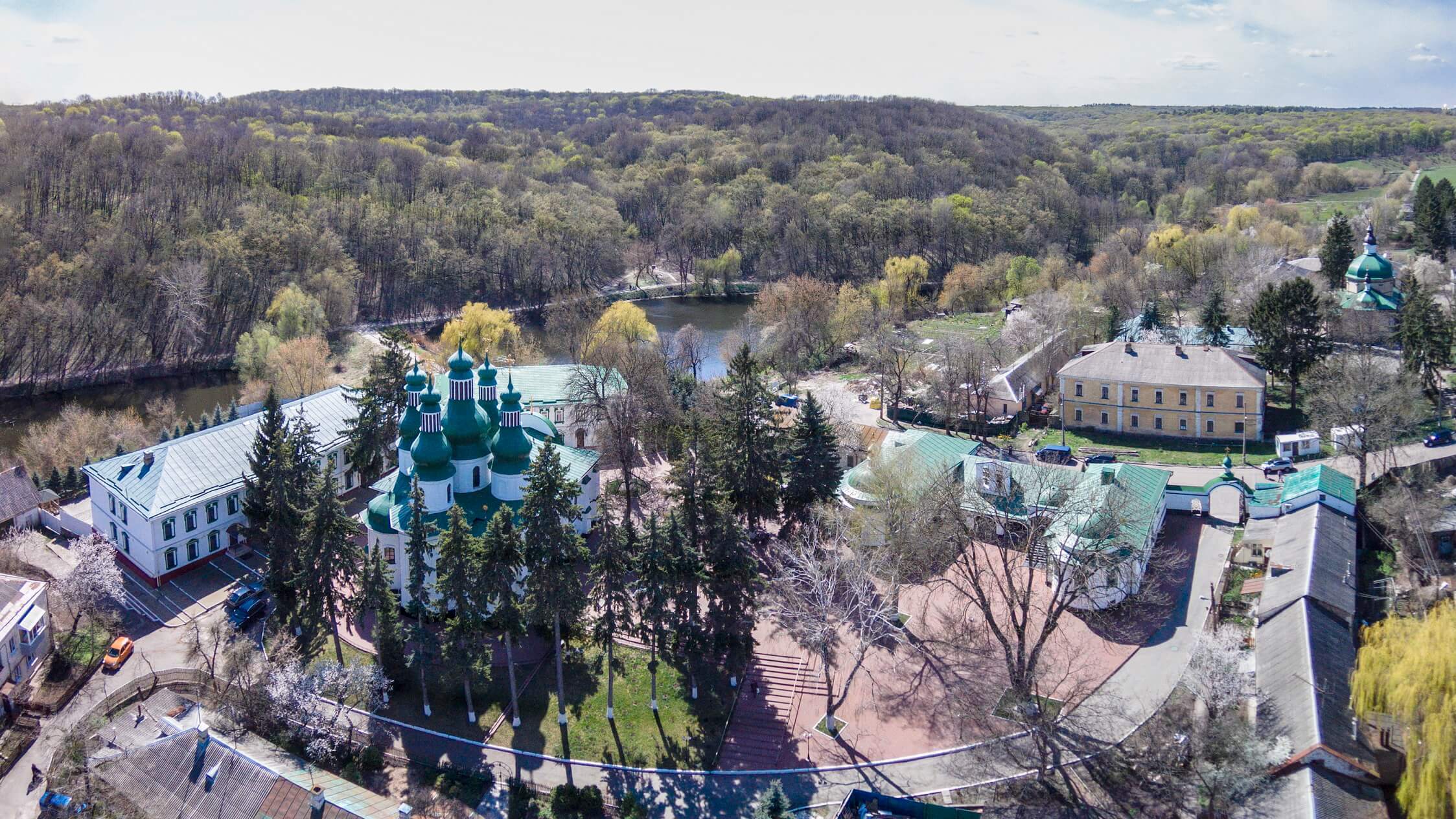
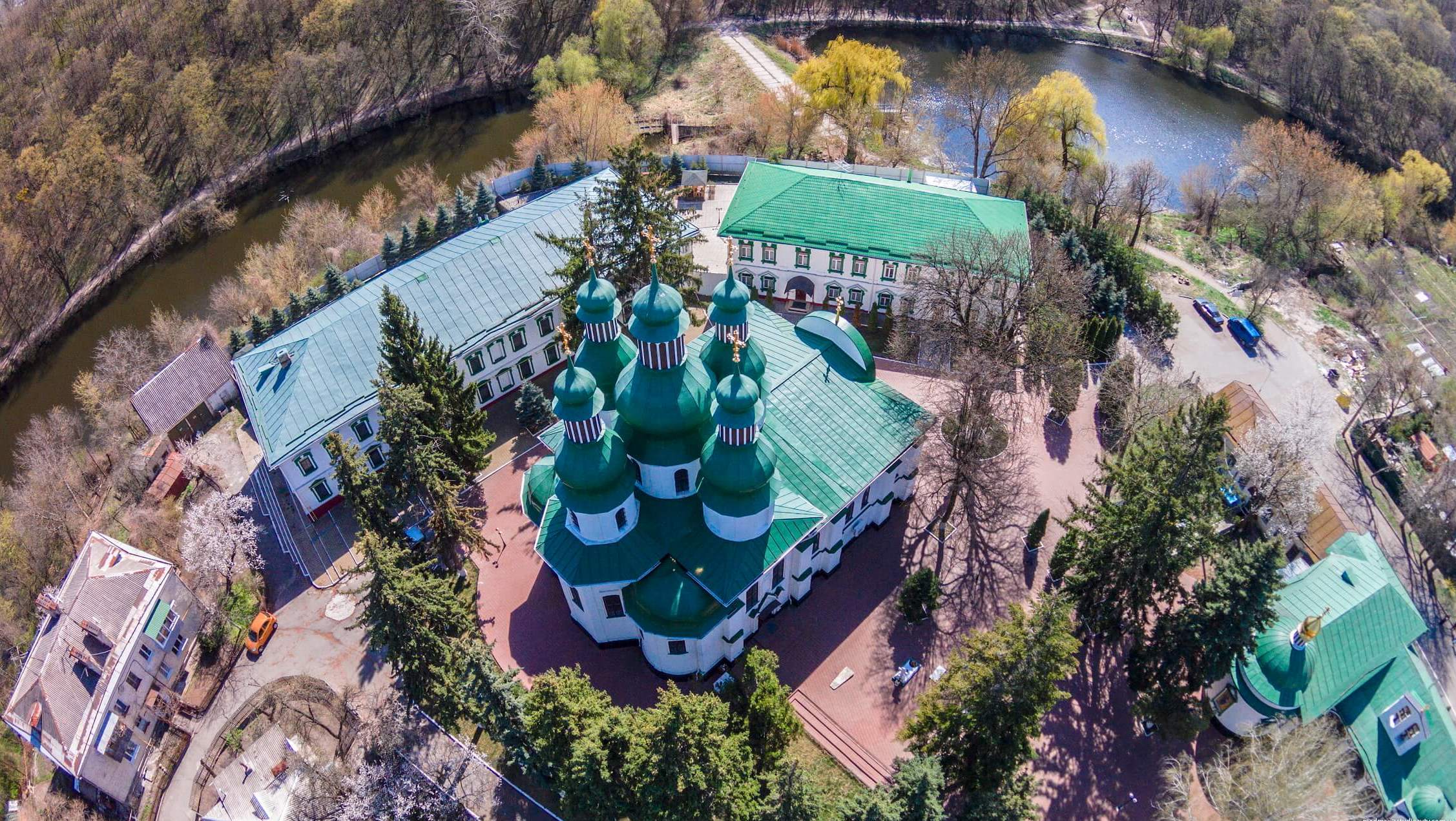
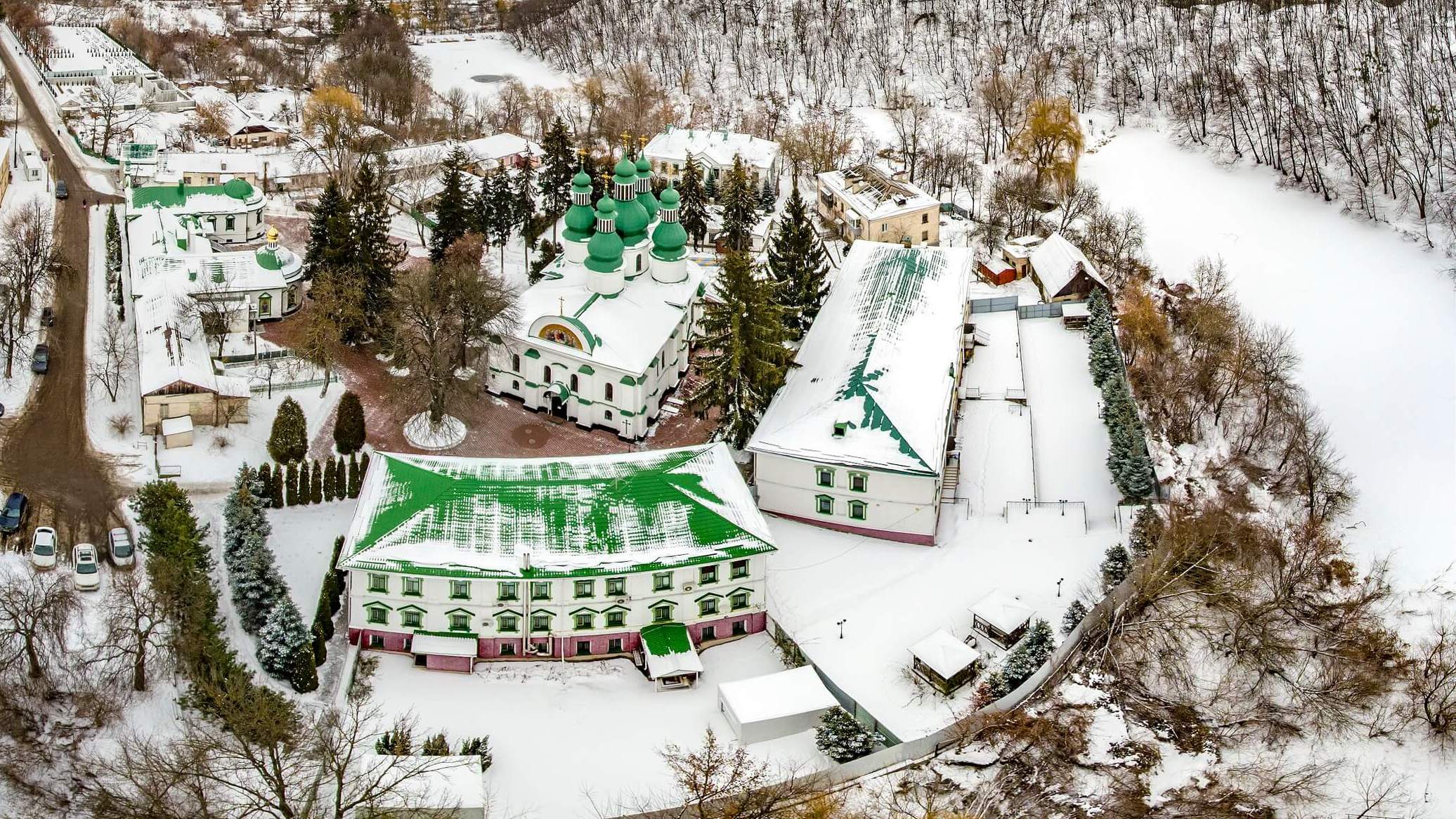
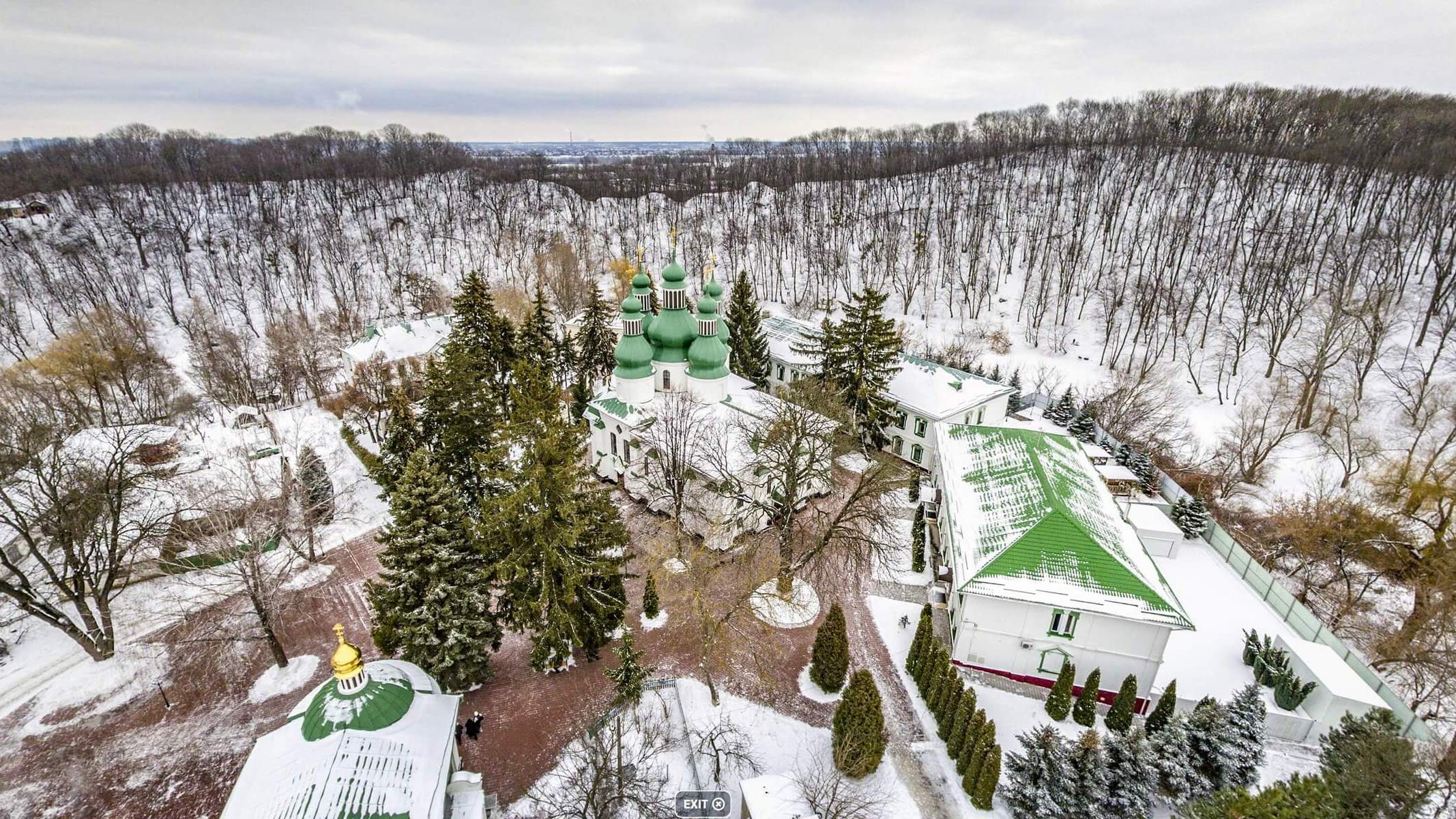
Kitayevo Holy Trinity Monastery
50.367400, 30.541149
- the document of appointment to the post:
Journal No. 10 session of the Holy Synod of UOC on 03.04.1996 year
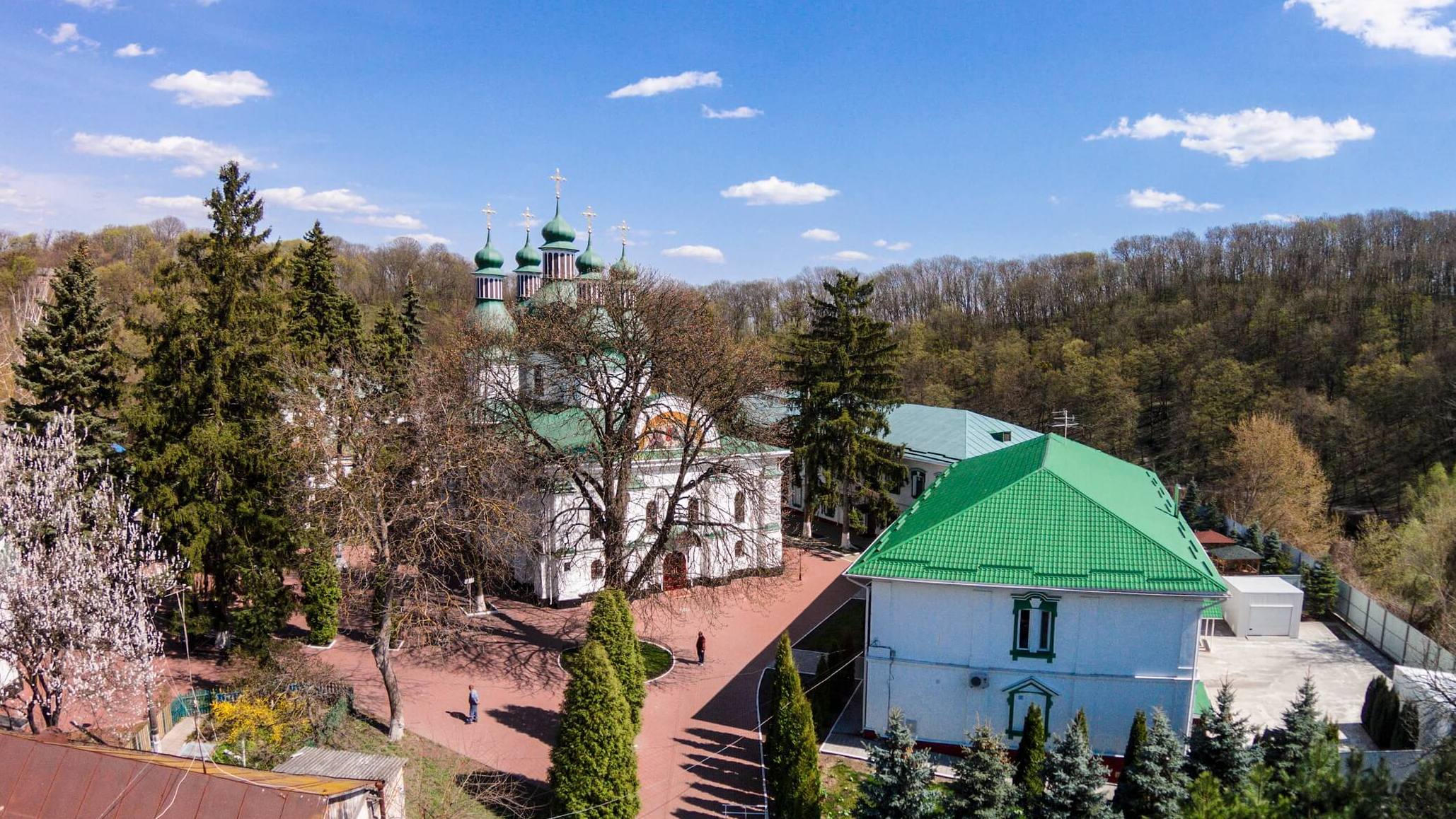
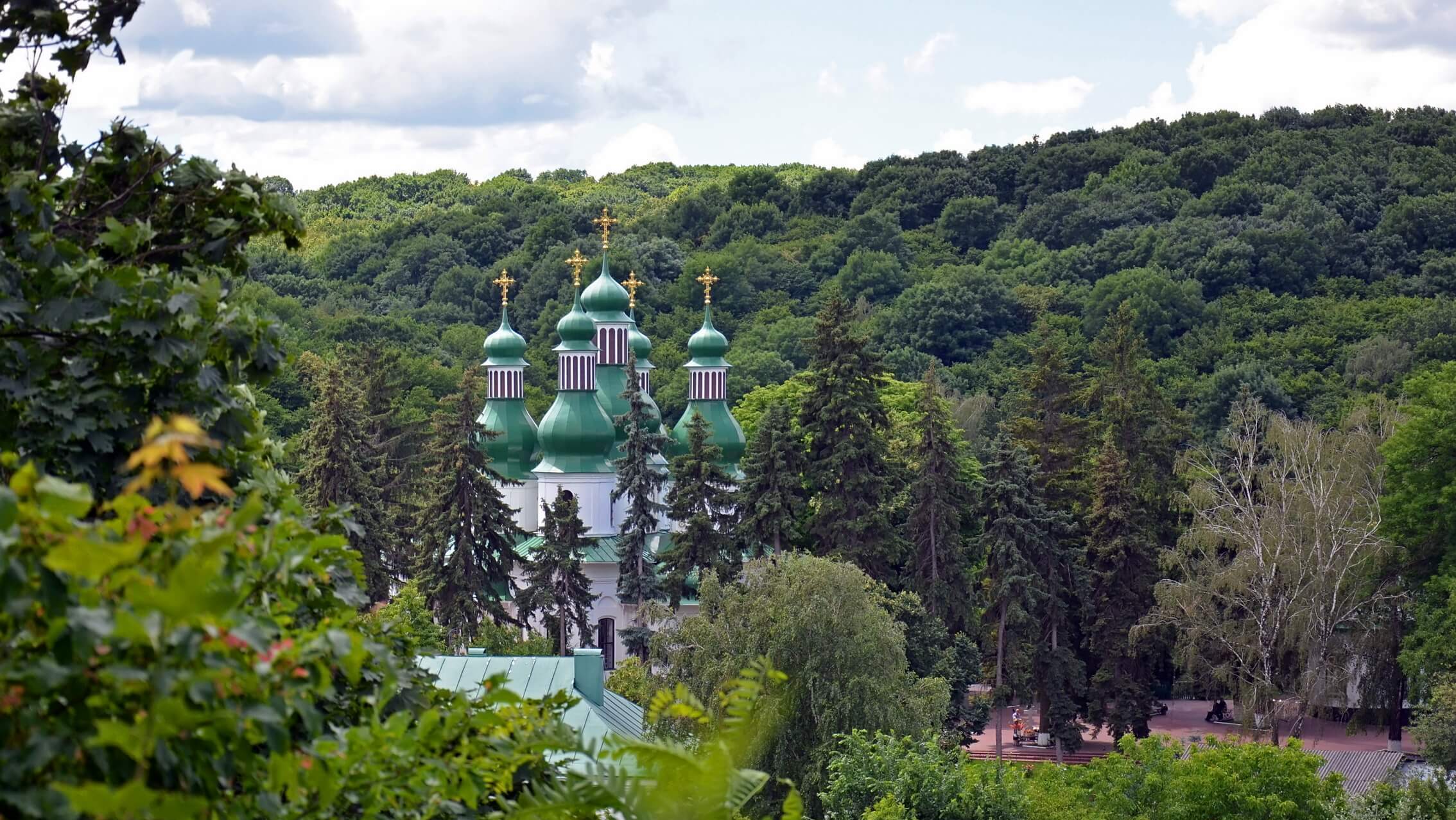
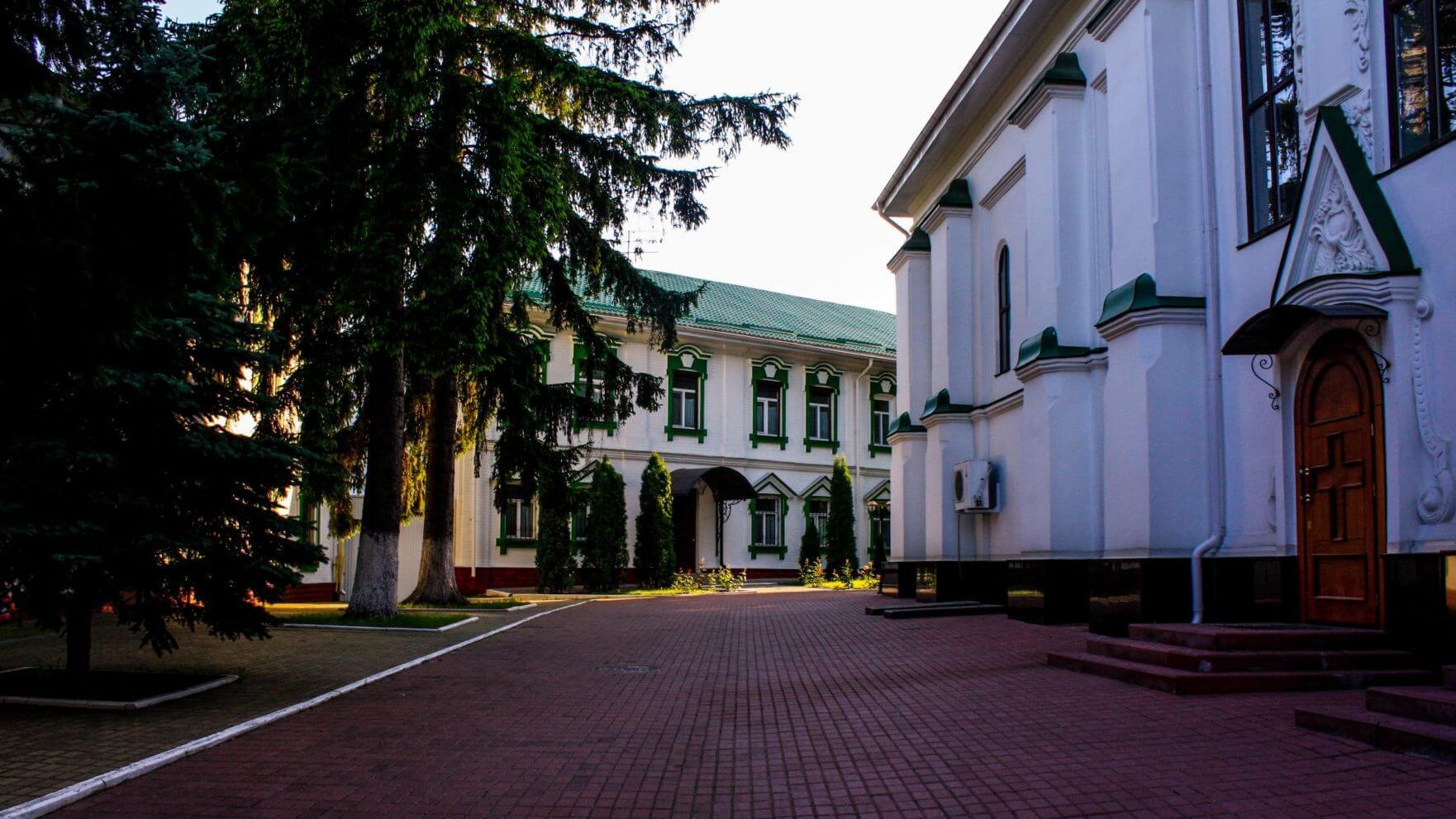
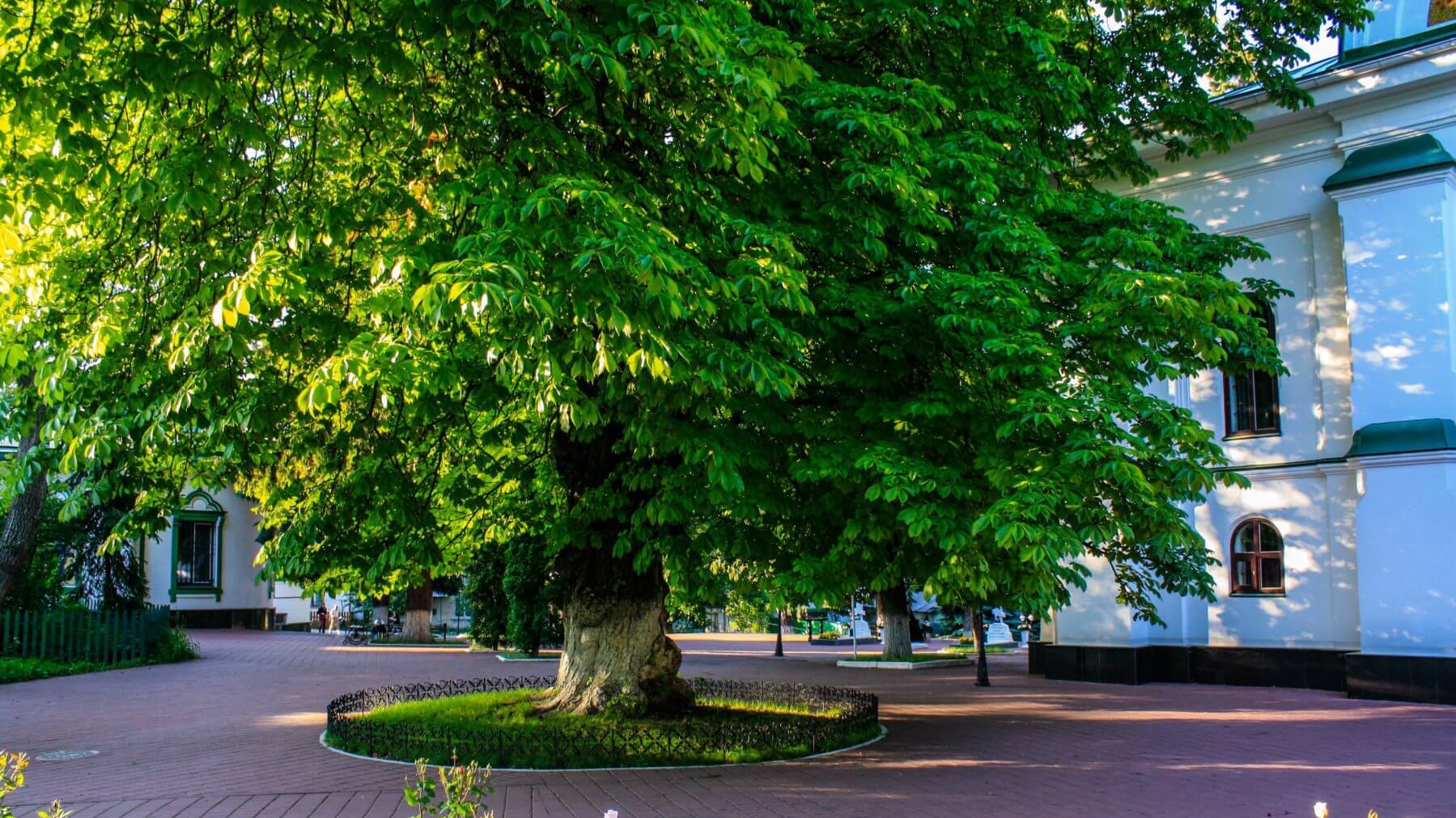
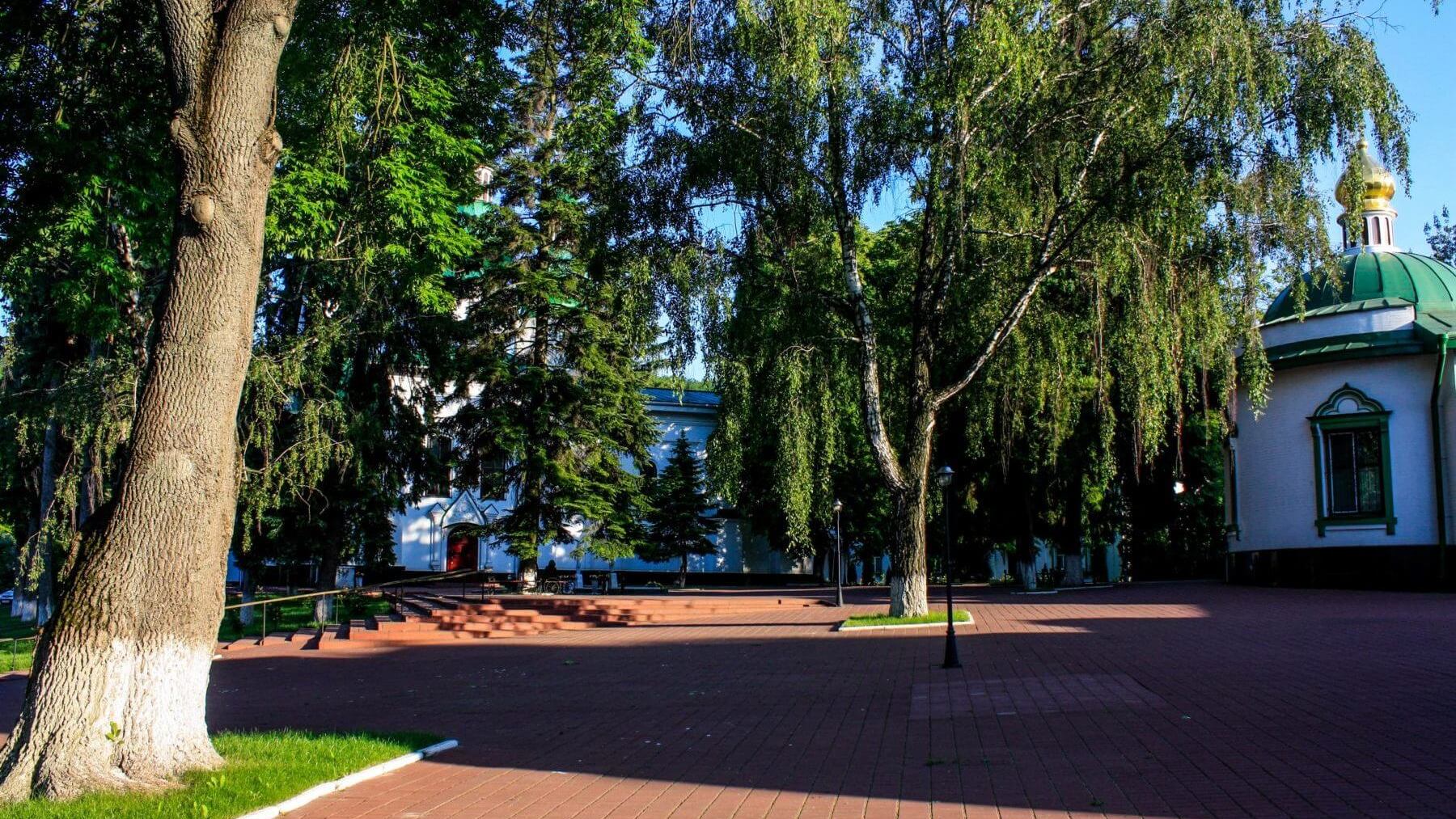
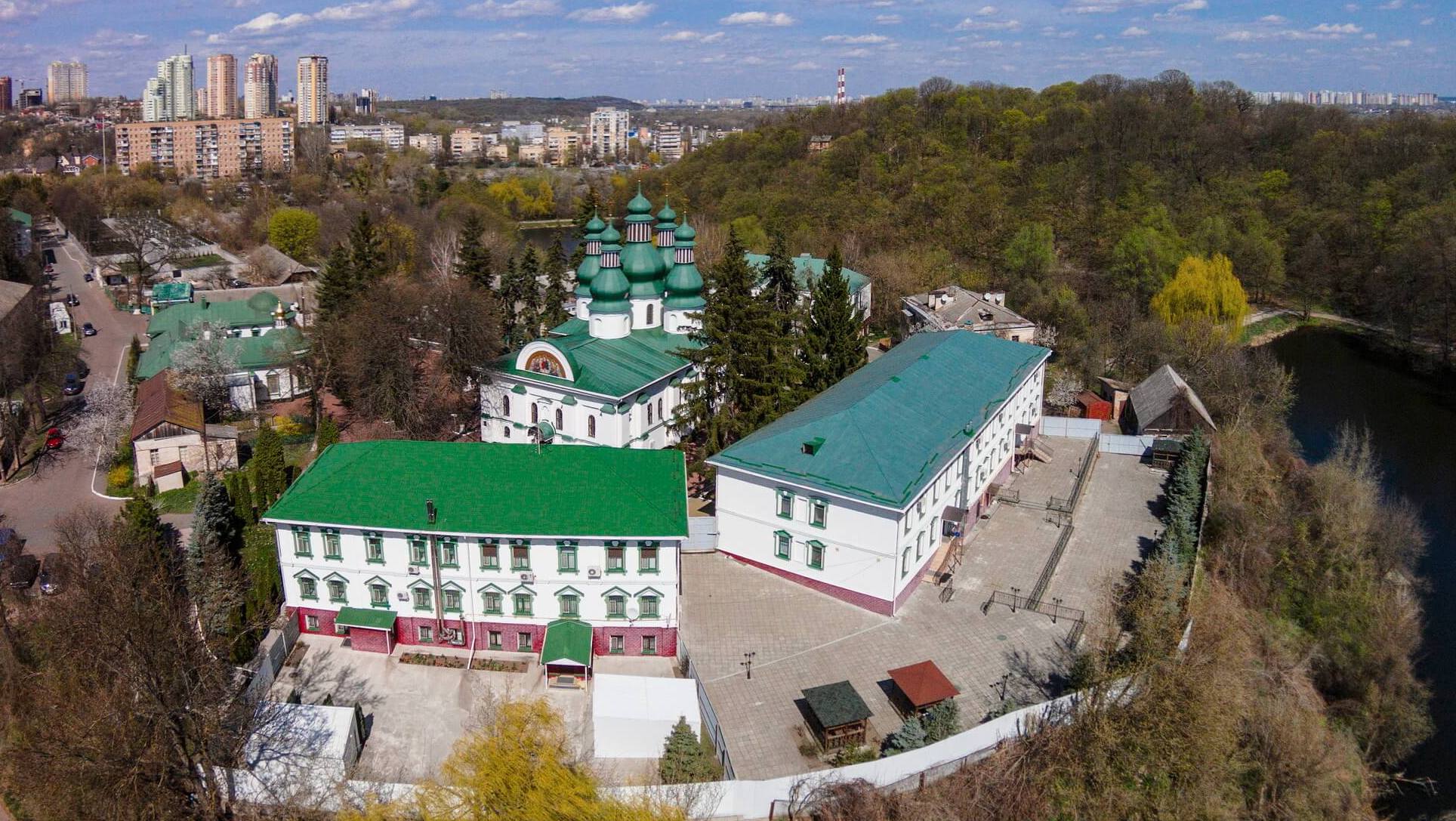
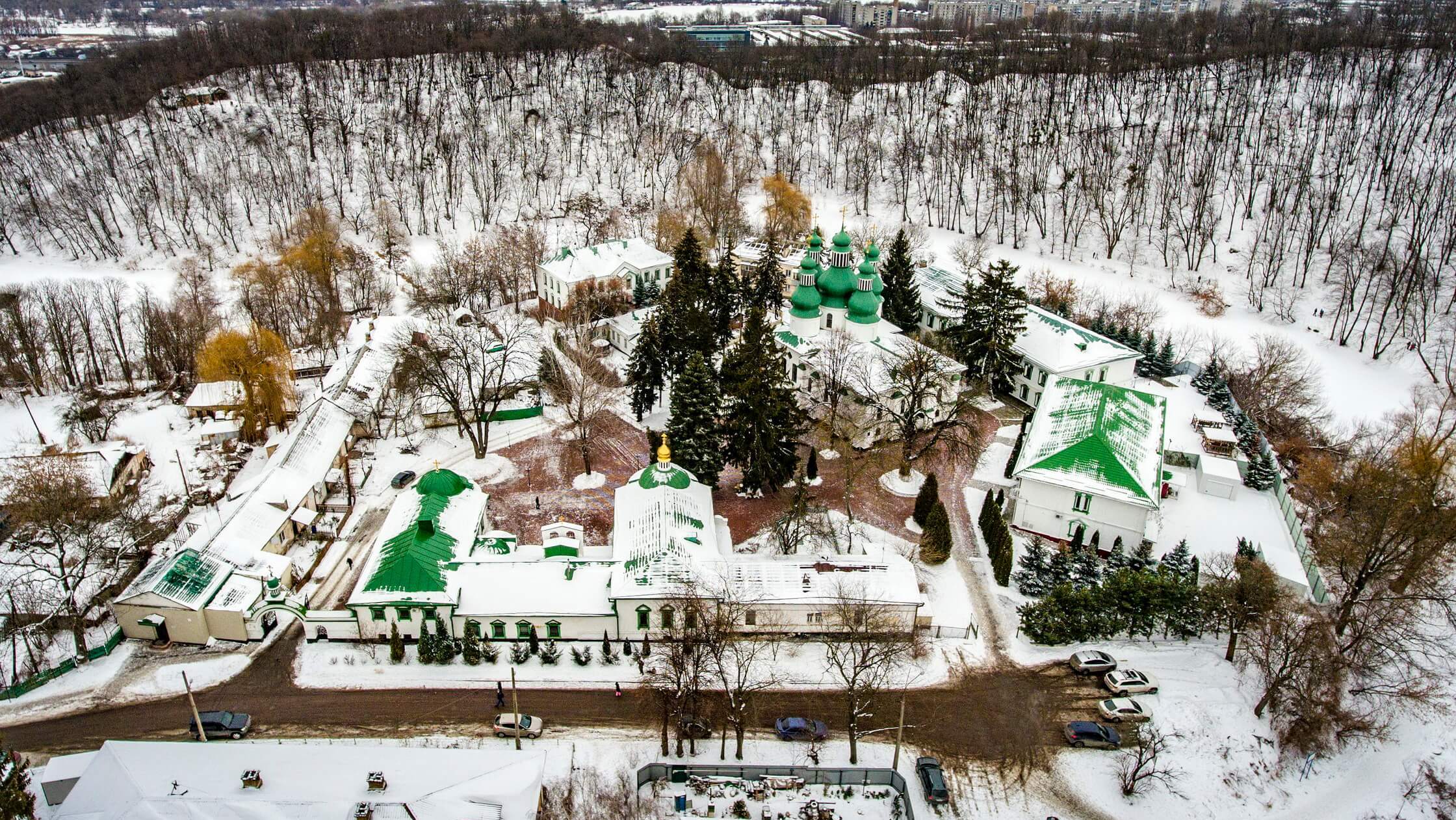
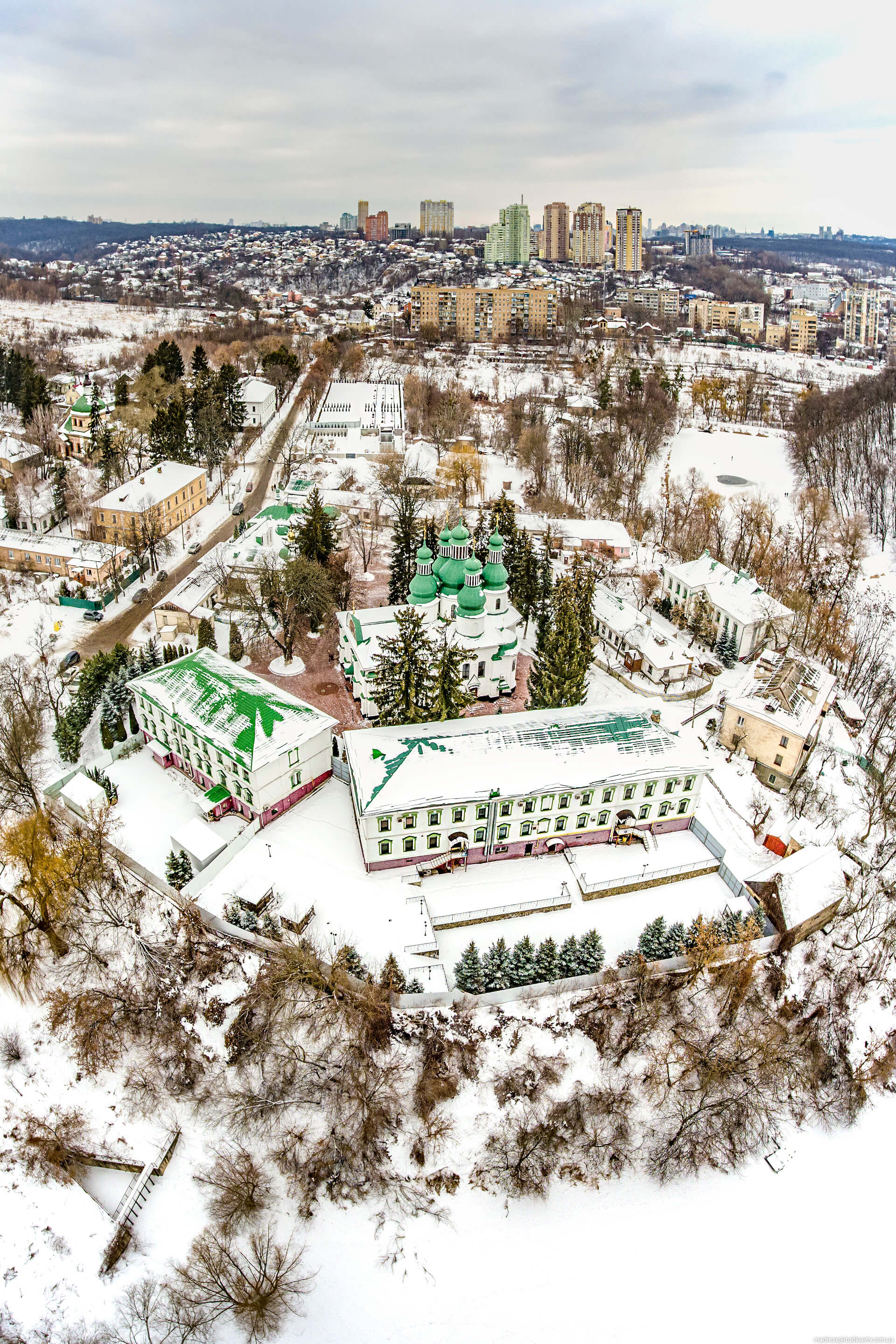
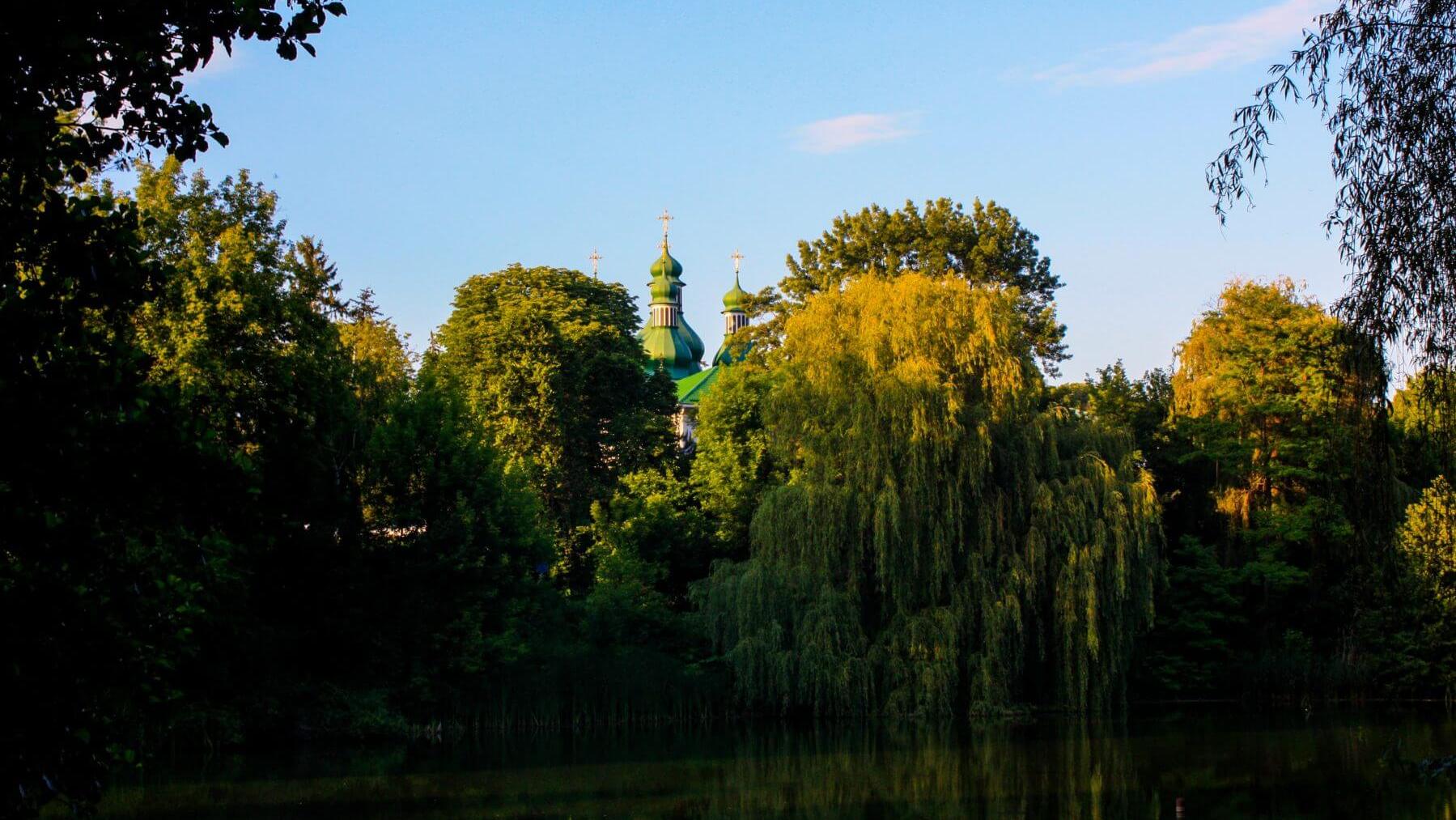
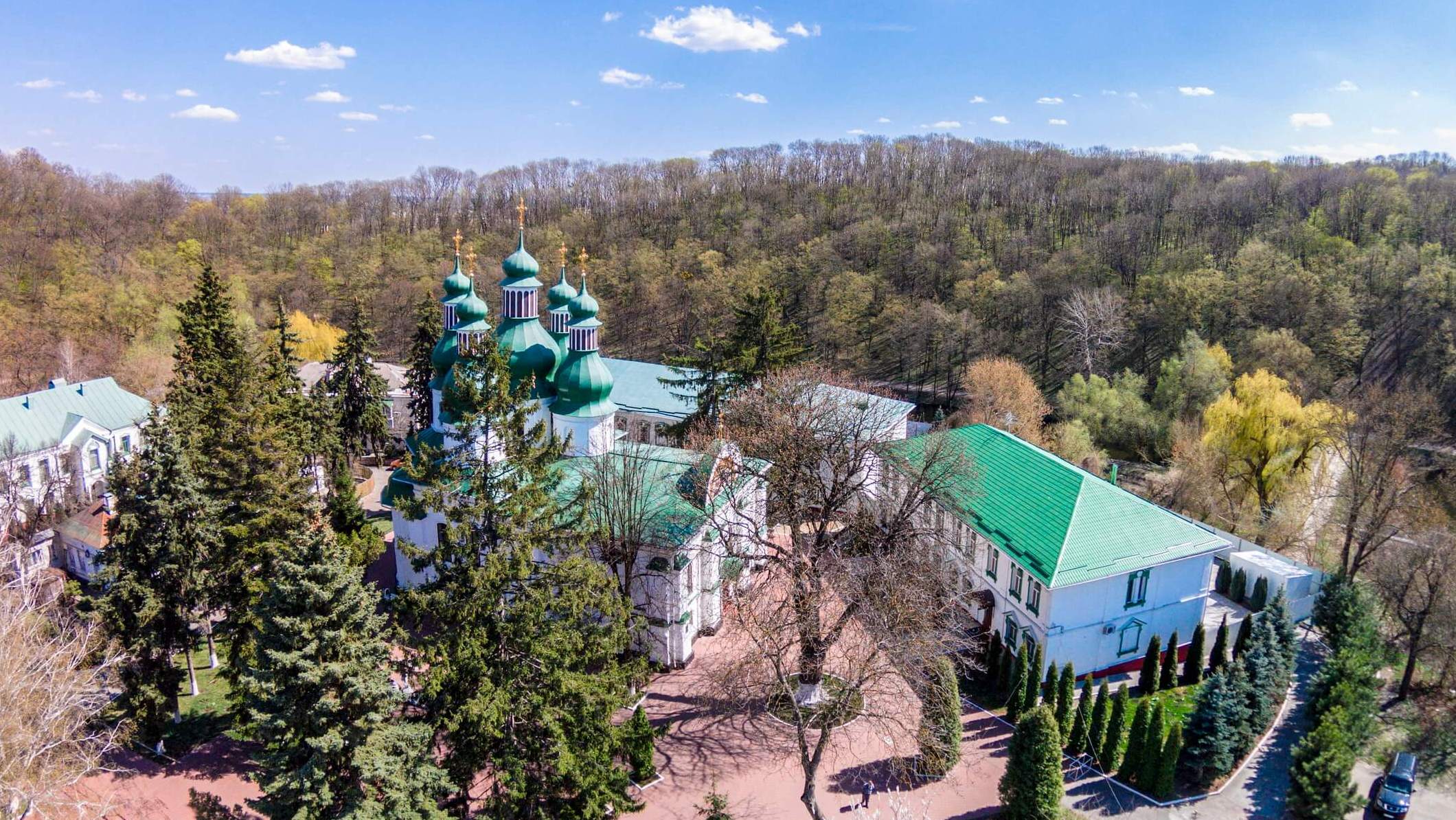
The Holy Trinity Kytaiv monastery of the Kyiv eparchy of the Ukrainian Orthodox Church stands on the southern edge of Kyiv, in the Kytaiv tract6. The tract itself is a deep S-shaped hollow in the mass of the right-bank heights, opening at its northern end into the valley of the Dnipro; a stream has run along its bottom from ancient times, and in the second half of the twentieth century a cascade of four lakes divided by dams was made here9. The monastery's main ensemble stands on the western shore of the lakes, while the wooded Kytai hill keeps on its summit the remains of the ramparts of an old Rus hill-fort, and in its depths the monks' caves, opening to the west9.
The name of the tract is explained in different ways: from the byname of Prince Andrei Bogoliubsky in a charter attributed to him, from the Turkic "kytai" in the sense of "fortress" - in memory of the old Rus hill-fort - and from the word for a skete, since in Volodymyr Dahl's dictionary "kytets" means a dweller in a skete1.
An old Rus fortified settlement stood on Kytai hill; after the invasion of 1240 the fortress was never revived, and the settlement lasted until the fifteenth century1. Church tradition ties the house to a charter of 1159 attributed to Prince Andrei Bogoliubsky, but its text is known only from an eighteenth-century copy and abounds in anachronisms and divergences from the ancient sources: Metropolitans Yevhenii (Bolkhovitinov) and Makarii (Bulhakov) stated that the copy known today does not match an original, and the modern scholar Iryna Zhylenko considers the text the fruit of repeated revisions made at the Lavra to defend its ancient privileges1. The Encyclopedia of the History of Ukraine places the skete's origin, by the legend of church tradition, in the sixteenth or seventeenth century, and by written sources dates the house to 17166.
On 16 October 1720 Peter I confirmed the Lavra's rights to "the monastery Malyi Kytaievskyi, built anew in 1716 on the land of the Caves house", which had been put up by the governor of Kyiv, Prince Dmytro Golitsyn1. It was at his expense that a wooden church of Venerable Serhii of Radonezh was raised here in 17162, 6, 7.
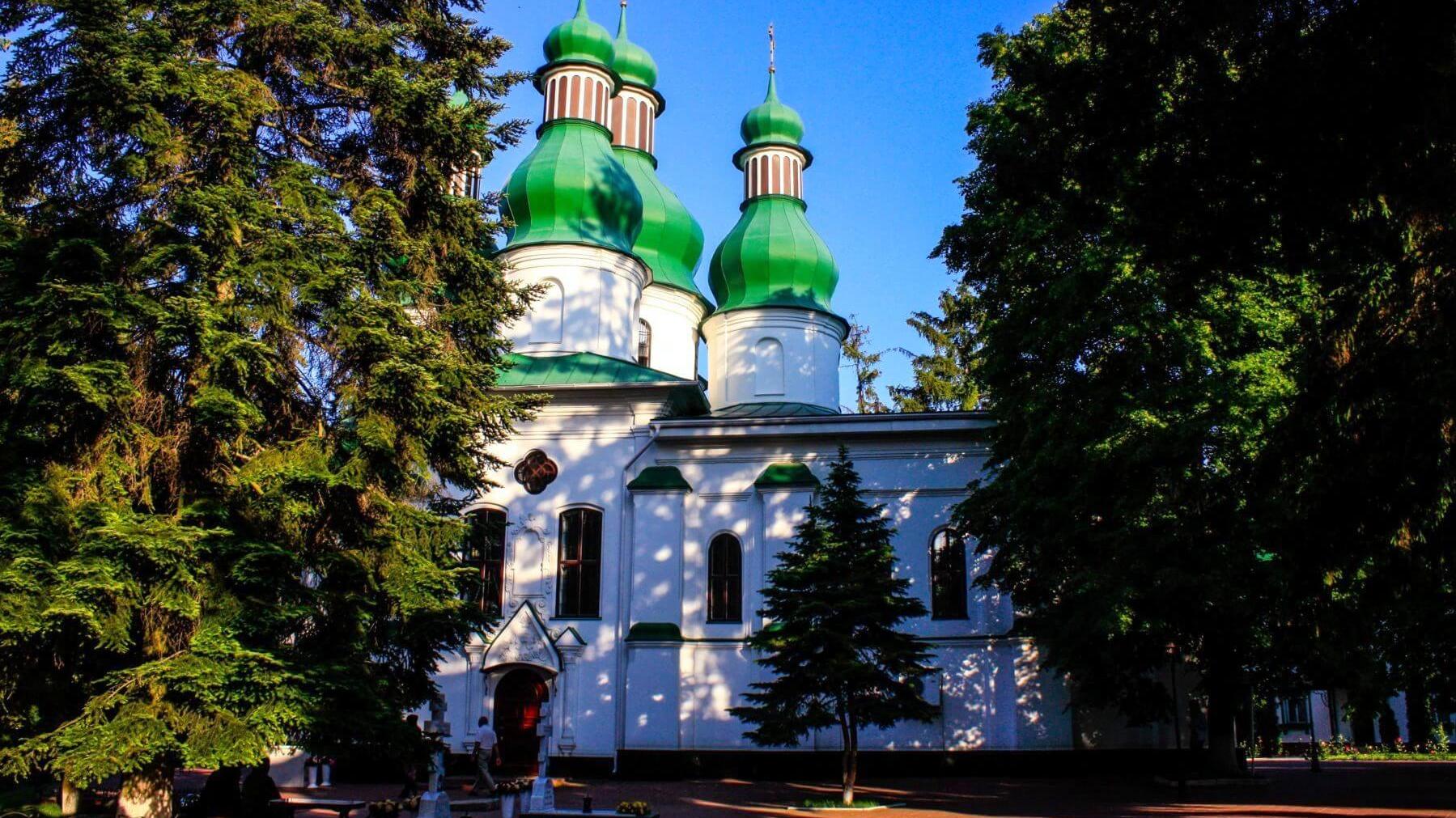
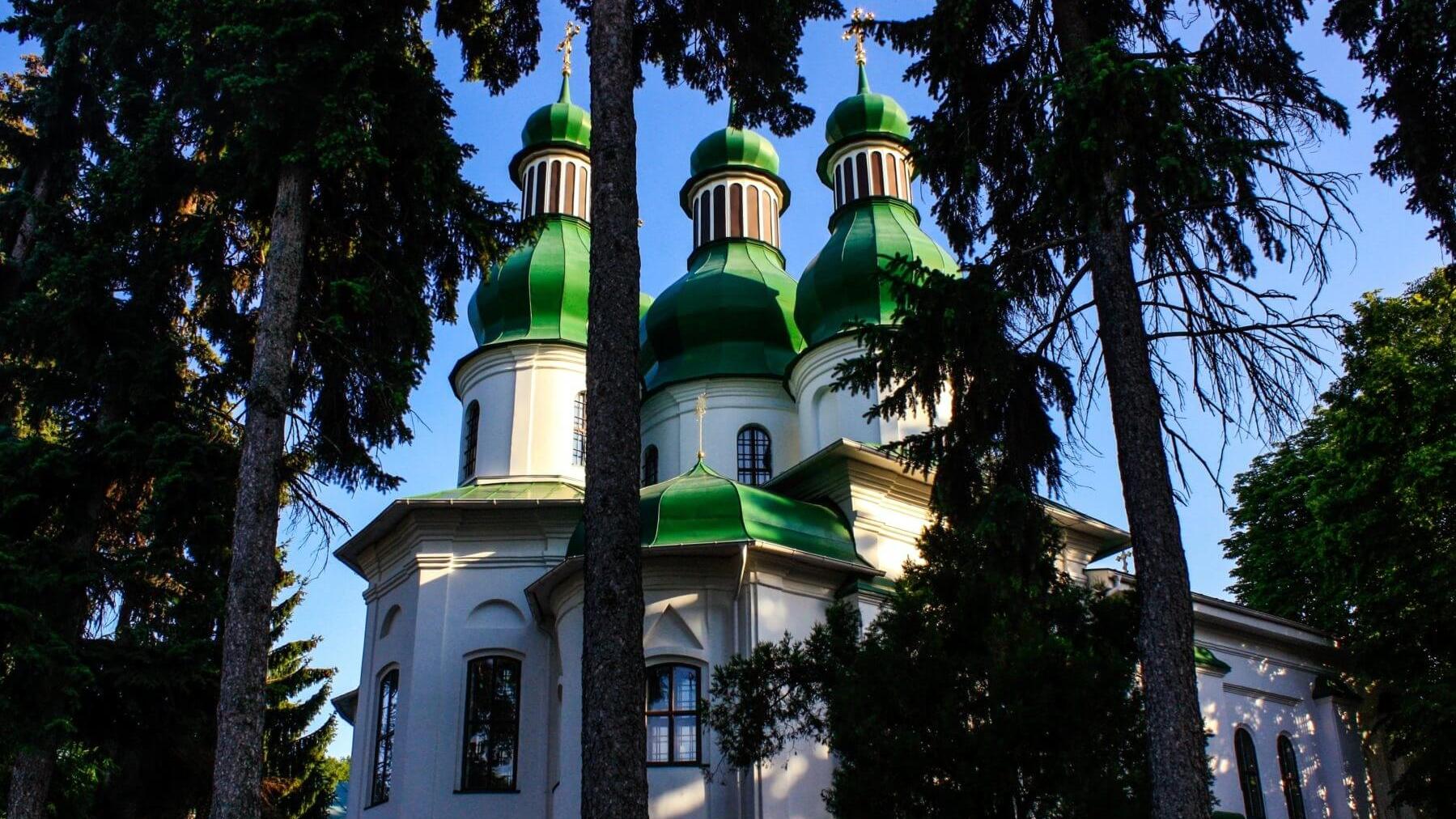
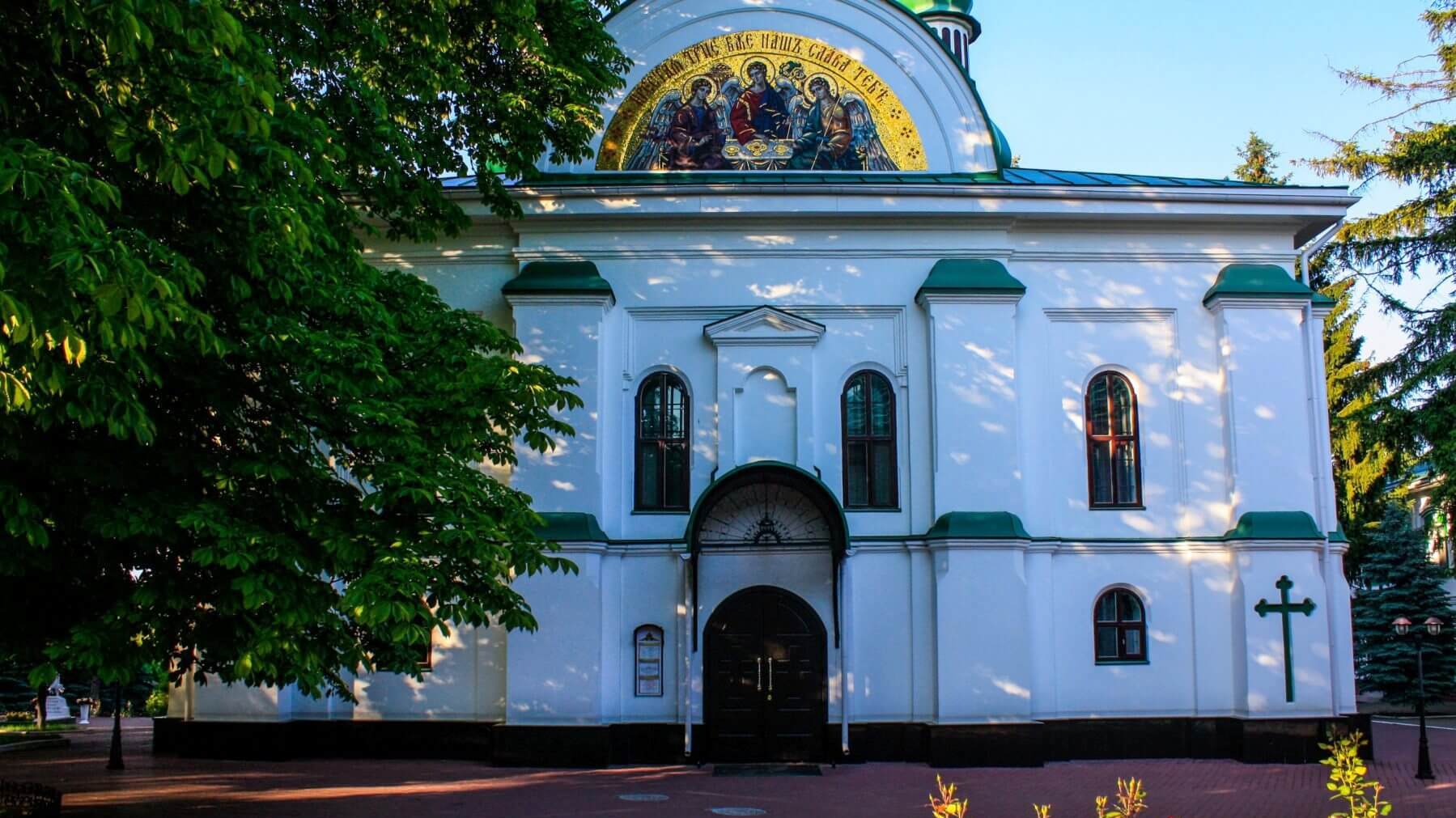
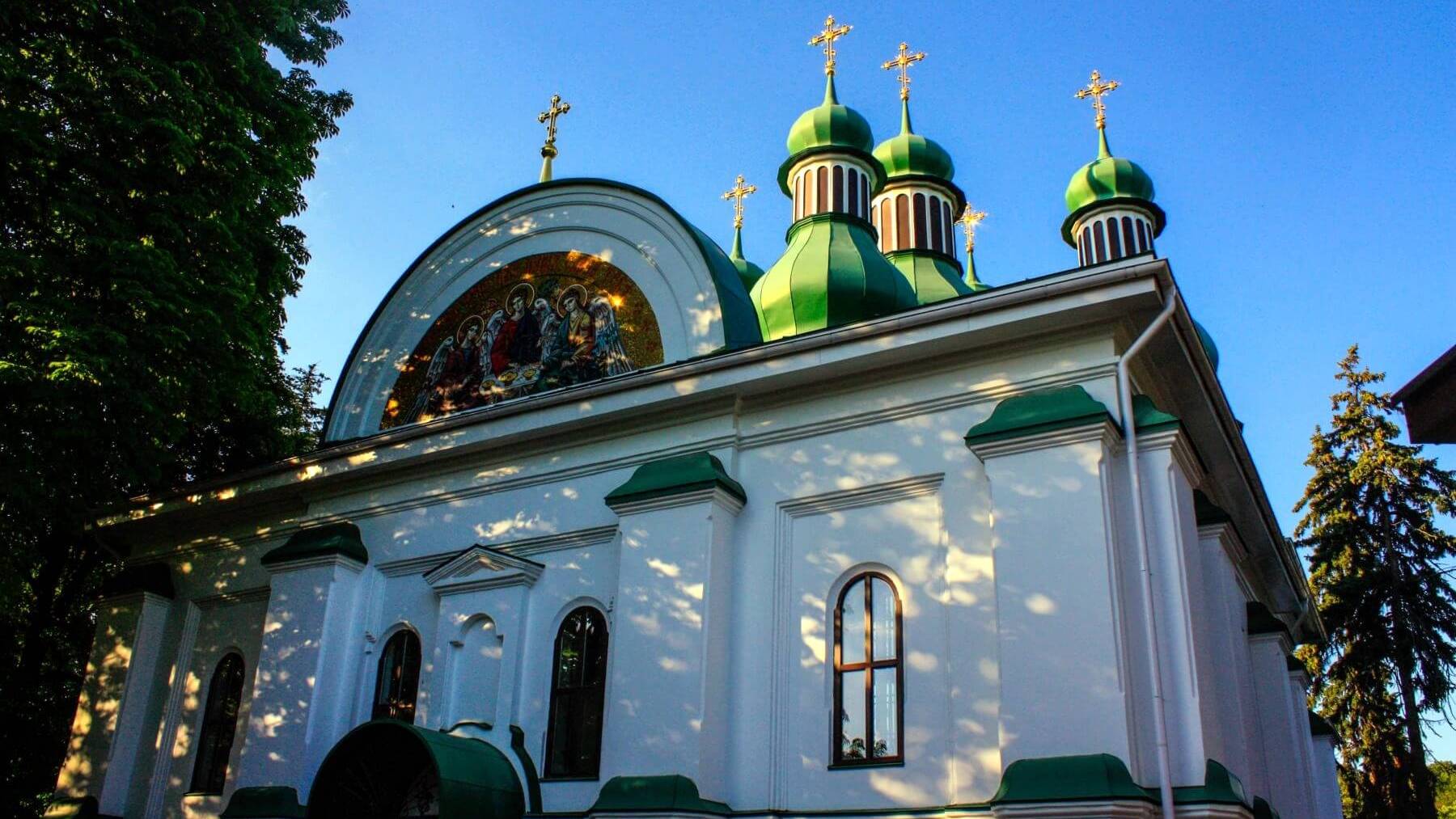
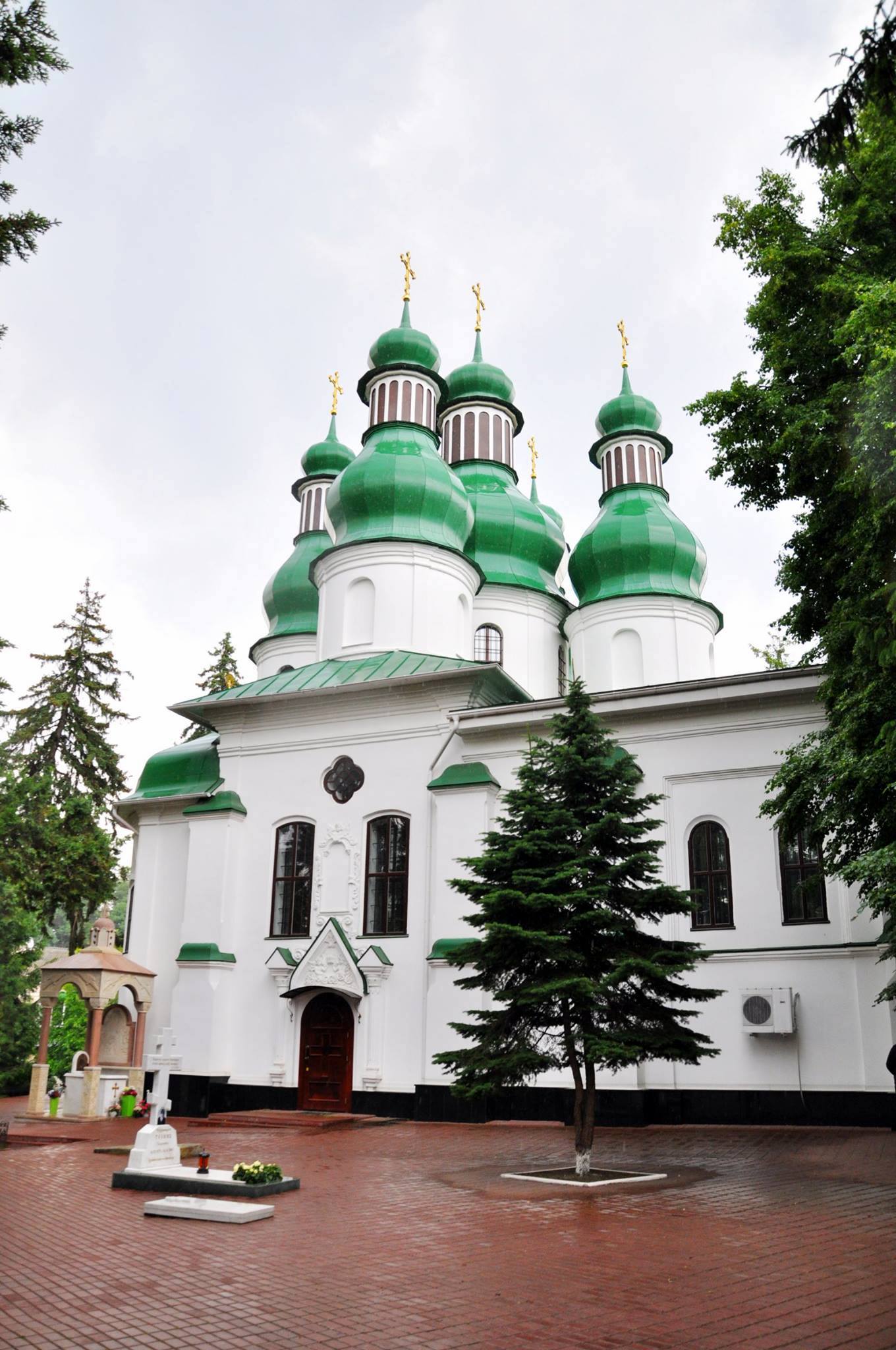
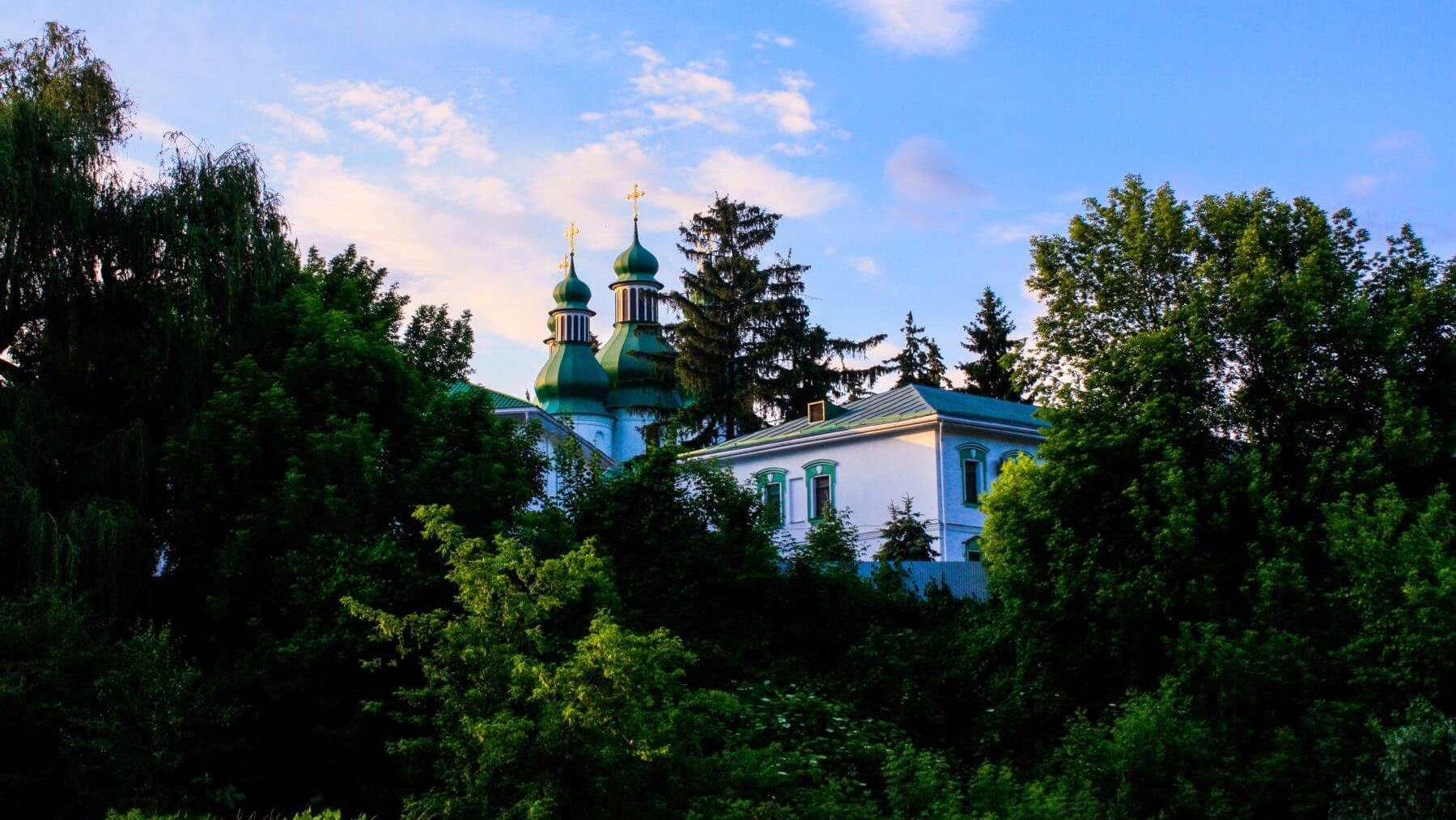
In 1763-1767 it was replaced by a masonry church of the Holy Trinity with side chapels of Venerable Serhii of Radonezh and St Dymytrii of Rostov; the building was directed by Stepan Kovnir, an architect working for the Lavra, and the church is in the forms of the Ukrainian baroque2, 6. It did not take its present shape at once: in 1853-1854 three more cupolas were added to its original two, and in 1892 the architect Volodymyr Nikolaiev strengthened the walls with buttresses and made a new narthex on the west2.
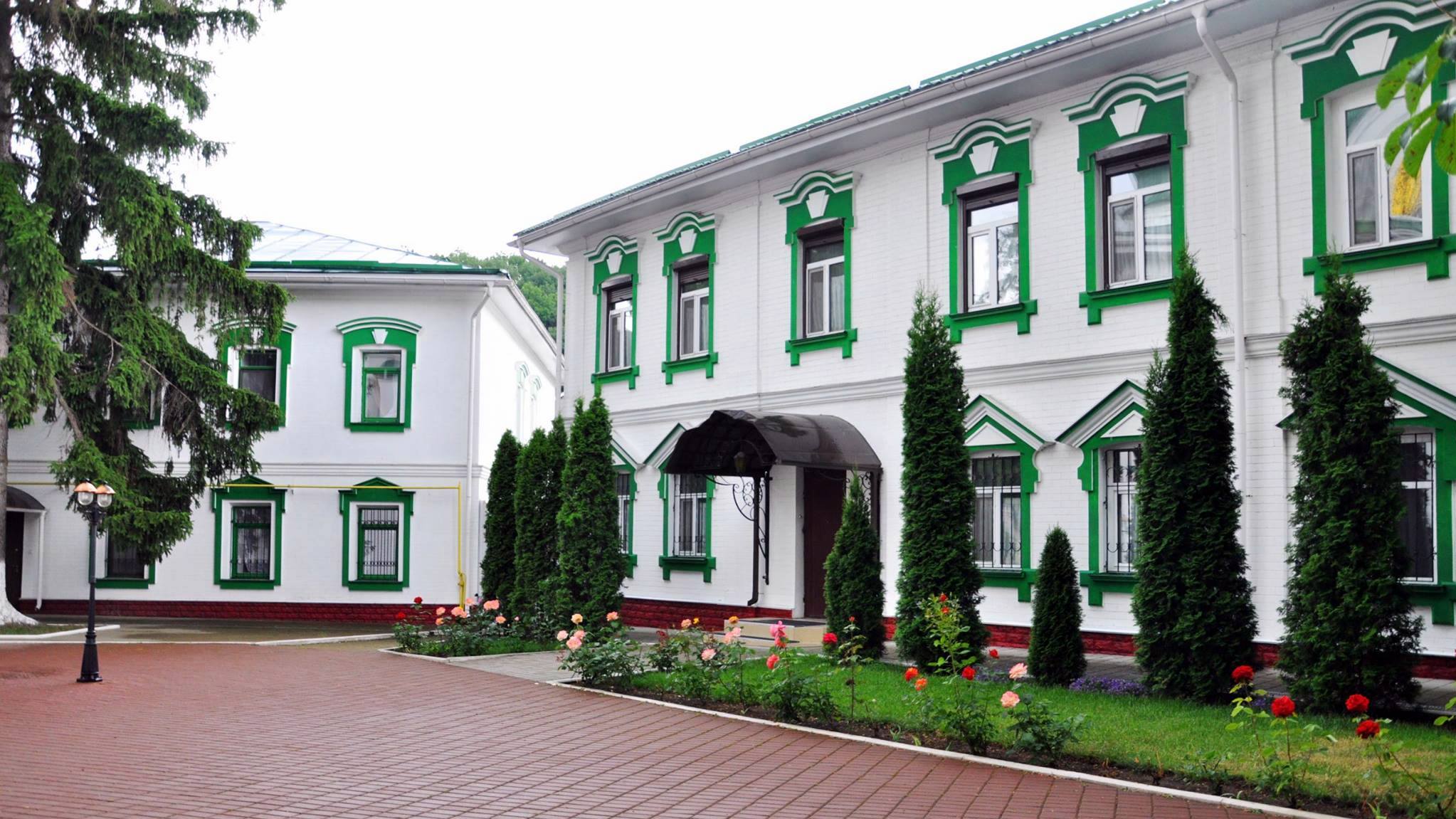
In 1786 the hermitage was assigned to the Kyiv-Pechersk Lavra: it served as an agricultural estate and as a place where monks of advanced age lived in retirement6, and the almshouse was moved here from the Lavra7. From 1898 a Lavra candle works operated here6, and in 1853 the hermitage received the name of the Holy Trinity7.
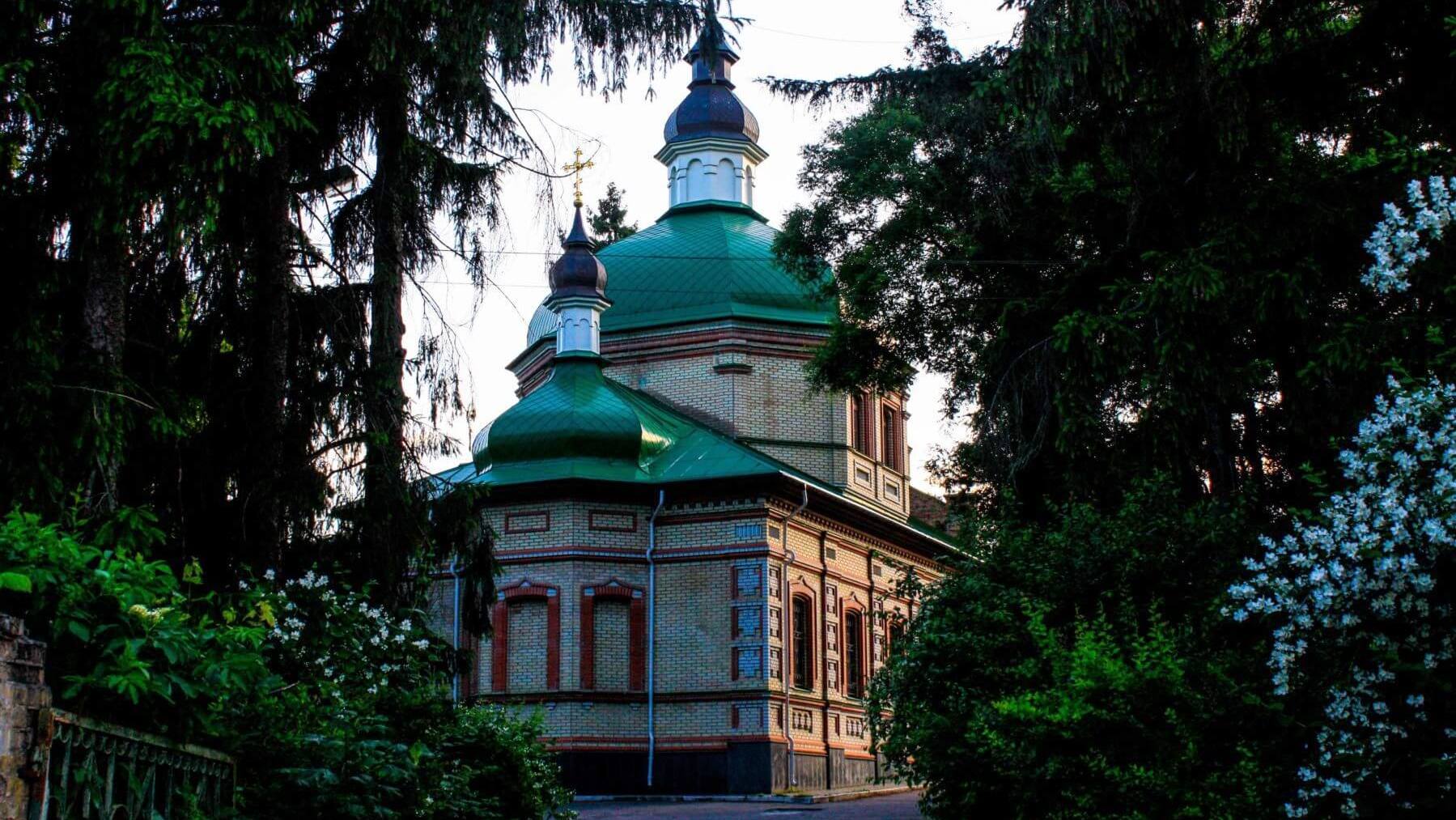
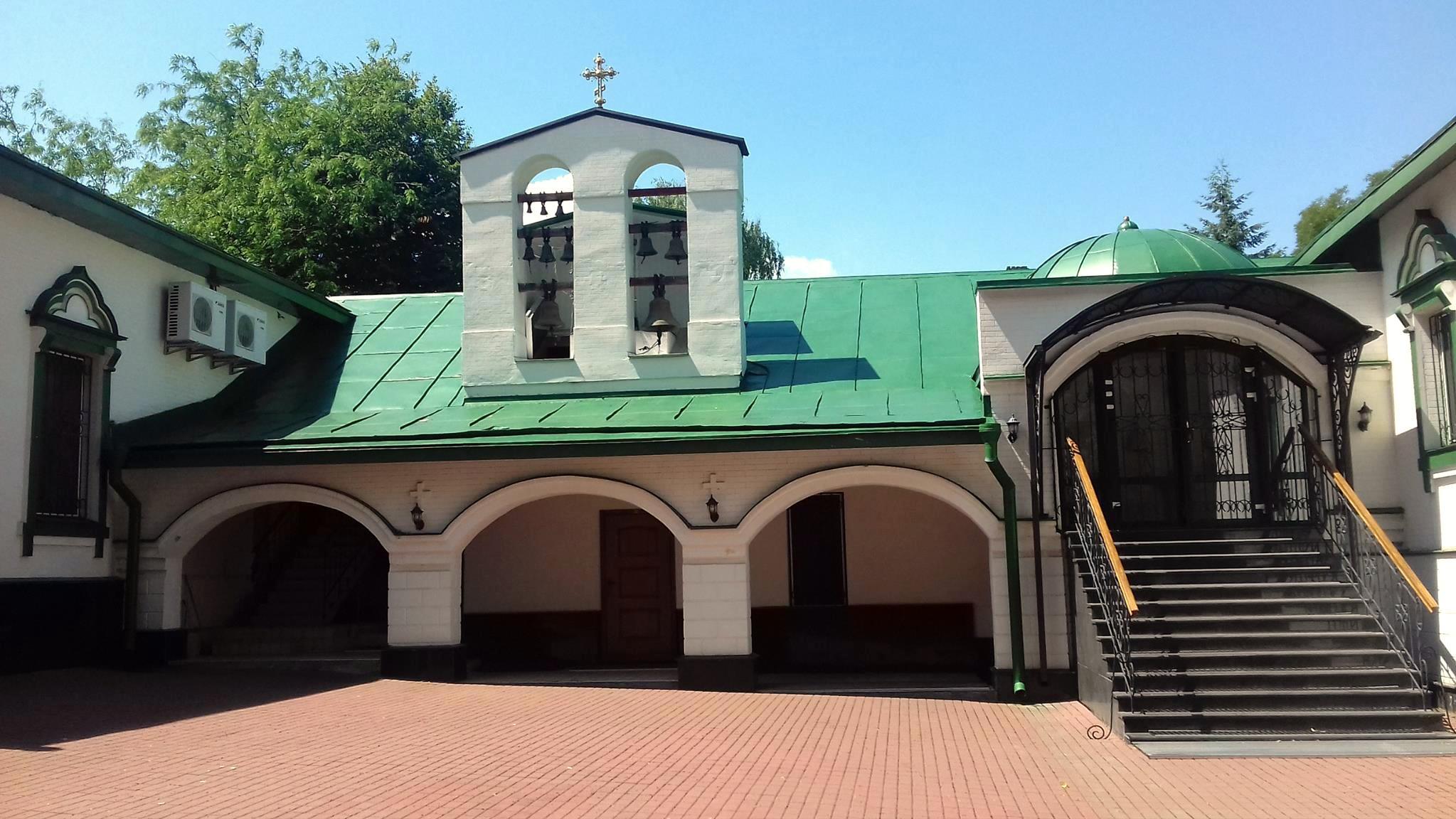
In 1757 a fire destroyed the wooden cells and the refectory at the house, and by 1761 a second wooden church - of the Twelve Apostles - was consecrated2. In the 1830s the wooden churches were replaced by the masonry church of the Twelve Apostles with a refectory in the classicist style2, 6. In 1829-1837 a fifty-metre masonry belfry was raised - a three-tier round tower narrowing upward on a massive rectangular building; in the 1930s the structure was dismantled2. In 1904 a church of Venerable Serafym of Sarov was built onto the almshouse building6.
The mouths of the Kytaiv caves were periodically covered by landslips, so descriptions of the house sometimes mention the underground passages and sometimes pass over them in silence: the description of 1785 is silent, in 1831 the caves are mentioned, in 1847 there is silence again, and in 1858 a novice "rediscovered" them on seeing a stake he was driving fall through into the ground1. In 1843 Taras Shevchenko visited the passages and described them in 1853 in his novella Varnak1. In the 1870s the Lavra schemamonk Tyt settled in the caves: with his cell-attendant and the residents of the skete he cleared a labyrinth up to a hundred metres long and built a brick church at its centre1. In 1990 the staff of the "Underground Kyiv" department of the Museum of the History of Kyiv began clearing the caves and secured the corridor from the entrance to the church with temporary concrete supports, which stand there still, and the brotherhood and parishioners carried the work on2. In the middle of the 1990s the cave church was named for Venerable Dosifei, and in 2000 it was renamed in honour of the Synaxis of the Mother of God2.
The best-known ascetic of the hermitage was Venerable Dosifei (d. 25 September 1777)1. The life of his cell-attendant Feofan relates that Dosifei was a girl of the Riazan gentry family Tiapkin who at fifteen went secretly to the Trinity-St Sergius Lavra and spent three years there in obedience under an assumed man's name, because the Spiritual Regulation then in force forbade the tonsure of women under fifty; found by her family, she withdrew to the Kyiv-Pechersk Lavra, and spent the last years of her life at Kytaievo1. The Encyclopedia of the History of Ukraine states it plainly: after Dosifei's death it emerged that this had in fact been a woman, Daria Tiapkina in the world6. The lives, however, diverge: a manuscript life of the late eighteenth century calls him a peasant who reposed at about a hundred years of age1, while archival findings of 2007 attest the elder's presence at the Lavra from at least 1760 until his transfer to the hermitage in 1766 and refine the date of his death1. According to the lives of Venerable Serafym of Sarov, the future elder of Sarov met Dosifei here and heard from him the direction to labour at Sarov - the house itself notes that this report is absent from the earliest life of 1841 and first appears in the redaction of 18491. The Holy Synod of the Ukrainian Orthodox Church resolved to canonise the venerable on 27 July 19931.
The second in chronology of the well-known ascetics of Kytaievo is Venerable Feofil of Kyiv (1788 - 28 October 1853), the son of a priest from the village of Makhnivka in the Kyiv region; the fullest account of his life was compiled in 1906 by the Lavra novice Volodymyr Znosko from documents of the Lavra archive, oral tradition and the recollections of Kyivans who had known the elder personally1. The relics and chains of Venerable Feofil are the chief holy thing of the house5. In 1923-1929 the venerable confessor Schema-Archbishop Antonii (Abashidze), canonised by a decision of the Holy Synod on 14 June 2011, laboured at the hermitage, as did the venerable martyrs Zinon (Beda) and Neofit (Sobolenko), canonised on 28 October 1997 among the hundred and three new martyrs of Cherkasy4. In 1786-1870 the hermitage served as a burial place for the Lavra brotherhood: besides Venerables Dosifei and Feofil, the Kyiv holy fool Ioann Bosyi (d. 1855) is buried here2.
In 1924-1933 Kytaievo became an organising centre for the monastic brotherhood that Soviet power was squeezing out of the Lavra by stages1. The hermitage itself was closed in the 1920s and its grounds placed under the All-Union research institute of fruit and berry farming, from 1931 the Ukrainian research institute of horticulture, and after 1945 the republican beekeeping works and the Ukrainian research institute of plant protection were housed here6. In 1932 the belfry was dismantled6. In 1941 the roof and cupolas of the Trinity church were damaged by military action and partly collapsed in the 1950s; in 1965 the church was entered in the register of architectural monuments, in 1978 a restoration project was drawn up, and by 1982 it had been carried out on the exterior2. In that same year of 1965 Kytaievo received the status of an archaeological monument1.
The church revival of the hermitage began with a festal service on the day of the Holy Trinity in 1990 in the church of Venerable Serafym of Sarov, and from 1991 regular services were held in the Trinity church, which was a parish church until 20091. From 1993 the revival of monastic life was led by Archimandrite Pafnutii (Rossokha), who took in the schema the name Feofil in honour of Venerable Feofil of Kyiv (d. 1996)1, and in 1996 the house was transformed from a skete into an independent monastery1, 7. On 26 July 2004 the Holy Synod of the Ukrainian Orthodox Church blessed the renaming of the "Kytaiv hermitage skete" of the city of Kyiv into the Holy Trinity Kytaiv monastery8.
The patronal feasts kept here are the Day of the Holy Trinity, the Synaxis of the Mother of God, the Synaxis of the glorious and all-praised Twelve Apostles, and the memory of Venerable Dosifei of Kyiv, of Venerable Serafym of Sarov and of Venerable Feofil of Kyiv3.
Show sources
- 1. «История» (official site). Свято-Троїцький чоловічий монастир «Китаєва пустинь» (accessed: 2026-08-21)
- 2. «Архитектура» (official site). Свято-Троїцький чоловічий монастир «Китаєва пустинь» (accessed: 2026-08-21)
- 3. «Праздники» (official site). Свято-Троїцький чоловічий монастир «Китаєва пустинь» (accessed: 2026-08-21)
- 4. «Святые» (official site). Свято-Троїцький чоловічий монастир «Китаєва пустинь» (accessed: 2026-08-21)
- 5. «Святыни» (official site). Свято-Троїцький чоловічий монастир «Китаєва пустинь» (accessed: 2026-08-21)
- 6. Білокінь С. І., Вортман Д. Я. «Китаївська пустинь, Свято-Троїцька Китаєва пустинь» (encyclopaedia). Енциклопедія історії України, том 4, 2007 (accessed: 2026-08-21)
- 7. Білокінь С. І. «Китаївська пустинь. Свято-Троїцький чоловічий монастир [...]» (encyclopaedia). Енциклопедія Сучасної України, том 13, 2013 (accessed: 2026-08-21)
- 8. «Засідання 26 липня 2004 року (журнал № 16)» (church document). Священний Синод Української Православної Церкви (sinod.church.ua), 2004 (accessed: 2026-08-21)
- 9. «Место расположения» (official site). Свято-Троїцький чоловічий монастир «Китаєва пустинь» (accessed: 2026-08-21)
- Journal No. 30 session of the Holy Synod of UOC on 26.07.2004 year
- Journal No. 16 session of the Holy Synod of UOC on 26.07.2004 year
- Journal No. 10 session of the Holy Synod of UOC on 03.04.1996 year
- Journal No. 3 session of the Holy Synod of UOC on 08.03.1994 year